
Foreign CEOs and Boards in Japan: What Separates the Winners From the Rest?
 DOWNLOAD THE 31-PAGE REPORT HERE.
Corporate Japan’s record on international CEO succession is disturbingly poor. Just recently, Japan reached 7.3% versus 33.7% in the United States. Thus, winning as a foreign CEO in Japan is a must. However, the issue of truly successful foreign CEOs in Japan has received scant attention since the scandal of Carlos Ghosn. Indeed, over the past 30 years, from 1990 to 2020, our sobering findings suggest that just 31% of foreign CEOs who led Japanese companies have been gold medalists in performance, even when they are exceedingly qualified. In Japan, foreign business leaders need to look at issues with an eagle eye. Making matters worse, the unfolding COVID-19 business threat facing companies of all sectors in Japan is worrisome.

Our experience suggests that the first two years of a foreign CEO at a Japanese firm are crucial for success, given that the probability of failure increases every month from day one of wearing the manteau of leadership. However, the lessons we have gleaned from successful foreign CEOs in Japan, which we call the Tested Foreign CEO Playbook, can dramatically improve the likelihood of becoming an odds-defying and high-flying foreign CEO in the elite club of Japan’s most successful foreign leaders.
For starters, In the post-World War 2 era, the first foreign executive to lead a Japanese company was the Scotsman Henry Wallace of Mazda in the 1990s; three decades later, we witnessed dozens of foreign-led Japanese firms all over the place. The names of foreign CEOs leading Japanese companies span various industries in the Land of The Rising Sun. From automobiles to Banking to fast-food restaurants to pharma to Electronics and Media conglomerates and software security and gaming.
The recent names include Carlos Ghosn, former CEO of Nissan (now turned fugitive), Brian F. Prince of Aozora (previously at Shinsei Bank), Shinsei Bank’s Thierry Porte, Howard Stringer of Sony, Michael Woodford of Olympus, Sarah Casanova of McDonald’s Japan and Eva Chen of Micro Trends, Owen Mahoney of Nexon Co. and Christophe Weber of Astellas Pharma, to name a few.
Why are Foreigners Hired to Lead Japanese Companies?
Decades of research and empirical evidence suggest that the most common reasons for hiring foreign CEOs are:
- Financial distress or crisis, such as the case of Nissan
- Increment of foreign stakes, such as in the case of Mazda
- Globalization and global competitive threats, such as Christophe Weber at Astellas Pharma
- Making meaningful changes across the board, such as Howard Stringer at Sony
What are the Four Characteristics of Foreign CEOs (Presidents) in Japan
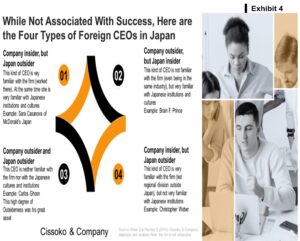
Company Insider and Japan Insider — These CEOs are very familiar with the company hiring them because they may be working at the company or have previously worked at the company. At the same time, given their work responsibilities, while working for the firm in Japan, they have developed a great familiarity with Japanese institutions, including Japan’s formal and informal cultures. A classic example is Sarah Casanova from McDonald’s Japan.
Company Insider but Japan Outsider: These types of CEOs, like the above ones, are pretty familiar with the firms hiring them, given their years of experience working as a country head or regional executive. However, they may not have deep expertise in Japanese cultures and institutions. Because during their career, their career at the firm can be based on overseas responsibilities (outside of Japan, such as within Asia, Europe, or the U.S.). The classic Japan-based foreign CEO in this category is Sarah Casanova of McDonald’s Japan.
Company Insider but Japan Outsider: These types of CEOs, like the above ones, are pretty familiar with the firms hiring them, given their years of experience working as a country head or regional executive. However, they may not have deep expertise in Japanese cultures and institutions. Because during their career, their career at the firm can be based on overseas responsibilities (outside of Japan, such as within Asia, Europe, or the U.S.). The classic Japan-based foreign CEO in this category is Sarah Casanova of McDonald’s Japan.
Company Outsider but Japan Insider: These CEOs are unfamiliar with the company’s culture. They have never worked for the company before (they may have deep industry experience). However, given their track record of leading or managing firms within Japan, they have a deeper grasp of Japan’s cultural aspects, including its institutions, for instance, Brian F. Prince of Aozora.
Company Outsider and Japan Outsider: These CEOs are the ultimate outsiders. They have neither worked for the company they are called to lead nor are they familiar with the formal and informal Japanese culture and its institutions in general. The classic example is Carlos Ghosn, who came to the rescue of Nissan nearly two decades ago. Ford also called Henry Wallace of Mazda for a rescue mission when Mazda was distressed, losing 65% of its domestic market share within five years (1990-95).
The Playbook of the Winning Foreign CEOs over the Past 30 Years
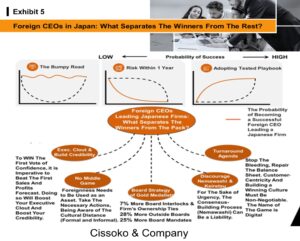
The success bar in Japan for foreign CEOs is very high, given that over the past 30 years (1990-2020), just 31% of them have been considered successful in their roles as captains of Japanese industries. In other words, the probability of failure when everything else remains equal is greater than the likelihood of success in the first two years at Japanese companies. Since the Carlos Ghosn scandal, the scrutiny of foreign CEOs has become considerable within corporate Japan. However, following the time-tested playbook gleaned from the strategic moves of the winners can enhance foreign executives’ and CEOs’ likelihood of success.
Build credibility and executive clout: It is imperative to beat the first sales and profits forecast to win the “no confidence vote” from all stakeholders. By doing so, foreign CEOs turbocharge their credibility and executive clout because the naysayers and people with doubt begin to listen and place their faith in your capability as the right leader for the job.
No middle game: Our experience suggests that many foreigners are called to run the show because of (1) trouble brewing on the horizon, (2) the company is under life support, (3) the Japanese firm is in bad need of turnaround to become competitive again 4) global or domestic threats 5) when foreign stakes increase dramatically, among others. The foreign executive must use its foreignness as an asset to make aggressive changes. Playing the middle game through timidity or lackluster moves may damage your credibility.
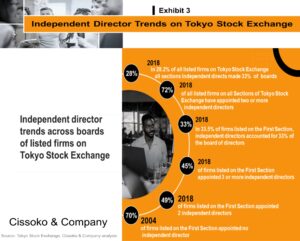
Deploy the lean board strategy when necessary: To move at the speed of the required change, there are two moves the winners have consistently deployed. Depending on the traditional circumstance, the first calls for a reduction in the number of board seats. Indeed, the leaner the board, the faster CEOs can build the coalition for actions, which is imperative in the Japanese corporate environment. Indeed, Japan is notorious for its weak market-based corporate governance. Worse still, many former CEOs or Presidents become Chairman of the board while holding an influential position within the company, which starkly contrasts with the United States or most advanced countries. As such, a board packed with such former executives can distract a Japanese company’s newly appointed foreign CEO from wanting to make bold strategic changes. Thus, urging them to retire can be a great strategic move for the foreign executive.
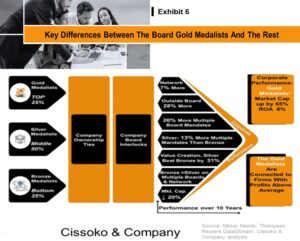
The second strategic move, which we call “the board gold medalists,” helped them double their profits between 2004 and 2013. Moreover, they increased the value of their organizations by over 65% over that period.
Deploy the strategy of the Japanese board gold medalists of profitability. The competition, the board composition, their firms’ ownership ties, and the board interlocks have been highly correlated with abnormal profitability in Japan.
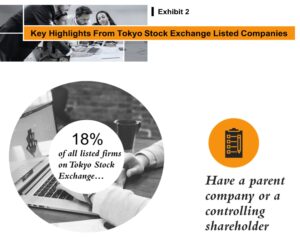
On average, the gold medalist board of directors in Japan has 7% more networks than others. Similarly, it has 28% more outside board members than the average Japanese company. Furthermore, the companies that made the list of gold medalists of profitability are in the top 25% of the top performers in Japan over the period 2004-2013. What else separates them from the silver and bronze medalists? The top performers — the gold medalists of profitability in Japan have, on average, 26% more board mandates than the rest of the nearly 3,000 companies analyzed that are listed on Japan’s Stock Exchange.
Discourage Nemawashi and Keiretsu—The traditional consensus-building process for reaching key decisions had its time and place. However, in today’s fast-moving world, many executives—particularly the winners told us it could be a huge liability when implementing the strategic plan. Similarly, with its interlocking network of layers of distributors, the byzantine horizontal keiretsu can have unintended consequences for foreign executives. Consider this: the average number of layers of Japanese distribution channels through the keiretsu system is five versus two layers and a half in the United States.
The turnaround strategic agenda—The first order of business that separates the winners from the rest is answering this important question: Are we in a crisis or a distressing situation? Failure to correctly answer this question has set many CEOs up for failure, as they waste time and resources on counterproductive activities and discussions.
The distressed company may have abundant resources but dwindling sales, losing market share, and losing competitive advantage. However, companies in crisis may display the signs, such as organizations in distress. However, the firm in crisis lacks resources and can be cash-strapped. Thus, unlike a distressed company, firms in a crisis require urgency and asset reduction until the stability phase. That’s why the strategic agenda for the two situations is different and calls for a deeper analysis.
To win in this critical phase, successful CEOs have paid attention to the fake yes-men who will say yes but don’t follow through in executing the plan. Most executives have reduced or gotten rid of such players in their midst. Another important trap that separates the winners from the pack is that they are in charge of the corporate strategy because they know the value of customer centricity and have built a culture of meritocracy, merit-based pay rather than the traditional Japanese seniority pay system, which favors loyalty over talent, competency, and expertise.
Corporate Japan is a tough environment for Japanese executives, let alone foreigners unfamiliar with the formal business culture and informal practices. However, our experience suggests that following the right winning playbook can improve foreign executives’ chances of success in the Land of the Rising Sun.
Get in Touch
We will respond to your message as soon as possible.
Insights to Win
Subscribe to our newsletter for in-depth analysis, reports, and our perspectives on business and economic issues related to the Japanese market and the global economy.