
Omnichannel Retail Strategy: A Guide to Growth and Better Customer Experience
The consumer’s product returns in the retail industry are the last frontier for improving customer experiences. Indeed, product returns inventory in the United retail industry alone was over $368 billion in 2018—roughly 10% of the entire retail sales within the country, revealed the U.S. National Retail Federation data. Around the world, we estimated the price tag to be over $2 trillion—bigger than the 2018 GDP of South Korea and Malaysia combined. With this eye-popping sum, there should be no surprise that bankruptcies in the retail sector are increasing. Some of the biggest casualties in the U.K. are Arcadia and Debenhams, while in the U.S., we have Neiman Marcus and J.C. Penney. To be sure, the list is too long.
Given the restrictive health measures worldwide, we expect a huge portion of retail shopping to move online. As such, if our experience is any guide, we believe that winning in the retail sector during COVID-19 and the holiday season calls for reverse logistics and omnichannel pricing strategies to enhance customer experiences and deal with the expected product returns. Simply put, many retailers need a new business model.

The return (including refund) policy can enhance or worsen the customer experience and the company’s profitability. Organizations need to devise a sound product-returns strategy for competitive advantage through fairness towards their customers. Businesses can provide options such as product exchanges, repair, and gift cards. Moreover, businesses can glean insights from product returns regarding potential product issues. Product returns can send a strong signal concerning the degree to which an organization’s merchandising is effective or flawed, given the customer reviews and expectations of a particular target segment. The feedback loop can help a firm fine-tune its products earlier than expected while avoiding a massive product recall. Therefore, organizations need to build these capabilities into their business models to avoid the unintended consequences of their product returns strategy on consumers—and ultimately on their brands and bottom lines.
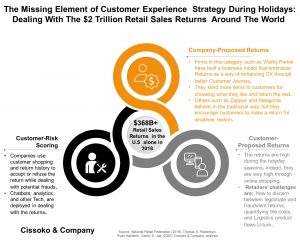
The first order of business entails vigilance regarding depreciation and impairment of product returns from the customer’s location through the reverse logistics flow—be it company-owned or third-party logistics. Moreover, reselling the returned products at a huge discount as an option in dealing with the challenges has been used by many retailers in the fast-fashion industry, given their products’ short-term usage period. The last option for many retailers is an outright giveaway to a charity that foots the bills that go with disposing of the product with its environmental, regulatory, and reputational consequences.
According to our experience, retailers’ product returns will increase dramatically as businesses move swiftly to capitalize on the booming online shopping given the COVID-19 chaos while accelerating the previous digitalization. For one thing, offline (brick-and-mortar) stores’ product returns have been 8% in recent years. However, online channels’ product returns are much higher, between 18% to 37%depending on the product category and shopping seasons, such as Christmas and other holidays happening every year. Without an efficient process, dealing with these returns can top 10% of the supply chain’s overall costs across many industries.
The problem with retail product returns is that when retailers want to return products to manufacturers, there are usually disagreements regarding the condition of the product, its value, and, above all, the timeliness of the retailer’s response. When retailers return many products to manufacturers, they automatically interpret the issue as an abuse of return privileges.
Thus, one of the most important issues to navigate between retailers and their manufacturers is product returns timeliness. For one thing, many retailers have no capability to handle the process timely, given the poor communication system for consistently sending detailed and clear messages to their manufacturers on time. As a result, those manufacturers take time to recognize those returns as a subtraction from sales to that specific retailer. These inefficiencies can be a frustrating experience for the two parties when tackling the product returns issues effectively while providing better customer experiences. Indeed, one of the biggest customer experience flaws across the retail industry is that most organizations treat product returns as a corporate nuisance rather than market signals.
When poorly managed product returns have negative implications for the bottom line through reverse logistics cost and margin erosion, they can enhance future profitability and loyalty through better customer experiences when adequately managed. As such, organizations need to rethink their tough product returns policies because of the perceived risks from consumers for buying from the firms, which can negatively impact the pre-purchase decision-making of future customers.
Again, the customer-perceived risk is real. The perception of the uncertainty and adverse ramifications of purchasing a product or service is a salient factor in the customer journey analysis. As such, by lowering the associative financial risks from the consumers, an organization increases the consumer’s willingness to purchase while enhancing the perceived value. Make no mistake: we know the so-called “boomerang shopping,” where customers intentionally buy products and return them to retailers by cleverly avoiding spending money. However, our experience suggests that the real shopping done with good intentions outnumbered the “boomerang shoppers.”
As the world becomes seriously threatened by climate change, the associated regulatory risks with sustainability, and the rise of activists, reverse logistics can be a powerful strategic weapon because it will help an organization deal with product returns while enhancing the company’s triple-bottom-line strategy through sustainability.
Options for Organizations to Turbocharge Their Strategy in the Retail Sector and Beyond
When CEOs examine the issues with an eagle eye, a flurry of strategic decisions can help companies worldwide—not just firms in the retail sector.
Reuse returned products—When product returns meet satisfactory quality after inspections, the sales and marketing teams can coordinate the resale of the used products through other partners with loyal and dedicated capabilities for those processes.
Revamp—In this case, the outbound logistics team needs to be put in charge of ensuring the product is returned to the company, meeting a pre-defined quality standard while the company extends its service level.
Remanufacture—In this case, the operations department will disassemble, remanufacture, and reassemble the product and send it back to the customer (client) like a brand-new product.
Recycle—When an organization follows this path, the inbound logistics department assumes the role of reusing various components of that product and other new materials (inputs) the company usually buys for the specific product-making. Indeed, recycling is all the rage, given the rise of consumer boycotts from activists and the global fight for a sustainable business environment.
Why do Many Organizations Double Down on Reverse Logistics?
We believe recovering outbound inputs (materials) is cheaper than buying new ones. Again, customers, regulators, and activists worldwide are increasingly unforgiving regarding climate footprints. Thus, since recoverable materials manufacturing is profitable and environmentally friendly, many firms are jumping on the bandwagon for altruistic or publicity stunts. That’s why organizations across industries such as fashion, auto, and chemicals, among others, are doubling down on reverse logistics as a decisive competitive advantage.
Moreover, given the imperatives regarding customer experiences and competitive pressures, companies such as Zappos and Warby Parker adopt liberal product returns policies. In contrast, others deploy customer-risk scoring through data analytics and other technologies to accept or deny returns while controlling fraud.
Reducing Product Returns Through Better Pricing Strategies and Customer Experiences
Our experience suggests that pricing strategy frequency discounts (retailers offer repeated small discounts), huge discounts (retailers offer few and far between huge discounts), different prices for the same product offline and online, and everyday low prices (EDLP)can enhance customer experience while reducing the likelihood of products returns in times of uncertainty. With the rise of customer reviews and ease of product price research online, consumers do mental accounting.
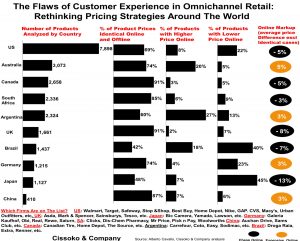
Indeed, when potential customers are choosing retailers under uncertainty, they compare the retailers with their closest competitors in that industry. When the price of their retailer of choice is low compared to the alternatives, they feel they receive a bargain. Moreover, when the price from their chosen retailer is high compared with the other options, they interpret it as destroying value. Thus, they interpret the experience as a loss, meaning a bad experience, which will be a factor in their choice of retail brand.
In other words, loss aversion in times of uncertainty, such as COVID-19, increases exponentially. During these economic storms with mounting job losses, consumers will, in most cases, stick with the retailers that consistently offer lower prices than others that provide lower prices only on occasion – be the discount huge or small – so long as the consumer believes a brand to be expensive in most cases, they are likely to ignore it during a tough economic environment. That’s why firms such as Amazon, Costco, and Walmart thrive (at least are resilient) no matter the state of the economy.
In short, many omnichannel retail strategies are teetering on the edge despite business leaders’ passionate efforts in dealing with disruptions. By following the prescription above, we believe that retail organizations can develop their strategy firepower while building organizational resilience through digital transformation. To win the hearts and minds of consumers, calls for the corporate purpose must be firmly grounded in a winning organizational culture to tackle the challenges of COVID-19. Above all, firms need to think of the prescriptions as a symphony, not a solo, to get better results.
Get in Touch
We will respond to your message as soon as possible.
Insights to Win
Subscribe to our newsletter for in-depth analysis, reports, and our perspectives on business and economic issues related to the Japanese market and the global economy.