
The D in Diversity Stands for Dignity in the Work: Building Cultures Worthy of Human Dignity — White Paper
 DOWNLOAD THE 44-PAGE WHITE PAPER
Our research suggests that the D in diversity stands for dignity in the work. Thus, building corporate cultures worthy of human dignity is imperative for becoming a purpose-driven organization in this age of ESG and worldwide social, racial and economic justice.
Our experience suggests that workplace discrimination against older employees, women and minorities is inconsistent with business ethics and can be considered an assault on human dignity. When human dignity is lacking across workplaces, what does it look like? Why do purpose-driven firms have a better DEI track record than others? How can companies build a corporate culture that is consistent with their purpose?
To glean insights for tackling these issues, which came to our attention recently, we researched the trends and evidence regarding the lack of human dignity around the world, from Japan to the United States to Canada, among others, in this age of Great resignation compounding the economic disruptions.
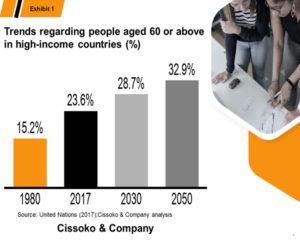
Aging Population Trends Across High-Income Countries
Labor Market Discrimination Against Older Employees
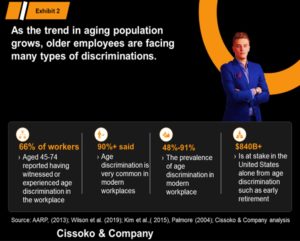
We found a strong correlation between aging across developed countries and increased discrimination against older employees. They are subject to two types of stereotypes. On the one hand, they increasingly face descriptive stereotypes, such as being less tech-savvy, resistant to change, lacking entrepreneurial spirit, and job ad discrimination in the form of “new graduate” and “energetic and dynamic,” among others. On the other hand, they face unfounded prescriptive stereotypes regarding succession planning and corporate resource consumption, among others.
Surprisingly, we found that executives and HR managers are more likely to factor age into their hiring decisions than HR professionals. Again, while most executives believe that diversity is important, the beliefs of many are inconsistent with business ethics. These beliefs are consistent with our latest Diversity Report and Rankings regarding women in C-Suites, on corporate boards, and in leadership positions of the 3,812 largest companies in the OECD.
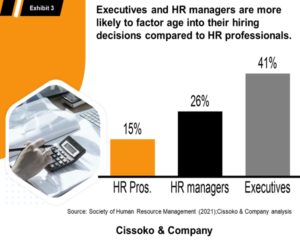
Surprisingly, we found that executives and HR managers are more likely to factor age into their hiring decisions than HR professionals. Again, while most executives believe that diversity is important, the beliefs of many are inconsistent with business ethics. These beliefs are consistent with our latest Diversity Report and Rankings regarding women in C-Suites, on corporate boards, and in leadership positions of the 3,812 largest companies in the OECD.
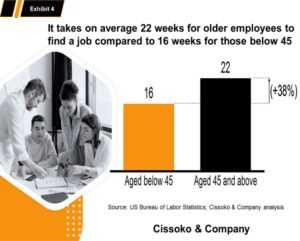
In countries such as the United States, it takes 22 weeks for older employees to find jobs compared to those below 45. Many older employees have taken their cases to court to remedy this large and unjustified discrepancy between the two groups.
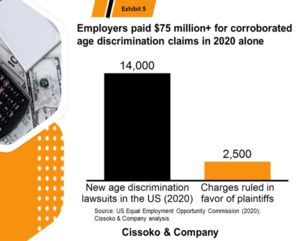
For this reason, in 2020 alone, there were nearly 14,000 age discrimination lawsuits in the United States, and 2,500 charges were ruled in favor of plaintiffs. Given that employees are winning many of their age discrimination cases, something is going wrong, which requires CEOs’ and business leaders’ attention across modern workplaces in this age of Great Resignation.
Minding Japan’s Gender pay gap: The “Gender Tax”
Regarding the gender pay gap, which we call “gender tax,” Japan stands out among the OECD countries. The country had a 92% “gender tax” gap with other OECD countries in 2020. Beyond Japan, in the United States, the “gender tax” is on full display regarding the hourly wage gap between females and males based on their work experience.
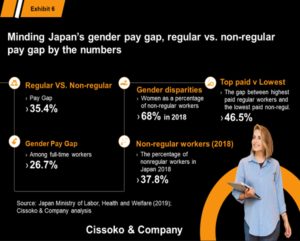
Beyond Japan, in the United States, the “gender tax” is on full display regarding the hourly wage gap between females and males based on their work experience.
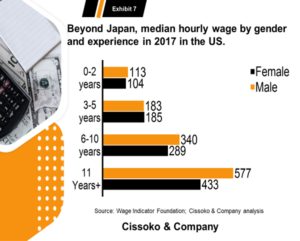
Labor Market Discrimination against Minorities
Our research reveals that all fingers point at employees’ supervisors and sometimes at plaintiffs’ colleagues regarding post-hire workplace discrimination. Thus, to win the game of diversity, equity, and inclusion, a talent’s supervisors need to change their behavior.
The two Types of Employment Discrimination Revealed in Court Filings
Most employment discriminations happen post-hire when employees are already on their companies’ payroll. The number of lawsuits regarding post-hire is three times higher than the complaints filed at the pre-hire level.
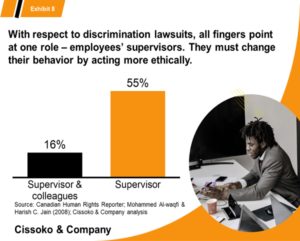
In addition, more than 57% of complaints are filed by “white-collar” employees. Again, given that the number of lawsuits won by minorities is higher than those rejected by courts, it suggests that something is going wrong across many organizations worldwide.
Corporate Cultures of Human Dignity Call for Humanizing the Workplace
Human resource managers, business leaders, and CEOs must understand many critical elements of human dignity. On the one hand, we have dignity in the work (inherent dignity) and dignity at work (earned dignity).
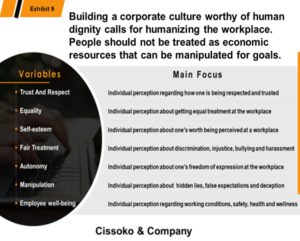
Failure to protect, defend, and restore these two levels of dignity is a recipe for disaster in firms’ quest to unleash purpose through diversity, equity, and inclusion (DEI).
Three Winning Paths CEOs Can Explore to Build Cultures of Human Dignity
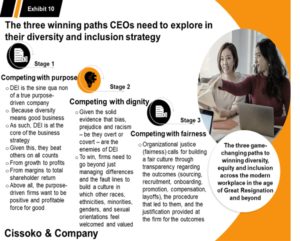
Human dignity is the sine qua non of diversity, equity, and inclusion (DEI). Failure to think about diversity through this lens leads to the obvious: disappointment and, quite often, poor results. To become purpose-driven, companies and their CEOs need to double-check the corporate environment and culture regarding stereotypes, discrimination, and lack of fairness.
Get in Touch
We will respond to your message as soon as possible.
Insights to Win
Subscribe to our newsletter for in-depth analysis, reports, and our perspectives on business and economic issues related to the Japanese market and the global economy.