
Beyond COVID-19 Crisis: Building Resilience in Japan for the Decades Ahead
To say that the COVID-19 pandemic has been an economic storm may seem like an understatement, given the human tragedy and supply chain disruptions worldwide. However, beyond the coronavirus crisis, organizations in countries such as Japan need to build organizational resilience against the catastrophic rise of natural disasters.
The statistics of COVID-19 are depressing. As of this writing, many countries worldwide—mainly Europe—are returning to square one of the lockdowns, which will send another chilling effect within the Global Value Chains (GVCs). However, our work and experience suggest that the dangers of other natural disasters are becoming frequent below the public radar, costing the world economy more than one trillion dollars. For example, floods have risen 134%, earthquakes by 53%, and storms by 40% over the past two decades, from 2000 – 2019.
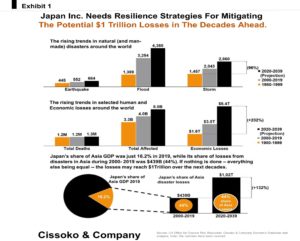
We believe that Japanese organizations – Japan Inc.— need to double down on resilience in the decades ahead, given that over the next 20 years through 2039, Japan’s share of the total losses across Asia regarding these disasters will keep on increasing to reach the dangerous milestone of $1 trillion—if everything else remains equal. In other words, while the Land of the Rising Sun’s share of Asia’s GDP in 2019 was nearly 16%, the country accounted for 44% of disaster losses in Asia over the past two decades, almost $440 billion.
Unfortunately, over 40% of Japan’s big corporations and more than 85% of SMEs in the country have zero insurance against earthquake risk. Moreover, regarding business continuity risk planning, around 28% of small and medium-sized companies have insurance protection in the country.
Furthermore, the commercial property category’s share of the commercial line of insurance was less than 20% at the end of 2018, which looks like a dangerous gamble by business leaders nationwide. For one thing, Japan is located in the area of the globe—the Circum-Pacific seismic belt—where nearly 80% of the world’s earthquakes occur. Indeed, being an insured organization is one of the primary risk transfer methods because it reduces risks from the balance sheet, cash flow, business interruption, and reputational damages when disasters strike while allowing firms to concentrate on creating value.
The Value of Risk Management Officers Across Japan
The basic tenet calls for reducing exposure to different risk categories, reducing vulnerability through actions such as retrofitting properties, and having an institutionalized risk management process within the boardroom. Then, the remaining aspects of risks can be transferred to insurers by preventing losses and financing the recovery process, which can take years, if not decades, in some cases.
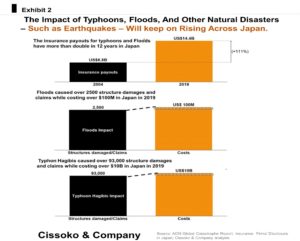
The good news about the investment in risk management through a risk-transfer strategy is that every single dollar spent will be doubled or quadrupled as return on investment (ROI) regarding the disaster impact reduction and avoidance on the environment, business activities, and business continuity, to name a few, according to our experience. Consider the impacts of recent disasters in 2019. Over 93,000 people were impacted by typhoon Hagibis through structural damages and claims, costing over $10 billion in losses. Again, recent floods in Japan impacted more than 2,500 people while causing over $100 million in damages.
Indeed, Japan Inc. needs to avoid being taken off guard, as we witnessed during the Tohoku earthquake and tsunami in 2011, which cost over $200 billion. Only 36% of big corporations in Japan were insured against catastrophic disasters during that disaster. The bad experience was a wake-up call across the country, given that six years later, in 2017, the ratio of firms with that badly needed disaster coverage increased to 48%. However, given the potential costs of the rise in natural disasters in the decades to come, we believe that Japanese companies, or at least companies based in Japan, need to double down on building their organizational resilience—not just through insurance alone—which is a no-brainer, but through other risks mitigations strategies by elevating the role of risk management officers within boardrooms of Japanese corporations.
In short, firms in Japan and worldwide should not be blindsided by disruptions. The COVID-19 pandemic is part of the story, but business leaders need better organizational resilience strategies now and in the decades ahead. An institutionalized solid risk management process can save many firms from disaster-induced bankruptcies or financial disasters with irreparable damages. Our planet is under severe stress from climate change, and we are running out of time to reverse the course through a better corporate culture for a sustainable competitive advantage. Given these indisputable facts regarding Japan’s industries’ profit pool, CEOs need to be more vigilant regarding managing their business from now on.
Get in Touch
We will respond to your message as soon as possible.
Insights to Win
Subscribe to our newsletter for in-depth analysis, reports, and our perspectives on business and economic issues related to the Japanese market and the global economy.