
Responding to Disruptors: A CEO’s Guide to Preemptive and Defensive Strategies
For any strategic move, there is a countermove from competitors. As such, CEOs need to develop their strategy IQ for the challenges of COVID-19. Therefore, a strategy must be analyzed through these high-octane interactions between a firm, its competitors, and other stakeholders in the environment. In fact, any strategic move by Apple or Amazon will result in another response from their competitors, such as Alibaba and Samsung, respectively, no matter how negligible it may be. For example, when Apple rolled out its elegant and tidy retail stores 18 years ago across the United States, Samsung and other rivals responded by copying the store design and experiences over time, according to Mark and Townsend’s findings in 2019. Therefore, understanding strategy through this practical perspective enables companies to win—avoid strategic blunders—by anticipating the competition’s response regarding the move.
Even in the worst-case scenario, many blunders can be avoided from the outset while enhancing a firm’s strategic agility with respect to resource allocation, capability enhancement, timing, and even secrecy regarding some crucial and future-dependent projects. So, considering competitors’ responses through a game theory lens is vital to make a strategy more realistic than fictive.

Moreover, our advisory engagements suggest that most competitive advantages are short-lived because competitors can quickly close the gap through imitation or mergers and acquisitions (M&A), among others; most product innovation is also quickly copied by rivals. Indeed, only 2% of innovations’ value goes to innovators, and all but 30% of innovations are not emulated, revealed Shenkar’s 2010 analysis. So, it is crucial to have deterrence and defensive strategies in business leaders’ strategic arsenals to fend off disruptors and imitators. Let’s look at these now.
Formulating a Deterrence Strategy Against the Disruptors
To formulate a deterrence strategy, a company must have a clear or at least a basic understanding of a disruptor’s planned or potential strategic moves concerning their true intention. This is done through good homework, such as scrutinizing potential challenger’s hyped or planned M&A, given that the move may increase their capabilities of attacks, and so on. The incumbents need to quickly translate these cryptic signals from disruptors while promptly refining these signals with corroborating evidence.

Timing is the key to success regarding planning, resource deployment, getting everyone on board, logical chain of actions, meetings, and progress reports while balancing these actions with other strategic priorities and objectives. The data collection process can start from venture capital (VC) investment trends across business categories and sectors, private equity investment trends, court and patent records, equity analyst reports, business lobbies, proprietary research, like. Today, other methods from big data can also serve an organization well. This step is crucial because any delay may be strategic suicide. Indeed, to fully grasp and anticipate competitive interactions, firms should make full use of macro and microeconomic trends and other analytical, predictive, and prescriptive tools such as:
- Market response models: These are models grounded in statistics for predicting the demand for new product launches. Yet, they provide the key insights for developing a winning marketing mix while optimizing the marketing spend on promotional activities such as advertising and trade promotion.
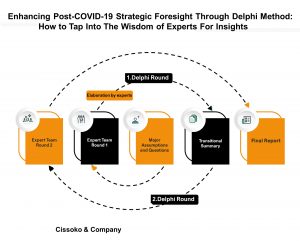
• The Delphi method: This technique requires gathering opinions or perspectives of unnamed experts by conducting and repeating several surveys through written questions—improving each one from the gathered responses—to statistically characterize the agreed-upon perspectives. The technique was pioneered by the RAND Corporation decades ago to enhance its forecast.
• Advanced analytics: In this age of big data, this method is becoming one of the favorite tools of big tech companies to spot threats from disruptors from far-flung areas of the globe that could otherwise be impossible with traditional methods of market intelligence. For example, by monitoring the filing of patents by rivals, firms can basically grasp the potential future intentions or capabilities of rivals concerning R&D expenditures and product development potential while monitoring the disruptors’ gradual enhancement of capabilities to turn the idea into real threats and then prepare their counter-attack.
Using these tools, a CEO can analyze the decision-making process from the competitor’s perspective and respond effectively at the right time to achieve the desired strategic outcome.
Responding to Disruptors: What are the Winning Options on the Table?
A firm has several options for successful responses to the disruption coming from traditional competitors, an adjacent industry player, and upstarts concerning the potential of emerging technologies and geopolitical and public policy threats. Below, we discuss the options at a firm’s disposal. We begin with the first option as an example, given that we have seen firms using that. However, we have urged clients to avoid such strategic bias. Then we focus on other strategies that we believe in our experience can do the tricks:
1. Downplaying the threats through over-confidence bias
2. Responding through corporate intrapreneurship
3. Turning the war into a peace treaty by retreating
4. Using M&A
5. Using corporate VC
6. Upgrading innovative capabilities through open innovation
Each of these options requires critical and strategic thinking.
The first option—downplaying the disruptive threats through over-confidence bias or arrogance — is not advisable. For example, when Apple opened its platform in 2007 to third-party developers, many tech giants failed to understand that the game had changed from product versus product to ecosystem versus ecosystem. As such, they waited for too long before responding. That kind of misreading of the industry’s signals was a strategic suicide for many. They played the wait-and-see card, and Apple had already taken a significant lead before they knew it. Indeed, in urgent situations like this, a bias-induced blunder can be prohibitive, given that it may send the wrong message to others that the incumbent lacks the strategic capabilities to respond to their moves.
The second option—responding through corporate intrapreneurship—entails building a culture of intrapreneurship by using dedicated resources, thinking like entrepreneurs inside a corporation, and exploring and exploiting disruptive opportunities through ambidexterity regarding the corporate structure. The firm distances the entrepreneurial unit from the influence of traditional structure and culture. For this intrapreneurship to succeed, the senior management must be involved by screening, funding, coaching, and integrating the new ideas into other business concepts. The head of this unit or project should be separated from the core business while giving its leaders significant internal authority.
A classic example was Toyota developing the concept of its premium car brand, such as Lexus. An unwavering commitment over several years enables the Japanese car giant to see its jewel on the road—and the payoff has been beyond the wildest dreams of Toyota’s executives—given that the innovation eroded the dominance of German giants BMW and Mercedes in the premium car market. Lexus is available today in more than 35% of countries across the globe (Wilson, 2009), and as far as brand value is concerned, it is one of the leading Japanese international brands (Interbrand, 2009). It pays to be an ambidextrous company to win the innovation game.
The third option—turning the war into a peace treaty —is to compete while avoiding a price war, given that the answer many companies get wrong is regarding where to respond and how to respond to threats. Indeed, in most cases, either the incumbent or the disruptor confronts the other in the same geography or segment through a price war. This is generally an ill-advised move because it results in profit erosion across the board. So, everybody loses. An excellent example of this is Uber’s U-turn from China in 2017, where the local incumbent, Didi Chuxing, outmatched it in a bitter subsidies war; it is a cautionary tale.
This reality is prevalent in markets or segments vital to the incumbent, given its investments already made in R&D, capacity expansion, distribution channels, and above all, when it is a national champion. So, the natural inclination for an incumbent is to defend its position in that market at all costs, even if it is a lose-lose battle. As such, it may be wise to retreat by making peace while getting equity stakes in the rival as Uber did by stopping its China bleeding. This China strategy and other subsequent retreats combined with strategic stakes in firms across Southeast Asia, among others, which were first touted as defeats, ended up generating several billions of dollars for the ride-hailing giant a few years later, according to its financial disclosures.
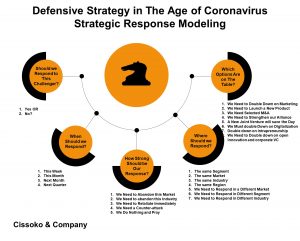
The better strategic option is to avoid bitter confrontation a la Didi. Our experience shows commitment through a global battle across industries, product mix, or complementary products or services. In this situation, concerning its resources, the incumbent competes with the disruptor not in one arena but across several arenas and not in one country but across many countries simultaneously around the globe. Also, the committed firm does not compete on just one product or service but through related (interdependent) ones that may be the key to future industry leadership. For example, consider the e-commerce battle between Amazon and Walmart; they are competing fiercely across many countries, from the United States to Japan, from Europe to India, where Walmart just bought nearly 80% of Flipkart at over $15 billion (according to Pham and Lyengar in 2018) to enhance its war chest in India against Amazon by overcoming regulatory barriers that hindered its entry to the country for years.
The fourth option is through strategic M&A. In this situation, the incumbent seeks to deter the threats from the startups from the first signs before it is too late. This strategy has been the mainstay of many tech giants, such as Facebook—at the time of this writing; the firm has made nearly 70 acquisitions (Toth, 2018), of which WhatsApp was the biggest in February 2014—at a price tag of almost $20 billion (Olson, 2014). Similarly, as of December 2016, Alphabet has acquired hundreds of firms, its largest being Motorola Mobility, at nearly $13 billion, noted Ricknas in 2011. Within the two years through 2011, Alphabet was so aggressive that it bought more than four firms per month on average.
However, Facebook’s founder and CEO, Mark Zuckerberg, said he buys businesses for talented people and has never acquired a firm for any other reason, according to media reports. The big question is whether Facebook bought all those firms and competitors for just their existing talent. The short answer is no, and in some cases, maybe. However, in most cases, the intention was to deter threats from future potential and formidable competitors that may eventually eat Facebook’s lunch. Meanwhile, if they fail to acquire a target, the tech giants use their resources to imitate the most appealing features of their would-be competitors. For example, when Facebook failed in its bid to buy Snapchat, it desperately duplicated many of the popular features of the disruptive startup, such as Snapchat’s stories (Hughes, 2019). This defensive strategy from the social media giant enabled Instagram to grow in popularity. As of this writing, it has already surpassed the daily active users of Snapchat. In other words, by June 2017, Instagram had 50% more active daily users than Snapchat, revealed Ballagher in 2018. So, Zuckerberg began to breathe after years of worries about the firm he co-founded, which became gradually irrelevant and possibly seeing the name of his beloved platform hang in the tech giants’ graveyard.
The fifth strategic option is to form a VC fund and invest in as many startups as possible with disruptive potential, or that can at least complement your existing or future lines of business. This strategy is one of the most critical arsenals in Google’s armory. For example, the platform giant has acquired more than 195 firms since the early 21st century and partnered with several thousands of startups on the West Coast. So, many firms are moving in that direction. For example, in January 2019, Japanese leading bank MUFG followed the footsteps of other leading companies, such as Alphabet, by starting its corporate VC with tens of billions of yen, which will focus on up-and-coming businesses in the most disruptive segments of the Fintech ecosystems.
The sixth option is the slow yet winning boat—the open innovation—which entails that a company upgrades its innovative capabilities by significantly investing in R&D while bringing outside expertise through external partnerships such as with universities. For example, the leading Chinese firm Huawei has been involved in collaborative research for almost a decade by working closely with top academic institutions and leading scholars based in more than 90 research institutions across more than 25 nations through heavy investments in hundreds of projects. In this approach, the incumbent doubles its bet on innovation, both incremental and disruptive (or radical). To be sure, this is a classic ambidextrous strategic innovation, given that it spends on its core products through incremental innovation while experimenting by doubling down on innovation with a high degree of future disruption potential. However, this strategy may present challenges regarding financial resources, capabilities, organization design, and structural constraints.
To enhance the likelihood of great success, companies need clear R&D strategies concerning alignment, coordination, and prioritization between internal and external capabilities. In addition, the answers to where, when, and how the collaboration or partnership needs to be structured must be clarified from the outset. For example, companies need to have sound criteria for external partners’ screening, selection, onboarding, partnership evaluation, and dissolution, like recruiting talent.
Also, businesses need to ascertain what type of expertise to prioritize, such as specialists, generalists, or both; in some cases, expert generalists may be required to align rewards and compensation accordingly. In fact, failure to get the incentives right by aligning them to the innovation strategy will hinder the openness of the internal talent to external ideas. In such situations, organizational politics will keep pouring cold water on ground-breaking ideas or delaying them as it can. In addition, organizations need to balance the centralization and decentralization of the R&D architecture to enhance their productivity. Furthermore, the firm needs to deal with governance issues regarding authority and decision-making processes. A firm must strive to resolve the resource ownership and authority challenges that have plagued many organizations, such as between headquarters and subsidiaries or business units.
Similarly, the questions of resource allocation between the internal and external project teams must be ascertained and aligned with the organization’s strategy. The good news is that well-managed, this kind of open innovation can bear fruits by being highly productive. However, poorly managed can drain or distract an organization from some of its most pressing issues. There are many approaches to external innovation, from corporate VC to incubators and accelerators—from innovation labs to collaborative research—licensing as common in intellectual property-rich industries, and so on. We believe that open innovation, like most corporate endeavors, needs to be congruent with the firm’s strategy to be truly useful.
Get in Touch
We will respond to your message as soon as possible.
Insights to Win
Subscribe to our newsletter for in-depth analysis, reports, and our perspectives on business and economic issues related to the Japanese market and the global economy.