
The 7 Common Digital Project Disruptors Since the Launch of ChatGPT
Every company is striving to become a digital entity, from digital transformation to artificial intelligence and generative AI. However, in this ongoing quest for transformation and adaptation since the launch of ChatGPT, we have identified the most common disruptors of digital projects worldwide.
The potential economic impact of artificial intelligence has been acknowledged for many years in academic circles and boardrooms. However, the launch of ChatGPT 3.5 marked a turning point due to its impressive ability to generate content that is comparable to or even exceeds human outputs in certain cases.
Significant hype surrounded its productivity-boosting potential, along with concerns about the dangers posed by formidable, uncontrolled technology from AI pioneers such as Geoffrey Hinton. ChatGPT, driven by large language models (LLMs), rapidly became the most discussed disruptive innovation worldwide. Consequently, it took just two months for the chatbot to amass two million users, compared to nine months for TikTok, 30 months for Instagram, 49 months for X (formerly Twitter), and 54 months for Facebook.

As companies—large and small—rushed to grasp the potential opportunities presented by the rise of generative AI, regulators around the globe, particularly in the European Union, hurried to safeguard their economies by crafting or updating their artificial intelligence directives, focusing on safeguards against potential threats from bad actors.
Like previous revolutions, the rise of generative AI has significantly benefited the technology sector—from major GPU manufacturers like Nvidia to OpenAI’s key partner, Microsoft, and its competitor, Google—with share prices soaring to stratospheric heights. However, beneath the public radar, many firms eager to carve out a piece of the generative AI market have found themselves grappling with ongoing digital projects, according to our discussions with numerous business leaders.
Since the launch of ChatGPT, we have surveyed over 1,600 companies from North America, Europe, and Asia to gain a clearer understanding of the most common types of digital project disruptors.
The Seven Most Common Digital Project Disruptors Since ChatGPT
At the forefront is the usual suspect: a shortage of digital talent, particularly given the fierce competition for AI-related skills. This includes data scientists, data engineers, computer scientists, UX/UI designers, and experienced individuals familiar with complex transformations.
Just below the talent challenges lies the difficulty of navigating the regulatory and institutional barriers that affect many industries. These barriers range from concerns about privacy and the accuracy of generative AI outputs (the fear of hallucination) to copyright protection, compliance with regulations in various regions (data sovereignty), and potential legal threats, among other issues.
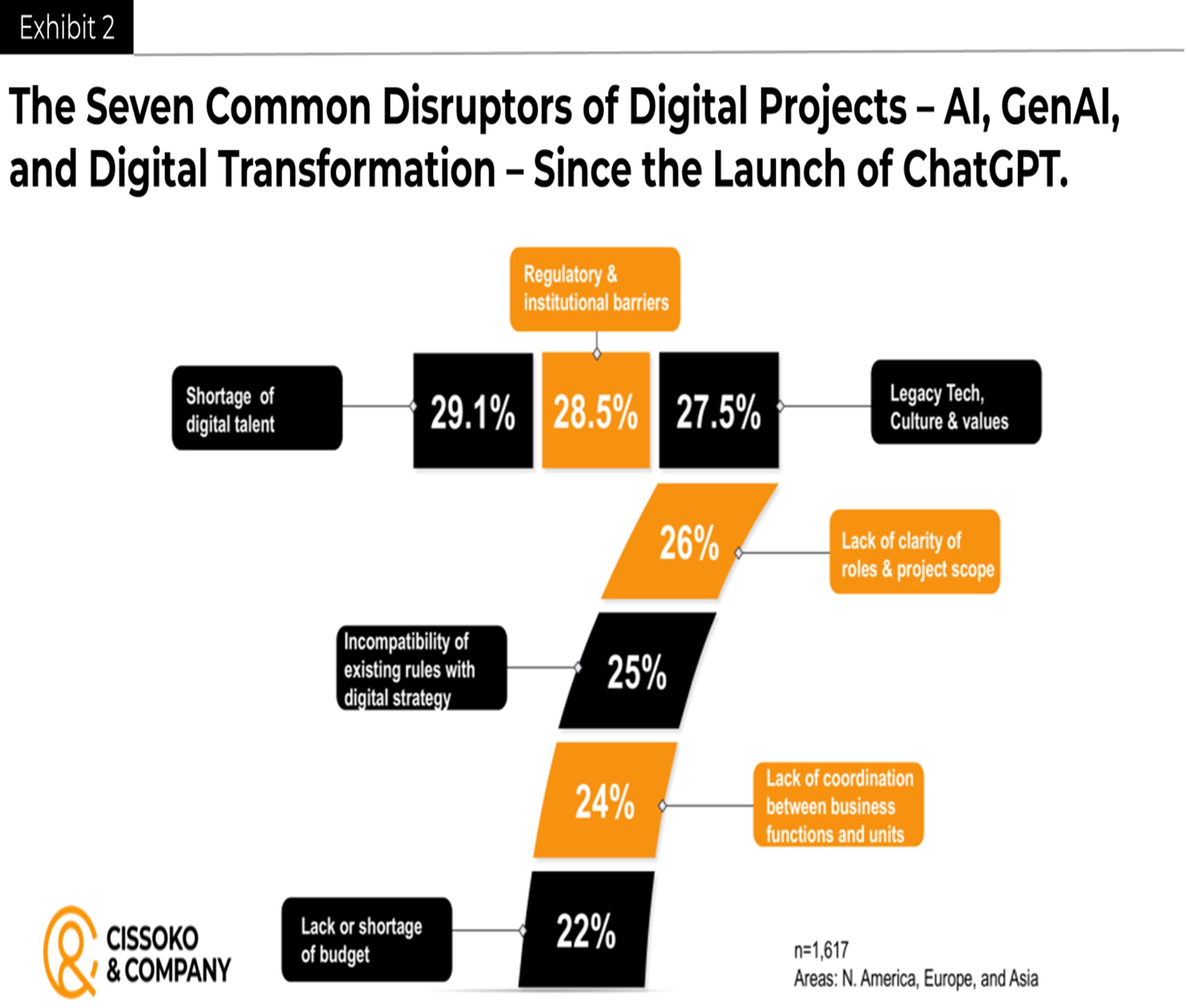
The legacy issues in technology, corporate culture, and values are interconnected factors that closely mirror the second-largest disruptor and have hindered meaningful digital projects. Being agile is essential, but it’s not enough; it can be obstructed by corporate politics and unhealthy work cultures.
Additionally, managing unstable team members in a high turnover environment can be challenging. Many respondents indicate that a lack of role clarity, combined with project scope creep, has disrupted their ongoing projects in this age of AI.
The hallmark of bureaucracy is an overabundance of rules, policies, and hierarchical layers throughout the organization. If left unchecked, this can lead to unnecessary complexity for simple decisions, sacrificing speed for corporate politics and gamesmanship. Consequently, it has created substantial obstacles for digital projects that require swift approval for agile teams during the coordination of multiple projects across functions and business units.
Lastly, budgeting—or the lack thereof—and inaccurate forecasting in a swiftly changing world of continuous product updates can derail successful projects and obstruct the potential for capturing market share. In summary, beyond the economic potential of the much-hyped generative AI, companies must pay closer attention to these seven pitfalls when managing their digital projects globally and ensure they are well-prepared before embarking on strategic initiatives, given the scarcity of corporate resources.
Get in Touch
We will respond to your message as soon as possible.
Insights to Win
Subscribe to our newsletter for in-depth analysis, reports, and our perspectives on business and economic issues related to the Japanese market and the global economy.