
Japan’s ¥120 Trillion Money® Game™ 2024: Winning CEOs’ Strategy Agenda
Winning in the strategy game in the age of artificial intelligence (AI) requires moving beyond abstractions and “theoretical junk food” to focusing on practical realities. Our experience and the evidence reveal a common truth: substantial opportunities continue to rise across industries in Japan, the Land of the Rising Sun. Japan’s GDP numbers often provide an incomplete or misleading picture of the country’s business performance. As a result, many leaders have become complacent, while others have missed valuable opportunities by disregarding Japan based on superficial macroeconomic data.
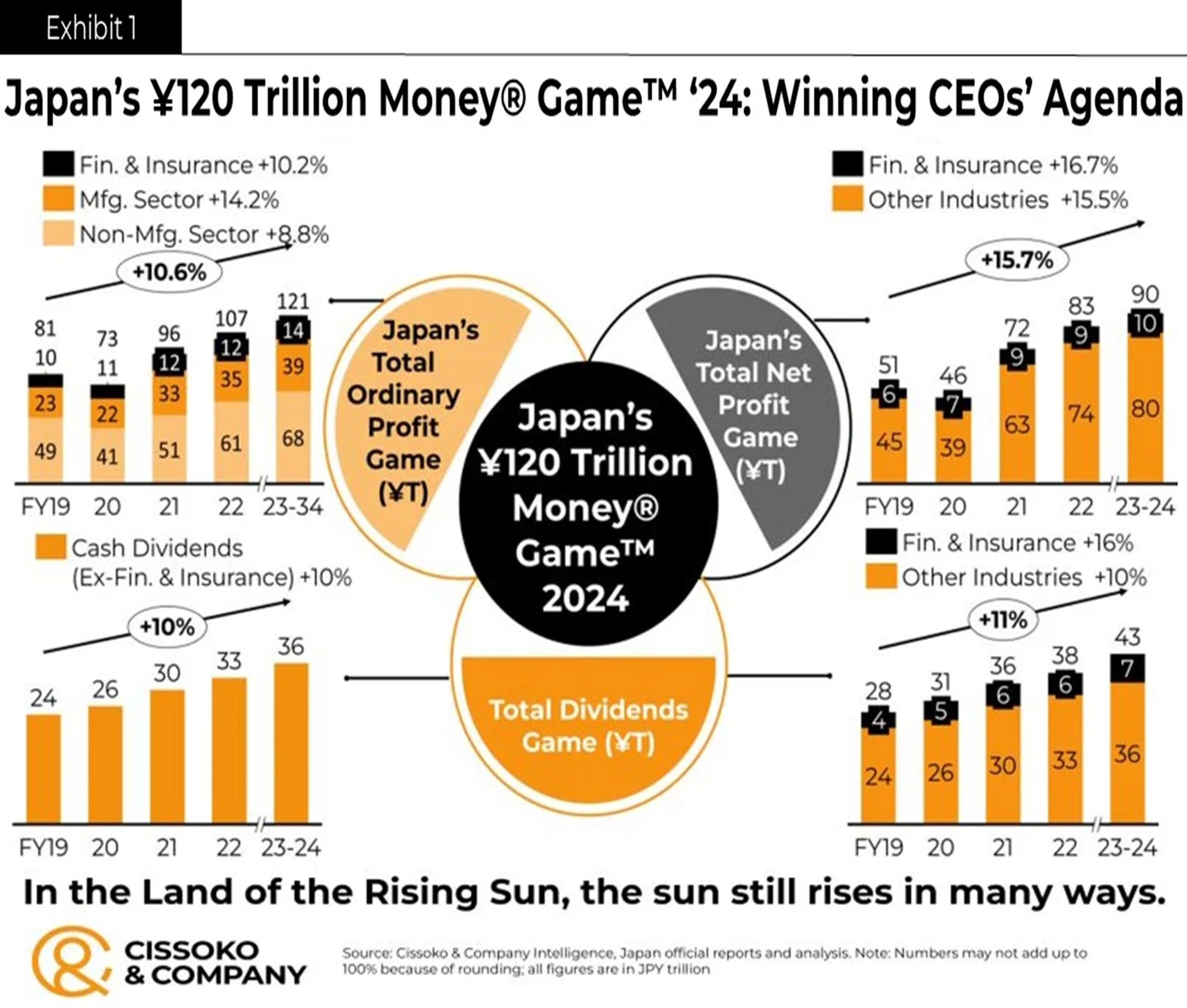
As a Tokyo-based strategic management consultancy, we see a different path to understanding the Japanese market. Rather than focusing solely on GDP metrics, we analyze the country’s corporate profits and dividend trends. This approach, which we call Japan’s ¥120 Trillion Money® Game™ 2024, aligns with the approximate total ordinary profit of Japanese firms in fiscal year 2023-24. This perspective helps CEOs zero in on actual business opportunities, guiding them away from Japan’s broader GDP components, such as employee expenses (including salaries, bonuses, and directors’ compensation), taxes, public charges, and asset expenditures. While such data points are informative, our experience shows that many leaders are most interested in national corporate profit and profit margin trends.
Indeed, a narrow focus on listed companies is insufficient to fully understand Japan’s corporate landscape, as only a tiny fraction of firms are publicly traded. Consequently, relying on insights from listed companies alone does not provide a comprehensive view of Japan’s corporate performance or help accurately assess how a company or industry compares to broader trends. Our analysis demonstrates that beyond the headline stories of Japan’s slowing GDP and aging population, the country continues to present significant and often-overlooked growth opportunities.
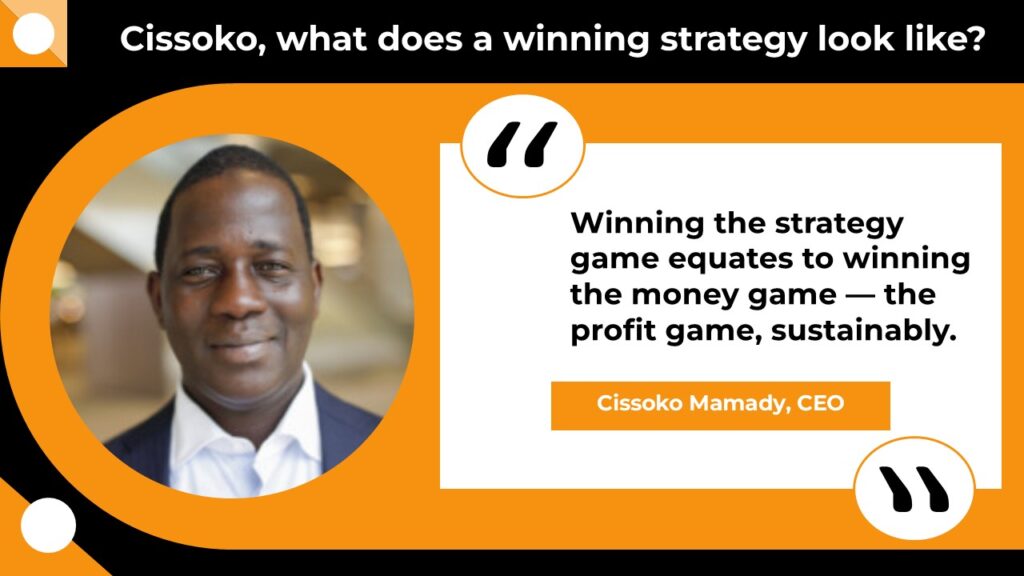
Our CEO, Cissoko Mamady, has long championed the strategy theorem: “Winning the strategy game equates to winning the money game—the profit game, sustainably.” Guided by this principle, our analysis focuses on the corporate profit landscape. He believes that, while various theories, frameworks, and approaches exist within the strategy, they share a common purpose: to achieve tangible results that materialize in corporate financial reports through operating or net profits or in the stock market through share prices. Ultimately, these indicators boil down to one essential element: money. As sustainability becomes central to all purpose-driven firms, the concept of “sustainable” is integral to our approach. Thus, Cissoko Mamady’s theorem comes to life: “Winning the strategy game equates to winning the money game—the profit game, sustainably.”
This strategic insight offers invaluable lessons for the next generation of CEOs navigating AI’s rapid evolution. A common pitfall we have observed is the confusion between productivity and profitability, as generative AI creates excitement and ambiguity globally in boardrooms. With AI promising transformative efficiencies, it is crucial to remain grounded in profit-centered analysis emphasizing sustainable growth over short-term productivity gains.
Japan’s ¥120 Trillion Money® Game™ 2024
Over the five years leading up to March 31, 2024, Japan’s GDP and total corporate profits have presented contrasting narratives. While GDP growth remains modest, and Japan has recently lost its position as the world’s third-largest economy to Germany, corporate profits tell a different story. Japan’s corporate ordinary profit has grown at over 10%
CAGR from fiscal year 2019 through FY 2023-24, adding roughly ¥10 trillion annually. Similarly, total corporate net profit increased at a CAGR of 15.7%, reaching ¥91 trillion, while dividend payouts rose by 11% to ¥43 trillion over the same period.
Profit margins underscore Japan’s understated economic strength. The average operating profit margin (EBIT) rose by 24% from 3.7% in FY 2019 to 4.6% in FY 2024, and the average ordinary profit margin increased by 35% to 6.5%. These figures highlight a steady improvement in corporate profitability, often overlooked amid the emphasis on Japan’s GDP and demographic trends.
The Bigger-Takes-All Landscape in Japan
While a winner-takes-all dynamic shapes many digital platforms, Japan’s market operates on a “bigger-takes-all” principle. In this environment, larger companies tend to be more profitable. For example, in FY 2023-24, 63% of Japan’s total ordinary profit (amounting to ¥121 trillion) was generated by companies with over ¥1 billion in capital, translating to ¥63 for every ¥100 in ordinary profit. This was followed by the first tier of mid-sized companies, with capital between ¥100 million and ¥1 billion, which captured 15% of the total ordinary profit, or ¥15 out of every ¥100.
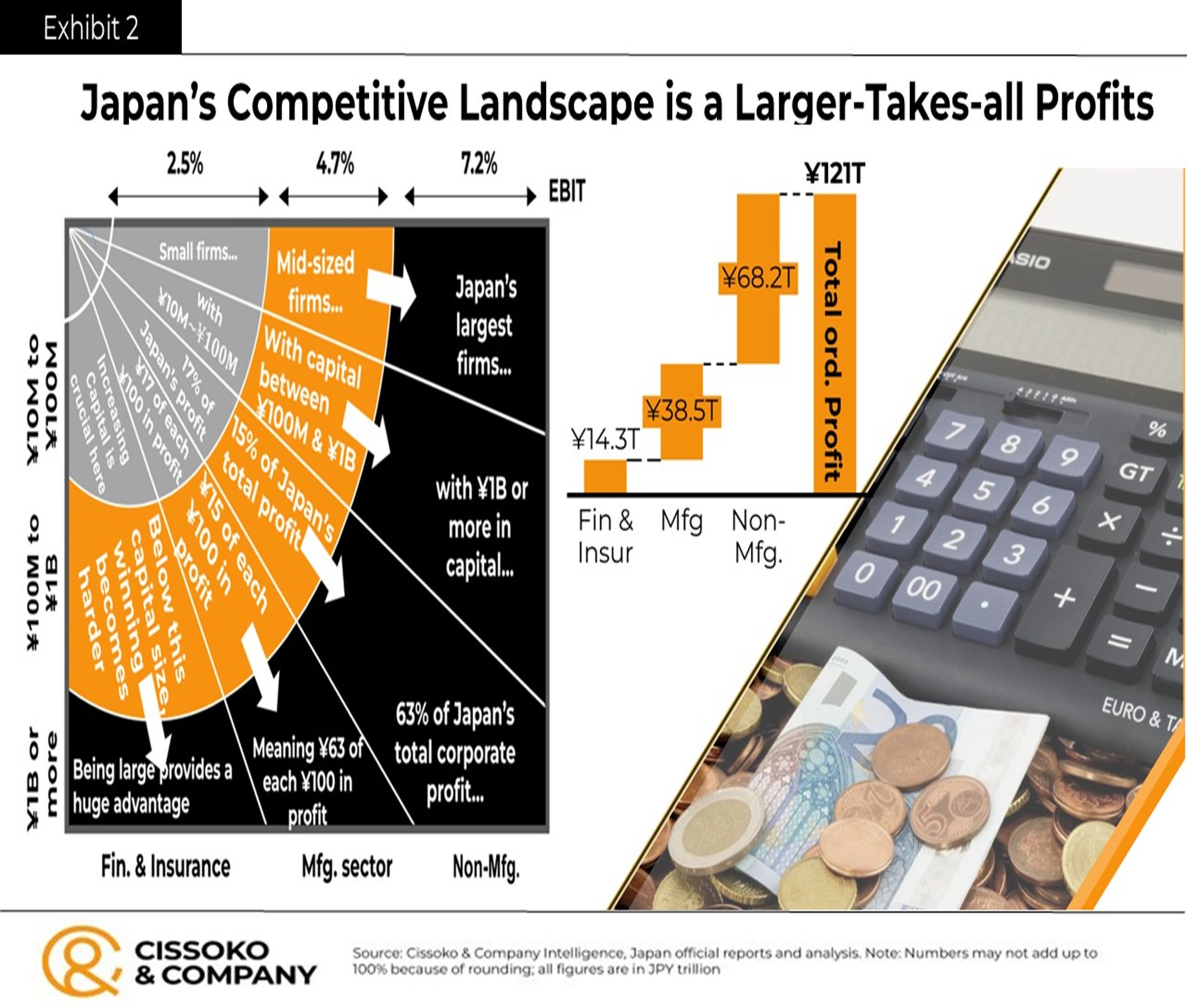
Next were mid-sized firms with capital between ¥10 million and ¥100 million, accounting for 17% of total profits, or ¥17 per ¥100. The smallest firms, with capital under ¥10 million, claimed the remaining 5%, or ¥5 per ¥100 of total profit.
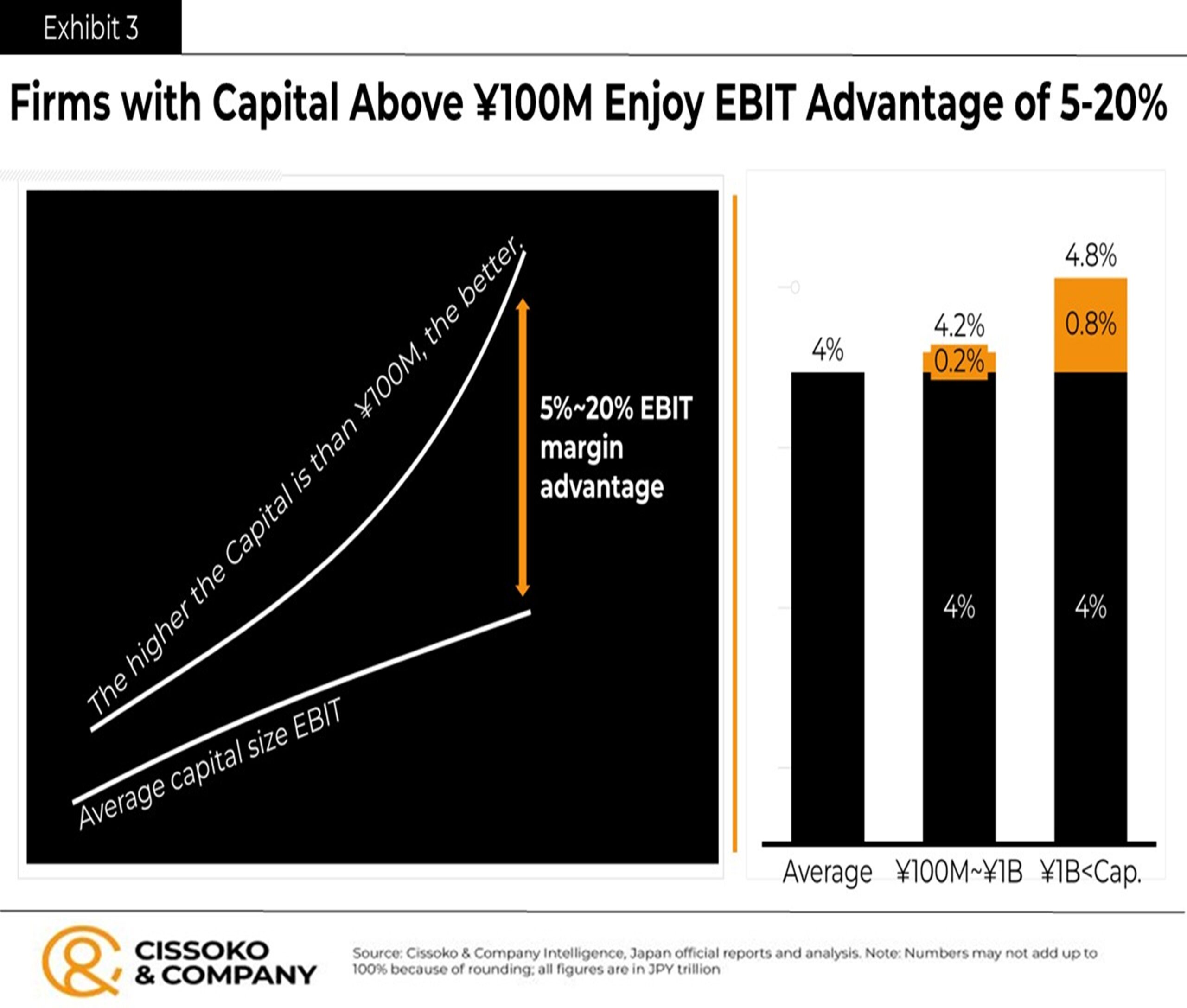
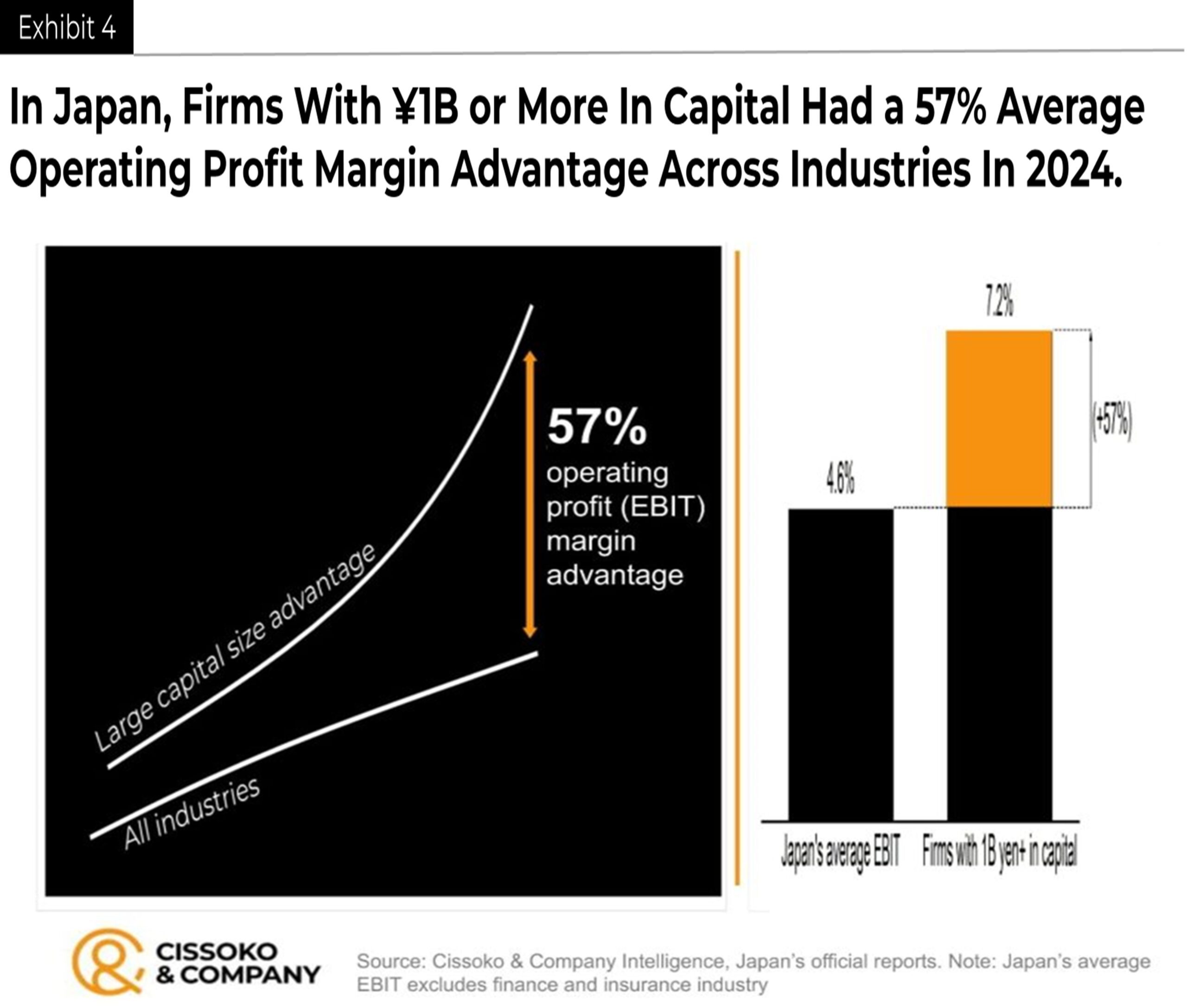
Our analysis shows that, in Japan, capital size is a more influential factor than industry in determining profitability. For instance, companies with capital above ¥100 million enjoy an operating profit margin advantage ranging from 5% to 20%. Firms with capital exceeding ¥1 billion across various industries benefit from a significant competitive edge, boasting an average operating profit margin advantage of 12%.
Reimagining Strategy in Japan’s Economy
Japan’s GDP, while informative, can mislead leaders by masking the true opportunities in corporate performance. The concept of Japan’s Money Game® provides a clearer picture of where value is generated, allowing leaders to identify trends, competitive strengths, and business opportunities that might otherwise go unnoticed.
In the evolving strategic landscape, winning sustainably in Japan’s market calls for an emphasis on the metrics that matter most. This framework underscores a critical lesson: real growth and long-term success stem from sustained corporate profit performance, not merely GDP. CEOs and business leaders who understand this will be better positioned to harness Japan’s unique opportunities, outpace their competitors, and achieve enduring success in a rapidly changing world.
Get in Touch
We will respond to your message as soon as possible.
Insights to Win
Subscribe to our newsletter for in-depth analysis, reports, and our perspectives on business and economic issues related to the Japanese market and the global economy.