
Strategy in times of Trade Wars and Geopolitical Tensions
The global economy and geopolitical landscape have changed significantly over the past few years. Ongoing conflicts in Ukraine and the Middle East continue to affect stability, and there is an increasing risk of nuclear war. Additionally, the possibility of trade wars looms as the incoming US administration prepares to implement planned tariffs on goods and services from many countries worldwide.
In addition to all these emerging threats, CEOs and business leaders must balance artificial intelligence’s potential and risk. What do business leaders need to do in this volatile and uncertain business environment?
Communications
To succeed and thrive, leaders must prioritize building resilience at all levels of their organization while remaining geopolitically aware. This means being mindful of their communication, including their comments and exchanges with external stakeholders during events and with the media. It’s important to remember that everything they say will be scrutinized in the countries where they have business interests. Poor or unclear communication can lead to serious consequences, including product backlash and unfavorable policies directed at the company they lead.
Consider this: Tadashi Yanai, the CEO of Japan’s apparel giant Uniqlo, made a comment during an interview with the BBC that sparked outrage across China, particularly on the country’s leading social media platforms. Many users have proposed boycotting Uniqlo’s products, like the boycott that occurred against H&M a few years ago over the same region’s cotton issues.
Dodging “Disruption Bullets” Coming From the Global Frontiers
The term “pivot” is not just relevant to startups. Our experience shows that during disruptive times, one of the most effective strategies for business leaders is to pivot whenever possible.
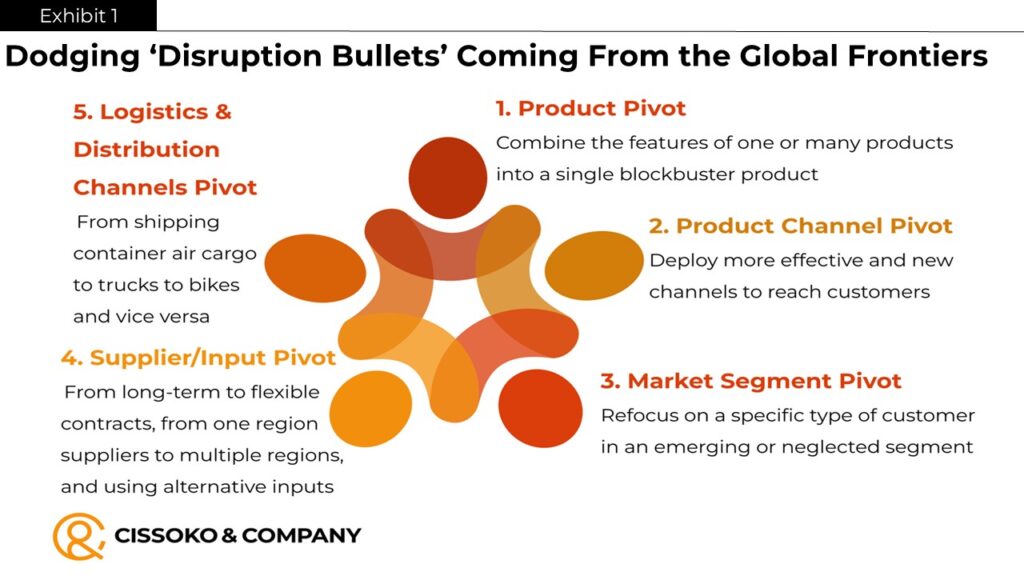
In other words, a business’s survival will depend on its ability to adapt quickly to a changing environment. This can involve various types of pivots, such as altering products or services, changing customer channels, targeting different customer segments, modifying the business model, or adjusting supplier relationships.
Build Adaptive Scenario Models for the Next few Years
Now is the time, more than ever, to develop comprehensive scenarios for various plausible business environments. It’s essential to consider responses and mitigation strategies related to tariffs, just-in-time (JIT) supply chain partners, sourcing and procurement, manufacturing locations, talent shortages, and salary levels. Indeed, if COVID-19 has taught us anything, it’s that putting all your eggs in one basket can be a dangerous gamble, especially when faced with unforeseen challenges.
China plays a vital role for many large organizations in terms of input materials, as it produces over 70% of chemicals (active agents) used in pharmaceuticals, as well as intermediary and finished goods. However, it will be essential to reduce exposure to these supply chain dependencies sooner than many business leaders would like.
We do not anticipate that US-China trade tensions will disappear anytime soon. While the situation may worsen in certain industries more than others, the ripple effects will likely be felt across the board. If history serves as a guide, larger trade deficits with the US will probably increase a country’s likelihood of being targeted by the incoming administration. As such, beyond China, countries such as Germany, Japan, Vietnam, and Canada are likely to be at the top of the list, including many in the European Union, through varying degrees.
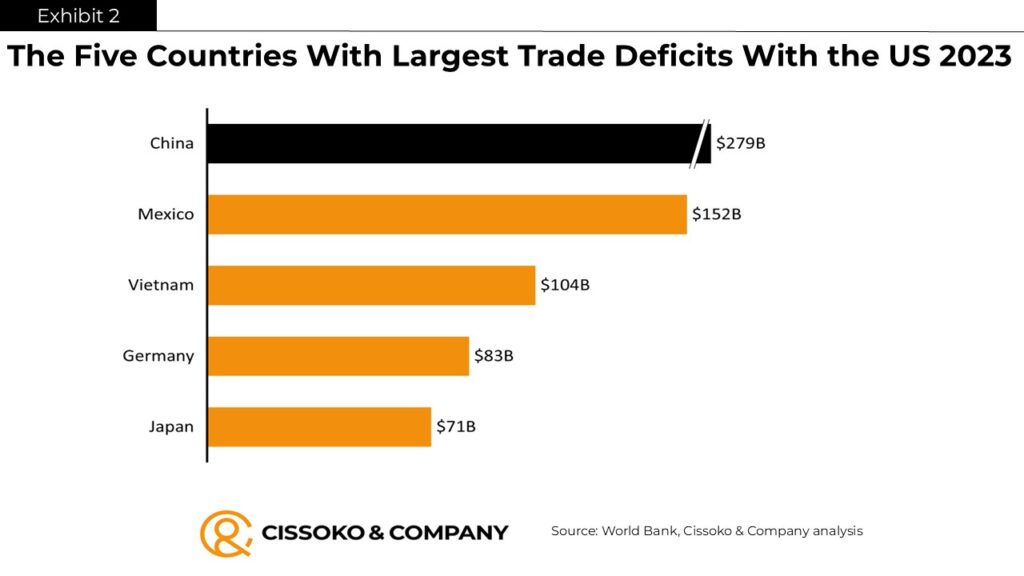
Mexico, which has now become a key strategic location for many car manufacturers and part suppliers, will face intense scrutiny. The incoming US administration has promised exorbitant tariffs and other regulations that may disrupt the emerging supplier networks of nearly all companies, making it increasingly difficult to succeed with the “Made in Mexico” label in the United States with respect to the trade deficit with the country. For example, in 2022, the US trade and services deficit with Mexico exceeded $130 billion, with US imports from Mexico growing by 19% to reach $455 billion. All these trade aspects will likely be closely examined soon.
The business landscape has changed dramatically in recent years, leading to the need for a new strategy focused on thriving instead of merely surviving. This shift is due to the convergence of various disruptive forces that could have significant implications for managing a multinational corporation, especially for leaders accustomed to the rules-based global order of the early 21st century.
Get in Touch
We will respond to your message as soon as possible.
Insights to Win
Subscribe to our newsletter for in-depth analysis, reports, and our perspectives on business and economic issues related to the Japanese market and the global economy.