
The Talent Game: Winning Japan’s Digital Talent Competition in the age of AI
The confluence of Japan’s aging population, the migration of skilled professionals to destinations such as Australia, and a tight labor market has put the country’s talent shortage on full display, which is anticipated to exacerbate in the forthcoming years.
In the era of Generative AI, the importance of digital talent is exceedingly significant on a global scale, especially in Japan, which is confronting a persistent and substantial decrease in its working-age population. What is the current talent landscape, and how is it projected to evolve by 2030? We contend that several essential charts illustrating the competitive landscape can provide a comprehensive overview of Japan’s labor market for current and prospective market entrants.
Digital talent landscape from 2015 to 2030
The mean scenario based on Japan’s demographic projections of 1.5% to 2.5% suggests that by 2030, the shortage of digital talent in IT-related fields will reach 590,000 people, more than twice the talent shortage experienced in 2015.
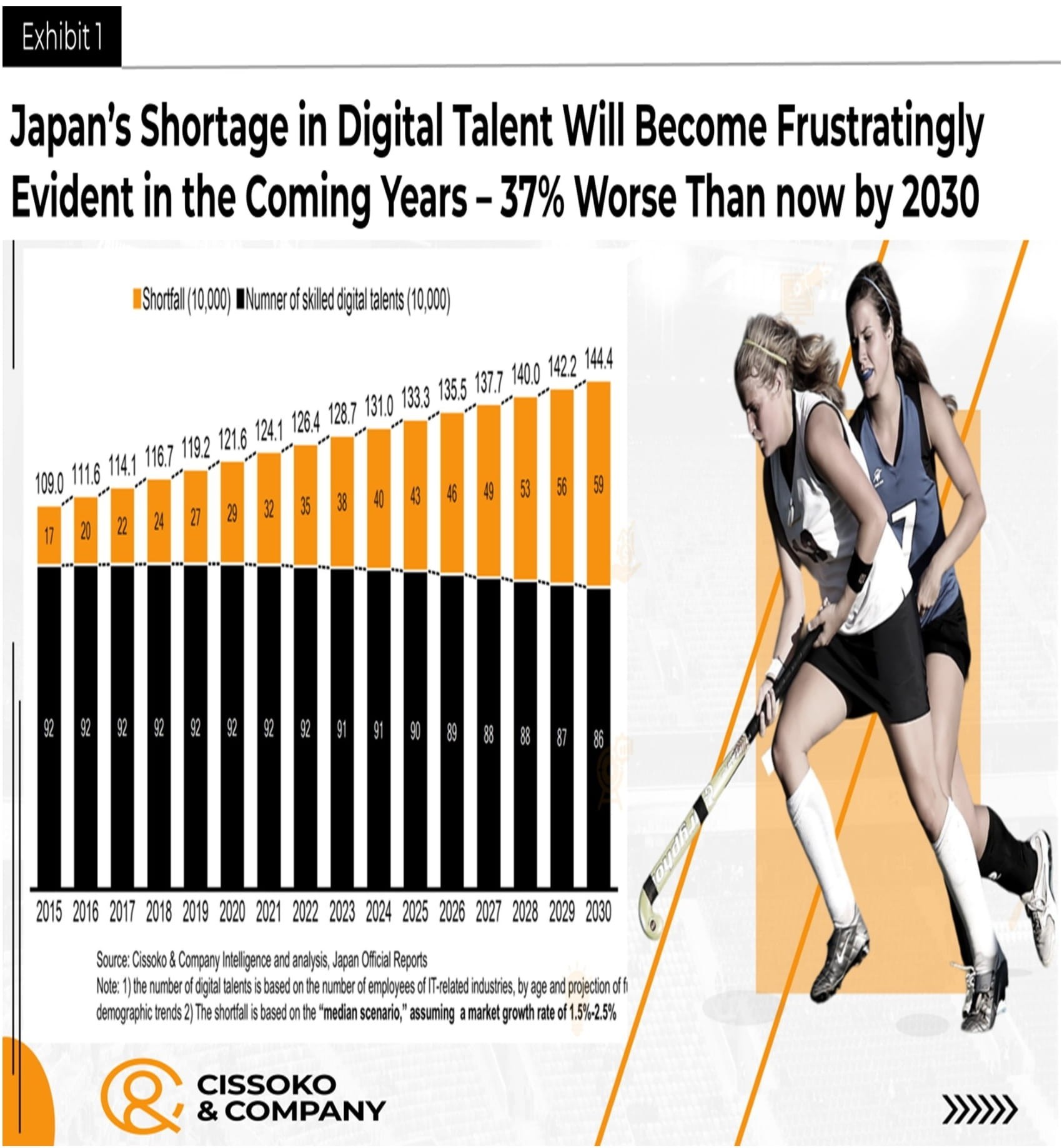
In other words, compared to the projected digital talent shortage of 430,000 in 2025, the situation in 2030 will represent an additional 37% shortfall over the existing trouble companies face, which is very concerning by any standard.
New Job Market Entrants – University Students and Compensation
The economy has benefited Japanese students as the labor market becomes more competitive. Specifically, in March 2025, the ratio of job offers to final-year students increased by 1%, reaching 92.6% compared to the previous year.
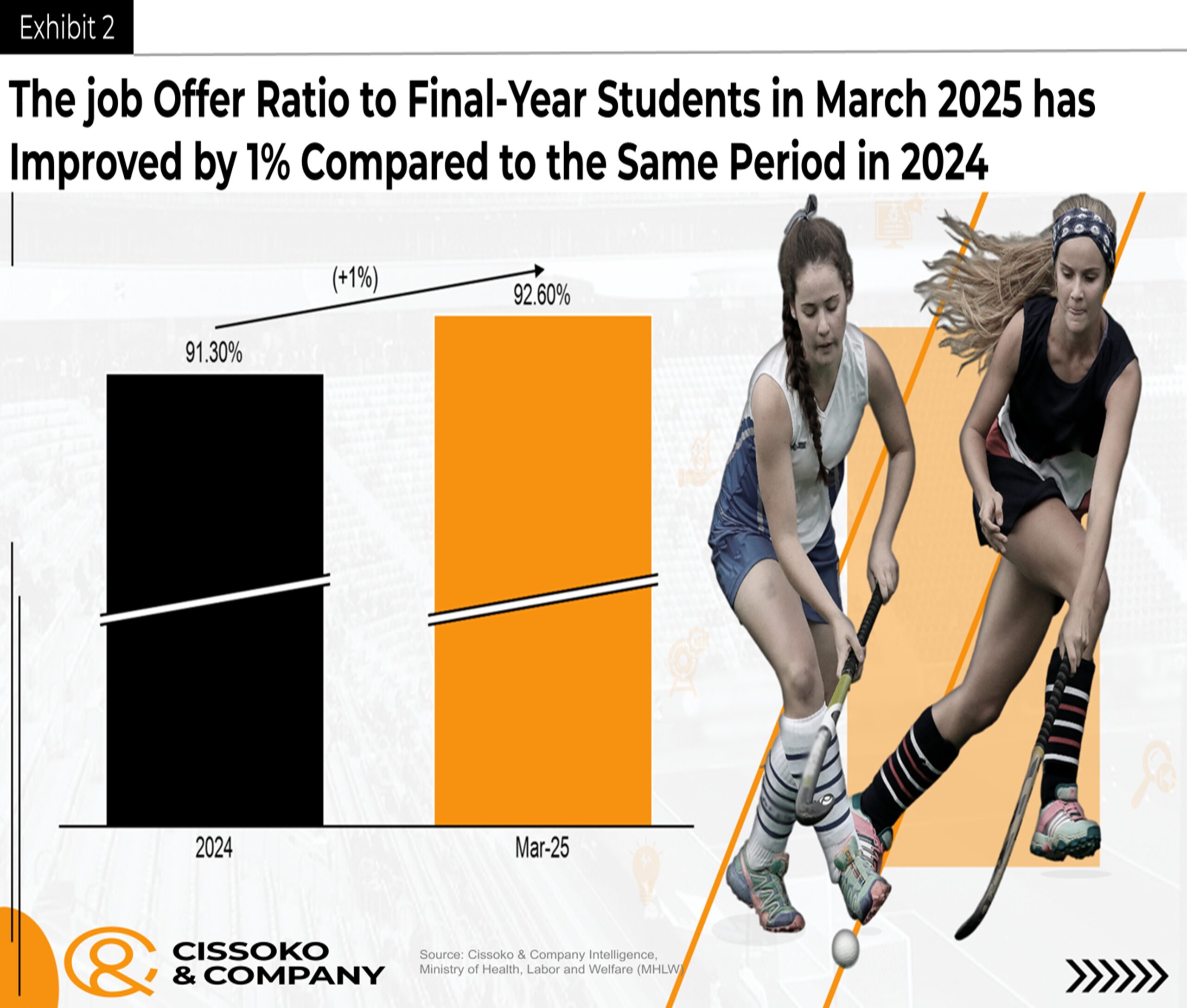
Similarly, employee compensation has improved by 1.4% and 1.6% in both real and nominal growth rates, respectively. As a result, approximately 8% of these students remained available for companies that joined the recruitment process late, highlighting the intense competition for talent, even amidst trade wars.
New Job Openings and Active Job Openings
Although the active job openings-to-applicants ratio has not changed, remaining at 1.6%, the new job openings-to-applicants ratio has increased by 3%, reaching 2.32% in early 2025 compared to the same timeframe last year.
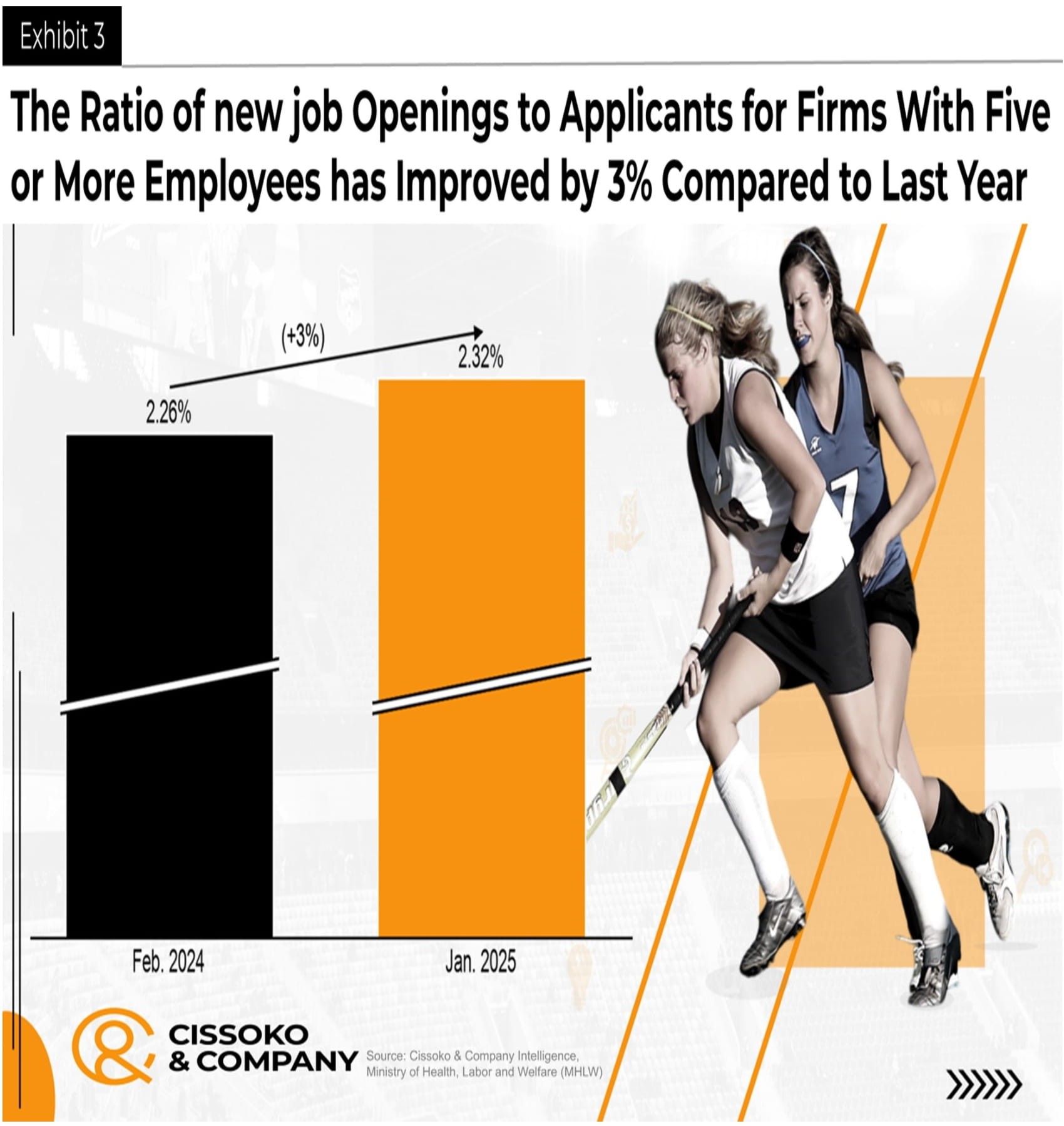
In other words, job seekers have more opportunities and choices than before. That is, they can afford to reject job offers with fewer benefits provided.
Salaries and Wages
The implications of a constrained labor market are predictable; wages generally exhibit an upward trajectory under such circumstances, and Japan is no exception. Full-time employees at organizations with five or more individuals reported a 2% increase in their cash earnings in March 2025 compared to the previous year.
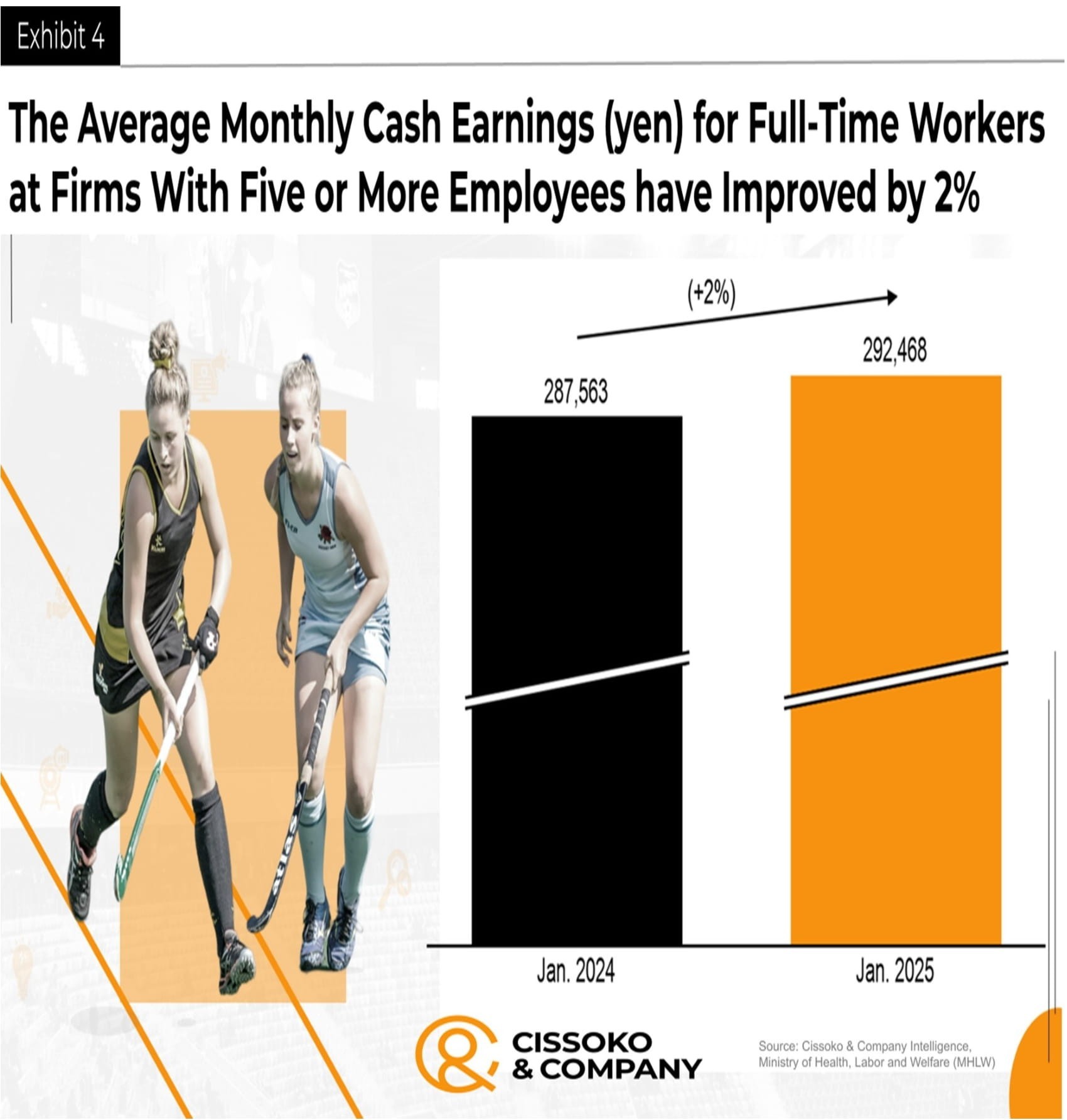
This increase is commendable, considering the unprecedented inflationary pressures currently afflicting the nation. Consequently, numerous households nationwide endeavor to manage the rising costs of groceries and energy, not to mention the price of rice, which has surged by over 100% in many supermarkets.
Achieving success in Japan during this era of artificial intelligence necessitates a three-pronged talent strategy that integrates workforce planning, employee upskilling and reskilling, and a compensation package that surpasses market standards within a firm’s respective industries. Furthermore, this strategy should integrate critical components such as equitable treatment, acknowledgment, and enhanced working conditions, among others.
Get in Touch
We will respond to your message as soon as possible.
Insights to Win
Subscribe to our newsletter for in-depth analysis, reports, and our perspectives on business and economic issues related to the Japanese market and the global economy.