
Growth Strategy in the age of GenAI: Talent Game, What Sets Winners Apart? — CEO Brief
For decades, growth strategies have been synonymous with marketing and related practices in many circles, including C-suites and boardrooms. However, in this emerging world dominated by agentic AI driven by instructional tasks, how can purpose-driven firms outperform the competition while safeguarding their employees?
There is no doubt that artificial intelligence—particularly generative AI—will profoundly impact businesses worldwide. This impact will be amplified by the arrival of low-cost, open-source disruptors from China, such as DeepSeek and Manus (an AI agent). Indeed, the emergence of these inexpensive chatbots and AI agents from a developing country has raised numerous questions about the efficiency and extravagance of Western AI players, who continue to secure billions of dollars for their AI infrastructure.
Even more concerning is artificial intelligence’s impact on jobs across all industries. A recent study revealed that over 28% of employees might experience at least 50% of their professional tasks disrupted by GenAI. Unlike previous technological disruptions that primarily affected repetitive or routine processes, the emerging tools and chatbots powered by large language models (LLMs) are designed for cognitive tasks, mainly performed by white-collar workers.
The recent rise of agentic AI has amplified further worries, given the imminent threat it poses to those creating algorithms. With the intensifying hype surrounding generative AI’s potential efficiencies and productivity boosts, many companies, particularly struggling ones, have reverted to their old strategies—especially downsizing their workforce—in their efforts to cut costs.
Upskilling and Reskilling – Addressing a Skills gap
Moreover, recognizing that many professionals’ skills are ill-suited to today’s business requirements, academics and consultants—including business leaders like Mickey Mikitani of Rakuten and Jack Ma of Alibaba—have advocated for workforce upskilling and reskilling in recent years. Our experience suggests that many firms have heeded this advice; however, many still view training as a waste of scarce corporate resources, which they believe could be better utilized for more productive endeavors, such as investing in innovation, given the intensifying competition.
Growth Strategy in the Age of GenAI: Talent Game, What Sets the Winners Apart?
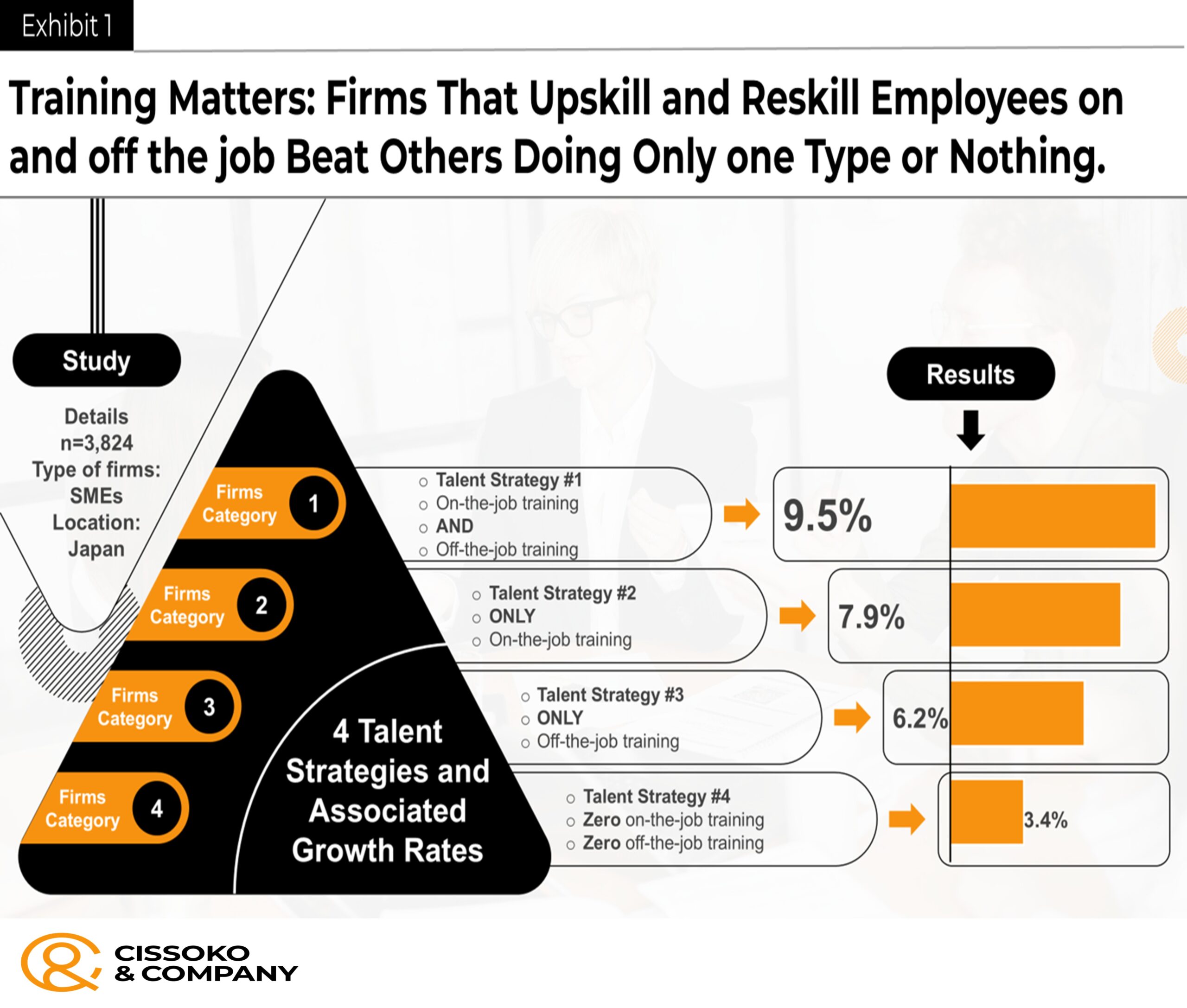
To gain a deeper understanding of talent strategies and their impact on growth, we surveyed and analyzed nearly 4,000 small and medium-sized enterprises (SMEs) across various industries and economic sectors, with employee counts ranging from 50 to 300. First, we categorized them into four groups as follows:
1) Category 1: Companies that train their employees both on and off the job – we call this the combination strategy.
2) Category 2: Companies that train their employees only on the job – we refer to this as the only on-the-job strategy.
3) Category 3: Companies that train their workers only off the job – we call this the only off-the-job strategy.
4) Category 4: Companies that provide no training – we refer to this as the zero-training strategy.
5) Finally, we assessed the mean sales of the four categories over five years and their associated growth rates.
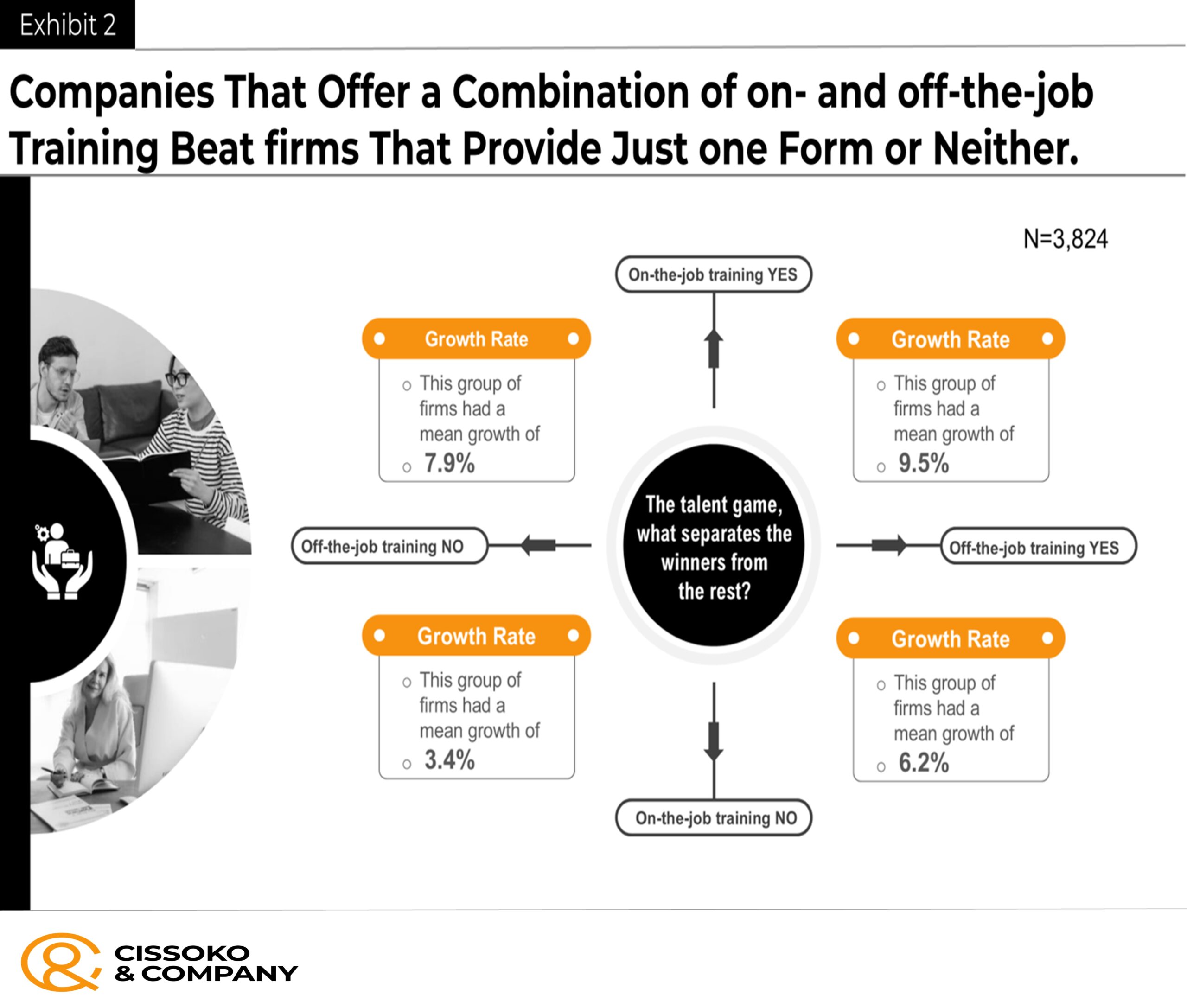
Key Study Findings
The study reveals a hard truth about many corporate training strategies. For one thing, while implementing solely an on-the-job training strategy is better than off-the-job training alone, it fails to unlock companies’ full growth potential.
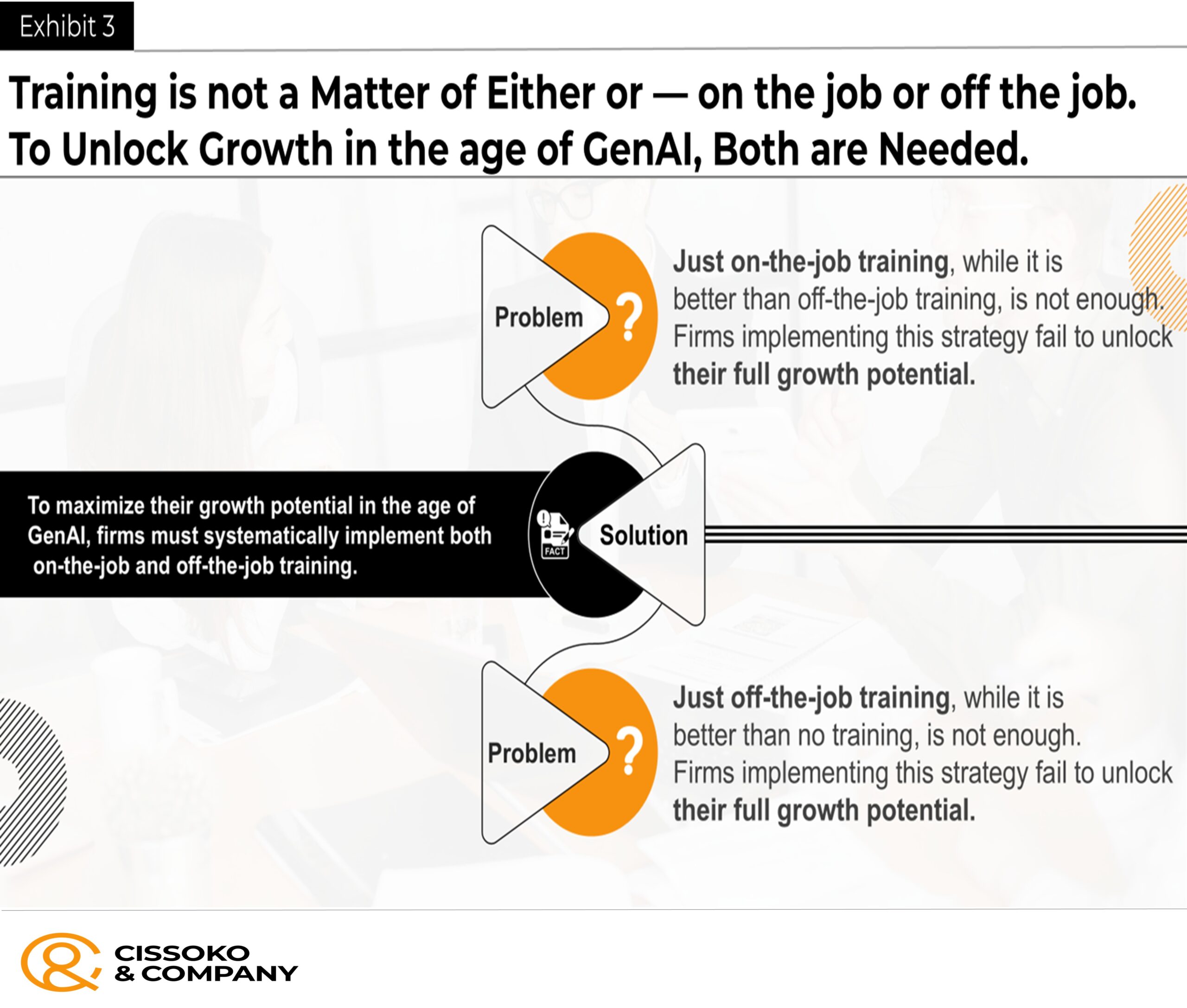
Similarly, having only an off-the-job training strategy, while an improvement over a zero-training strategy, does not fully unlock the growth potential of firms employing this strategy alone.
The transformative strategy combines on- and off-the-job training to truly unlock a firm’s growth potential in the age of generative AI.
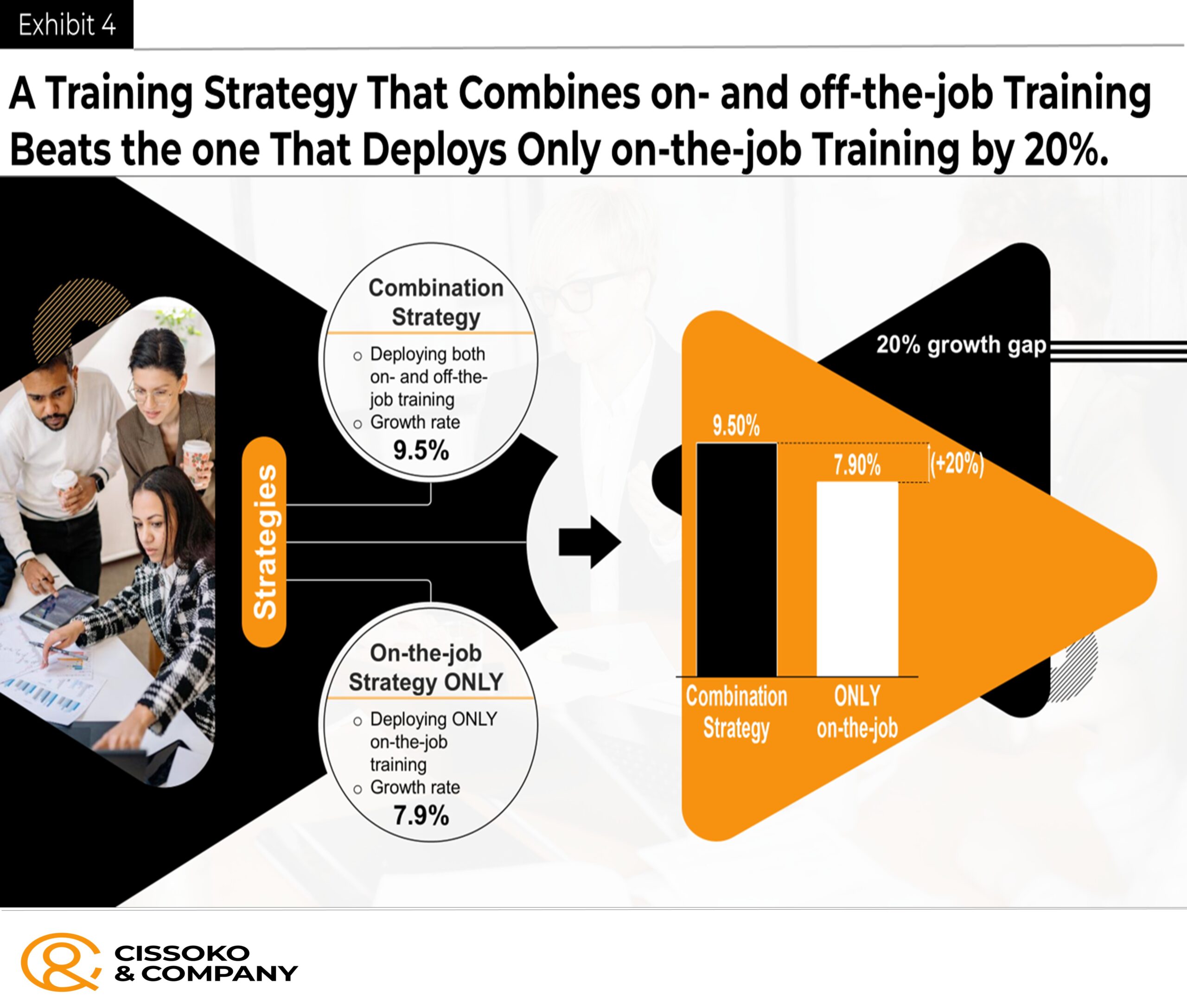
In fact, we found that the combination strategy outperformed all three other strategies, particularly the zero-training strategy. This winning strategy surpasses the only on-the-job training strategy by nearly 20% in terms of growth.
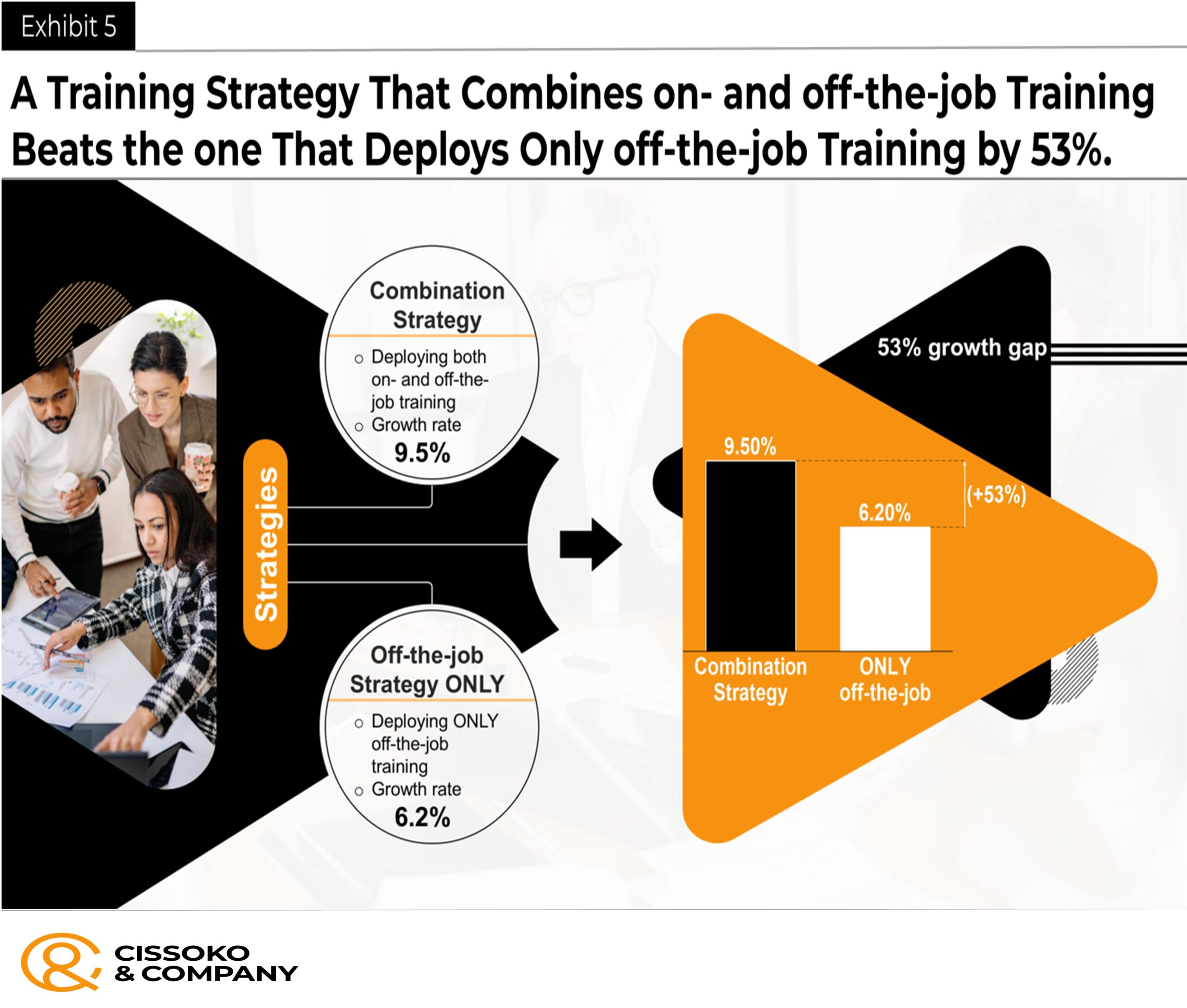
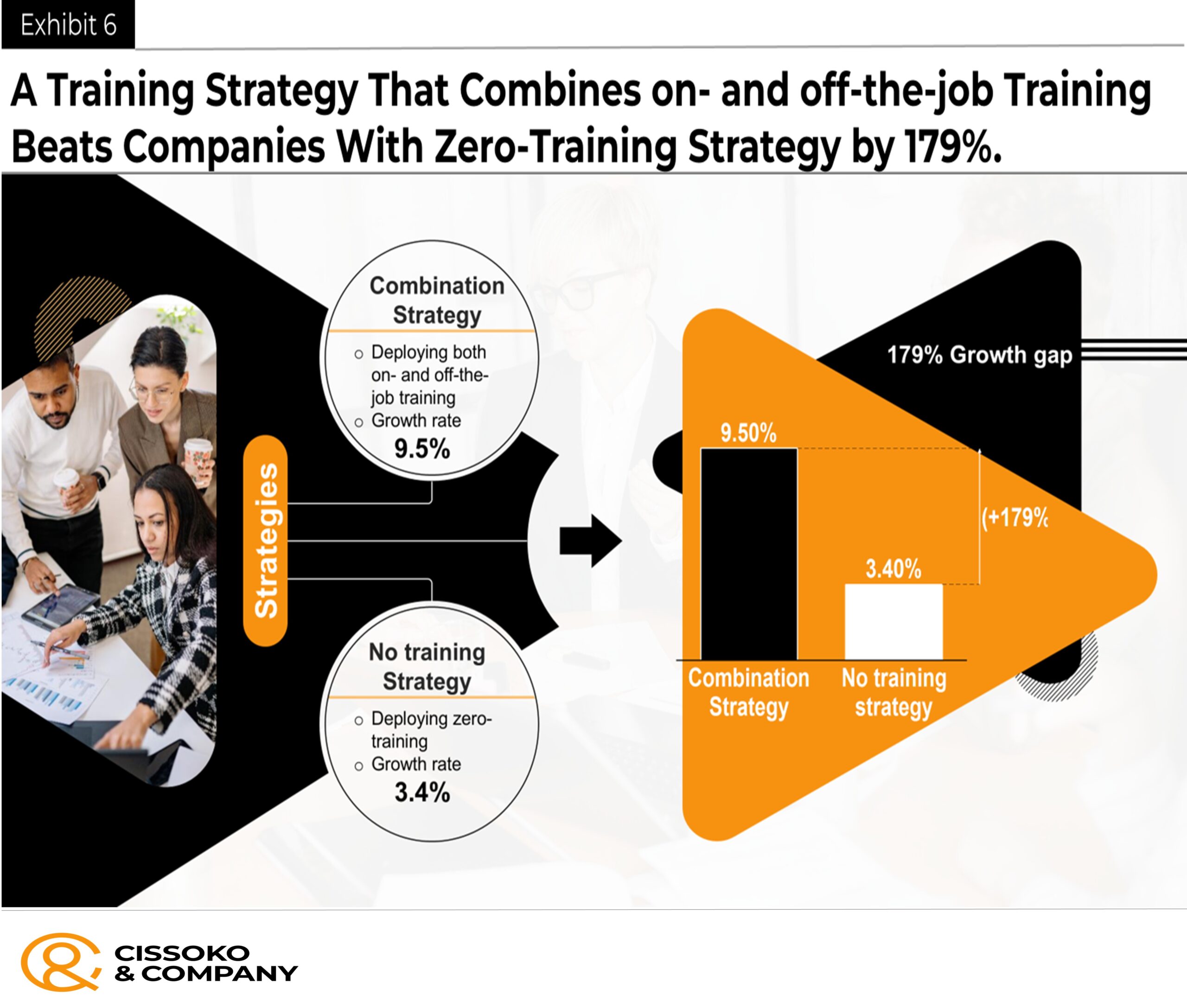
Compared to the off-the-job training strategy (only), companies deploying the combination strategy outperform this category of firms by over 50% in sales growth. A similar story emerges when we compare the performance of firms with zero-training strategies—the least effective strategies—to companies with combination strategies. The latter outperformed the former significantly, and the growth gap stood at 179%.
In short, it must be clear that training matters for growth in the age of artificial intelligence. As our world becomes increasingly dominated by technology and tools that continually evolve, requiring training to master and unlock their full productivity potential, upskilling and reskilling must become a top priority across C-suites and boardrooms worldwide to stay competitive.
Get in Touch
We will respond to your message as soon as possible.
Insights to Win
Subscribe to our newsletter for in-depth analysis, reports, and our perspectives on business and economic issues related to the Japanese market and the global economy.