
Japanese Firms: Strategy, Risks and Resilience in a Disrupted Global Economy
Prioritizing risk management and cultivating resilience is essential for thriving rather than merely surviving the numerous disruptions in the global economy. Our examination of over 1,300 firms has again demonstrated the value of resilience and the business implications of neglecting it.
Since Donald Trump’s inauguration, businesses of all sizes across the global economy have navigated one of the most tumultuous periods in modern history. Describing this era as disruptive is likely an understatement, considering the rapid, sweeping, and at times markedly flawed array of policies devised by the Trump administration.
These policies encompass substantial “Liberation Day” tariffs imposed on both traditional adversaries of the United States and its allies, alongside a concerted campaign against diversity, equity, and inclusion. In addition, unprecedented threats directed at American academic institutions — both private and public — and their students and faculty have exacerbated this disruption. A barrage of executive orders, threats to free speech, and mass deportations have exacerbated this upheaval. This period is poised to be remembered as one of the most chaotic in the annals of US economic history.
Given the business risks and threats posed by these new, exceptionally vengeful policies, stock markets experienced a sharp decline, resulting in the loss of trillions of dollars. Yields on US Treasuries displayed unprecedented behavior, moving inversely and indicating a clear lack of confidence in the nation’s trajectory, while the dollar’s value decreased.
Moreover, before the completion of Trump’s first hundred days in his second term, the president’s coercive strategies, which compelled business and government leaders to invest in the United States against their will, positioned him as one of the most significant threats and bullies — reminiscent of science fiction — that many CEOs and political leaders have encountered in their lifetimes.
Many Japanese Large Firms and SMEs are Highly Integrated Into the Global Economy
It is essential to acknowledge that only a limited number of companies, including small and medium-sized enterprises (SMEs) in Japan, can truly regard themselves as insulated from the disruptions occurring in the global economy. Primarily, the convergence of decreasing trade barriers alongside technological advancements over recent decades has intertwined industries, regions, and economies with respect to talent acquisition, sourcing, business process outsourcing, and supply chains, thereby establishing an efficient yet non-resilient global value chain.
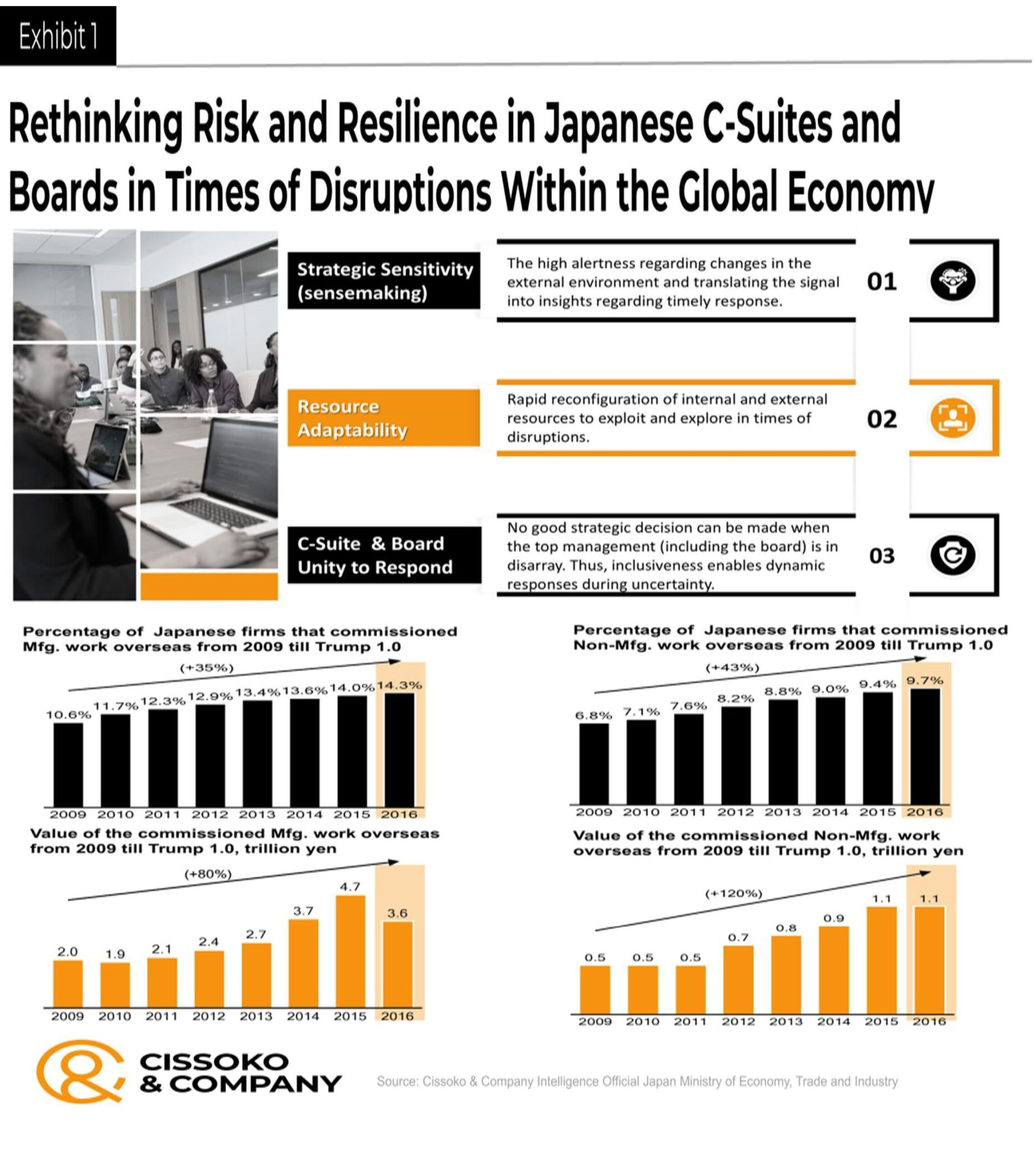
This integration has expedited the dissemination of disruptions from one region or economy to another at a pace that has often surpassed the awareness of many business leaders, as evidenced by the disturbances caused by the COVID-19 pandemic. For instance, while largely unnoticed from 2009 until the commencement of the first Trump administration, the percentage of commissioned work undertaken by Japanese firms overseas in the manufacturing sector increased by 35%, reaching 14.3%, while their non-manufacturing work surged by 43% to reach 9.7% — representing ¥3.6 trillion and ¥1.1 trillion, respectively (Exhibit 1).
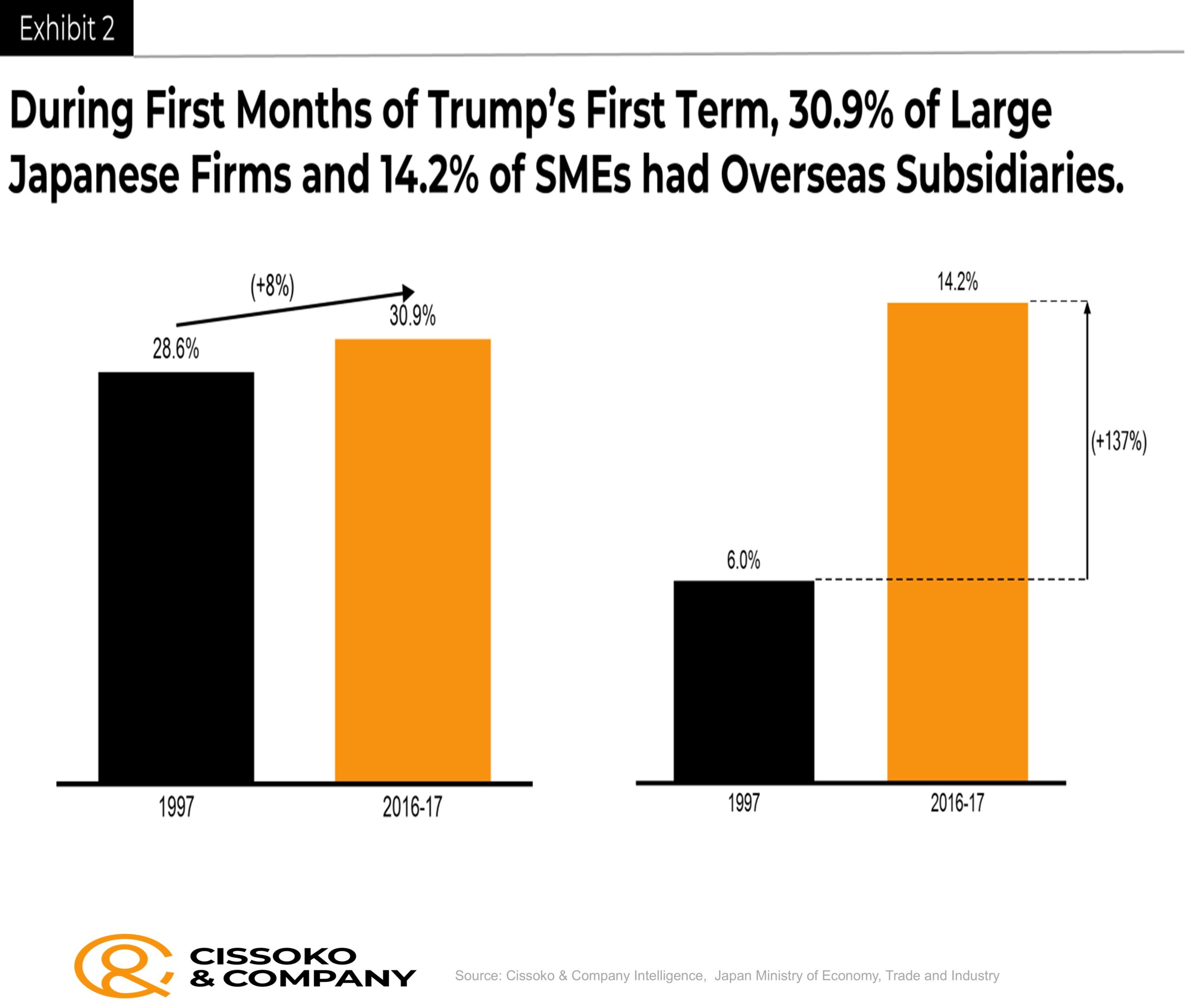
Moreover, during President Trump’s first term, the proportion of Japanese enterprises possessing overseas subsidiaries stood at 30.9% for large corporations and 14.2% for small and medium-sized enterprises — an increase of 15.2% and 136% from 1997, respectively (Exhibit 2).
This integration into the global economy presents both opportunities for growth and potential risks that Japanese firms must diligently navigate to maintain their resilience.
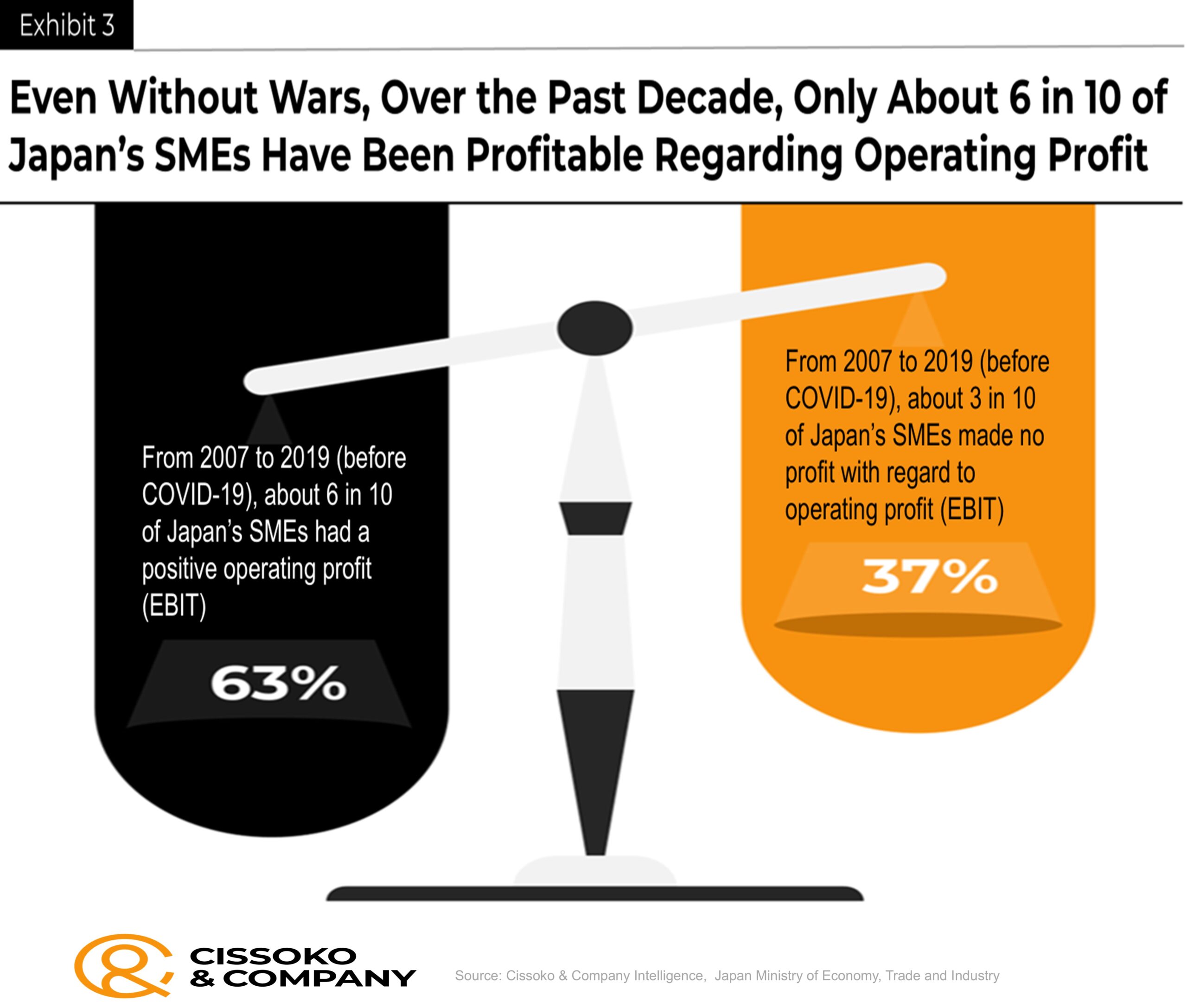
Conducting a proactive threat assessment concerning exposure is essential, as data indicates that, even in the absence of escalating trade wars and non-tariff barriers, numerous Japanese SMEs continue to experience unprofitability — only 63% have reported profitability in recent years (Exhibit 3).
Lessons on Risk Management and Resilience From Past Disruptions
To quantitatively assess the value of building resilience before it is too late, we conducted a study to evaluate how two groups of firms perform when disruptions — economic or due to natural disasters — occur. The analysis identifies which category of firms emerges stronger or faster than the others within six months, after six months, and which category reaches pre-disruption performance levels more quickly.
Key Findings
Of the two groups (Exhibit 4), the first category consists of 659 firms that proactively managed risks by lowering exposure, focusing on short-term liabilities, creating contingency plans, seeking alternative suppliers and inputs, and ensuring asset insurance while considering various crisis duration scenarios. This group emerged stronger than the other category, with 658 firms failing to take meaningful risk management actions. They recovered more quickly within six months and performed better after the disruption. Additionally, only 7% of the 659 firms failed to recover compared to 19% in the other group, which did not prepare for worst-case scenarios and only acted reactively afterward.
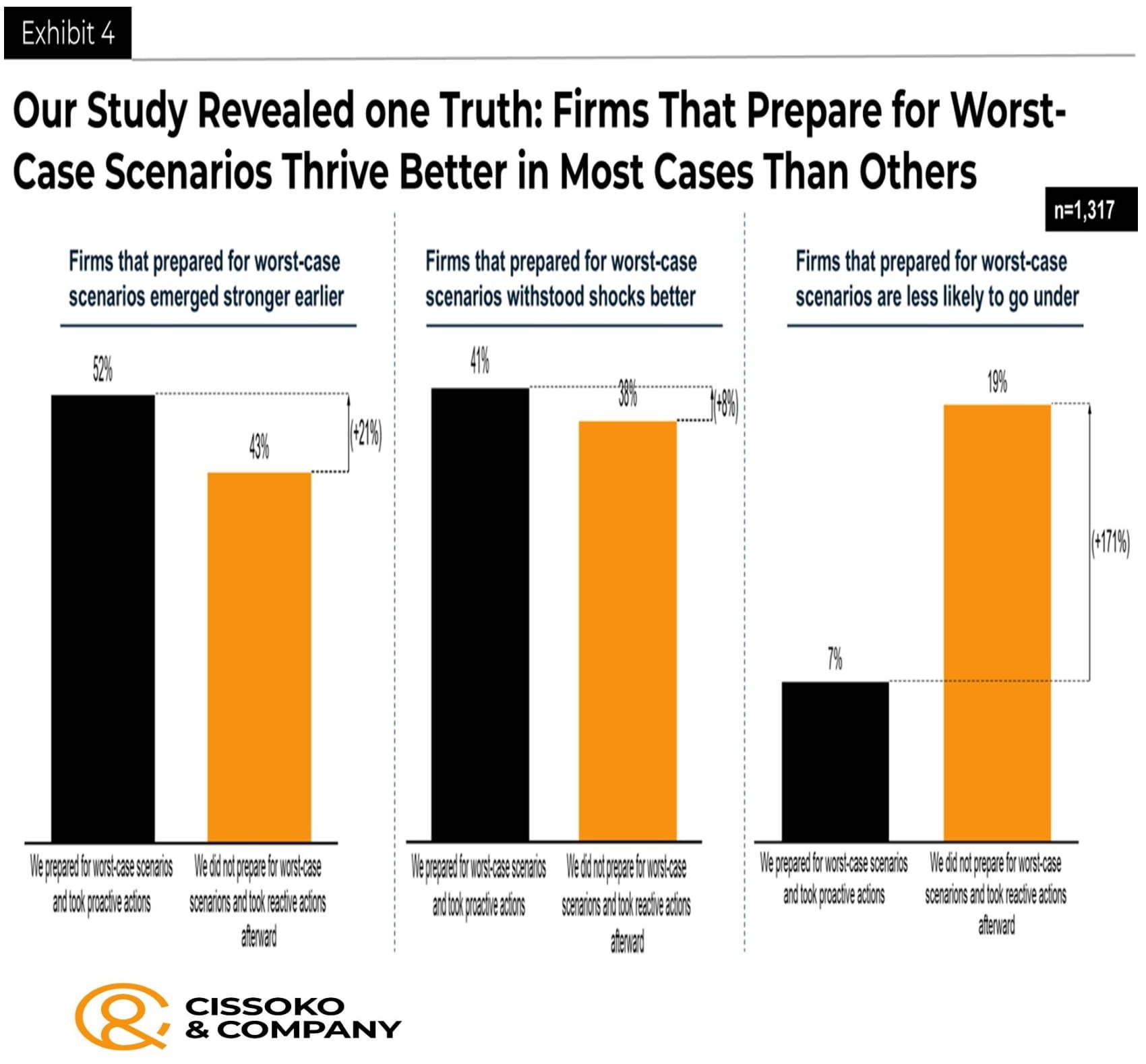
In conclusion, historical evidence indicates that numerous companies have encountered difficulties when they failed to proactively manage risks and develop resilience. This study underscores that in the current challenging environment characterized by trade wars, tariffs, and geopolitical tensions, the capacity to adapt and cultivate resilience can significantly distinguish a business and confer a competitive advantage.
Get in Touch
We will respond to your message as soon as possible.
Insights to Win
Subscribe to our newsletter for in-depth analysis, reports, and our perspectives on business and economic issues related to the Japanese market and the global economy.