
Strategy in Japan’s Payments and Cashless Industry in the age of GenAI — Report CEO Brief
Our analysis of the amount of cash carried by Japanese consumers in their wallets and the evolving trends in the usage of payment instruments, including why they prefer cash and what can be done to encourage consumers to use more cashless payments, provides insights into how players need to craft their strategies in this era of GenAI.
During this period of uncertainty, marked by trade disputes, increasing inflation, and technological advancements, the payment options available to Japanese consumers — namely, the instruments they use — have also evolved. To achieve success, participants in the payments industry, including financial institutions and retailers spanning the fast-moving consumer goods (FMCG) to consumer-packaged goods (CPG) sectors, must adapt their strategies accordingly.
The insights derived from this analysis are based on a survey with an equitable representation of males and females (50% each), across various age groups: 20-29 (10.4%), 30-39 (14%), 40-49 (17.3%), 50-59 (19.4%), 60-69 (15.4%), and 70 and older (23.7%). The survey encompasses all major regions of Japan, from Hokkaido to Hokuriku, Kanto to Kyushu, among others. In essence, the methodology employed is free from bias concerning population and sampling methods, taking into account residential registration.
Japan, a predominantly cash-based country, exhibits a unique pattern in the amount of cash that consumers carry in their wallets on a daily basis, even in an era dominated by artificial intelligence. Understanding the reasons behind this practice is particularly interesting, as it offers insights into consumer behavior and implications for cashless service providers. Moreover, it sheds light on Japanese consumers’ willingness to spend within the context of the Land of the Rising Sun.
Understanding how Much Cash Japanese Consumer Carry in Their Wallets
Indeed, most Japanese consumers (56%) carried less than 20,000 yen in their wallets, 14% between 20,000 yen and 29,990 yen, and just 3% carried 50,000 yen or more. As such, without cashless payments, firms in the premium and luxury segments will be competing for only 3% of consumers who can afford to buy at least some of their most affordable products with cash.
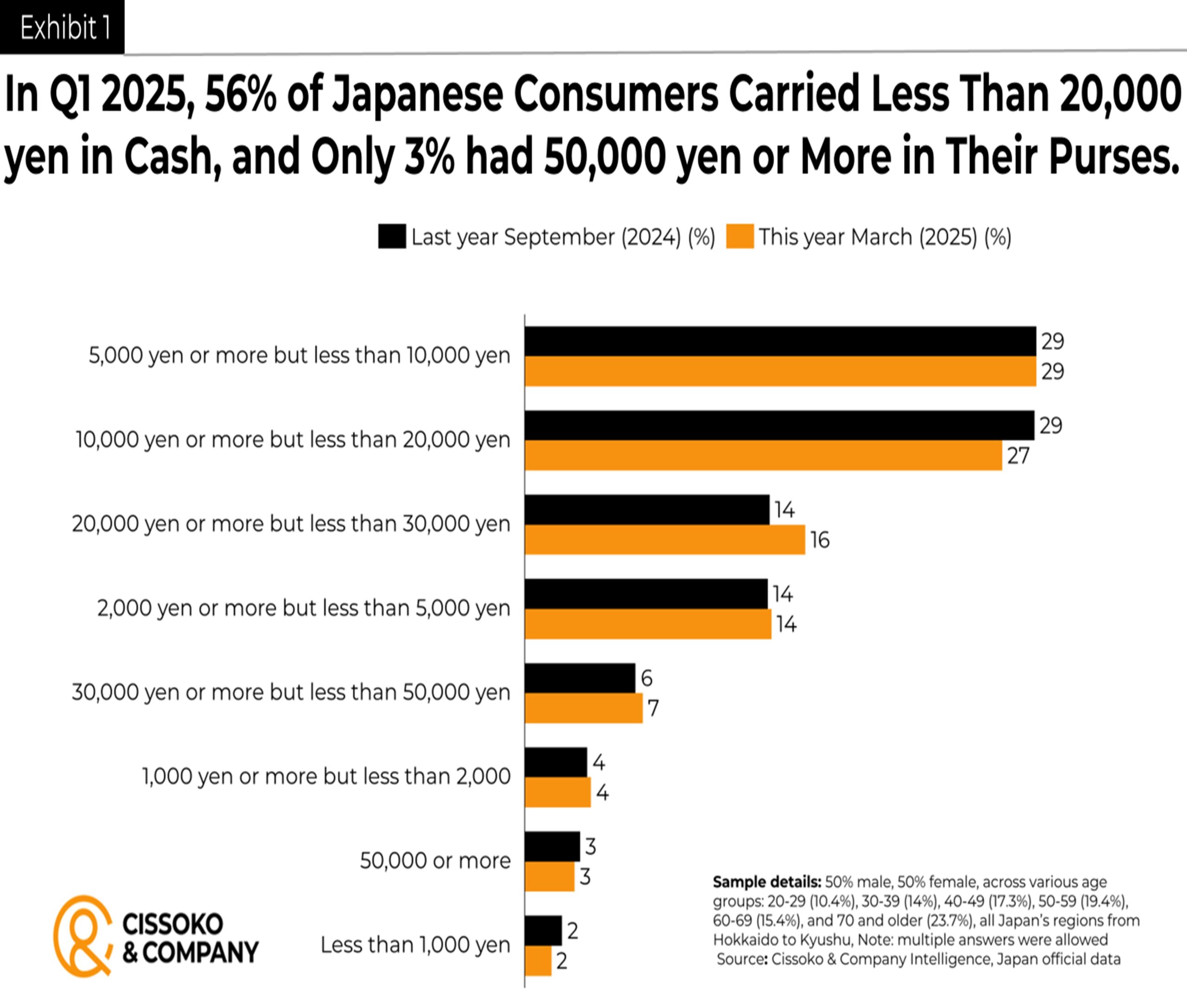
The exploration of the underlying reasons also reveals the issues inherent in cashless payments and similar technological tools, while highlighting the necessary product and service innovations required to appeal to the traditional cash users in this rapidly evolving retail environment.
In addition to preventing overspending and adhering to exemplary personal financial practices, when Japanese consumers are queried regarding their preference for cash over cashless alternatives, two primary issues emerge: many still perceive cashless payments as less seamless than providers typically assume, and elevated payment fees and commissions discourage numerous potential users nationwide.
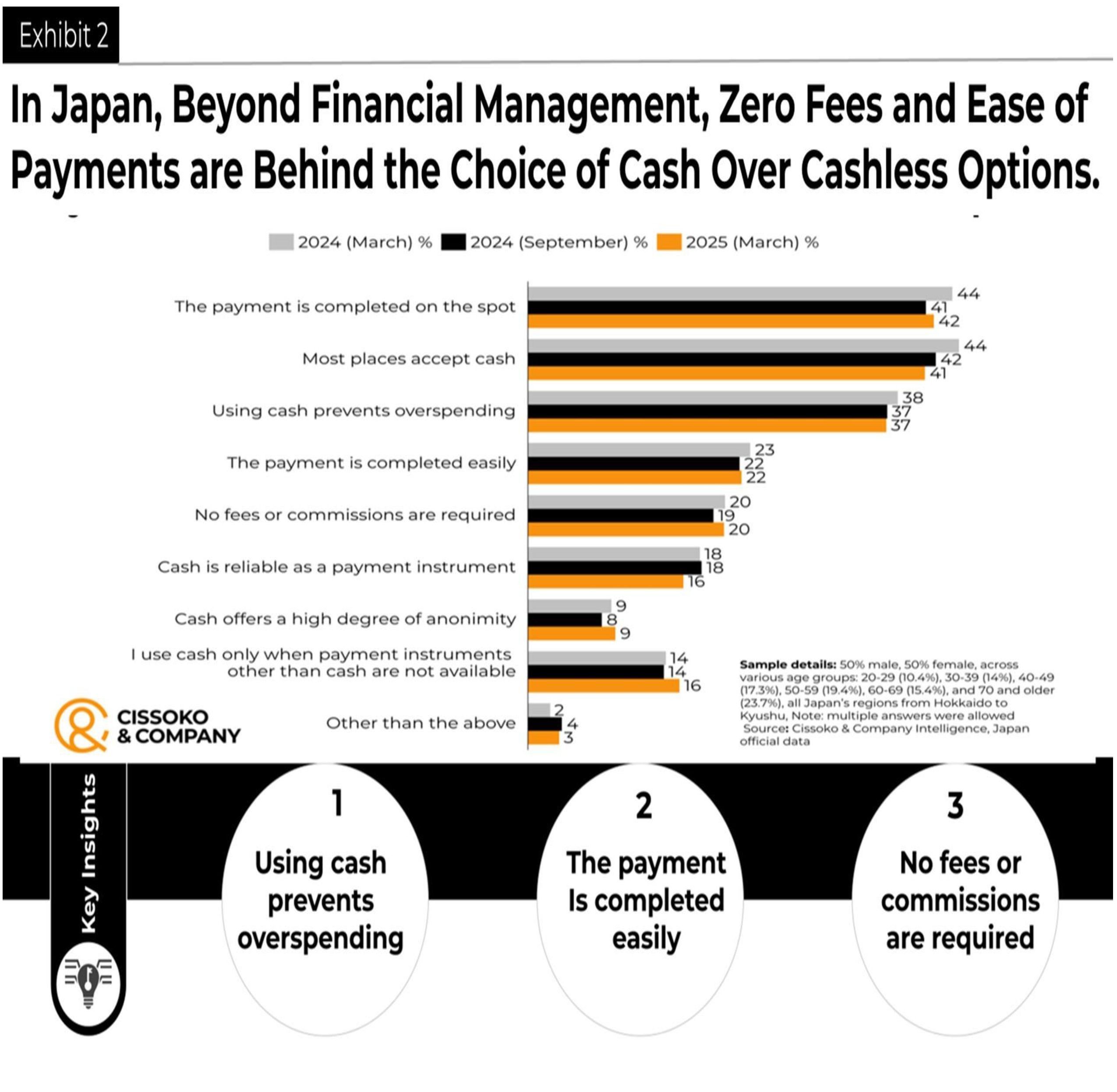
Consequently, stakeholders must address these concerns earnestly and craft winning strategies, including the underlying technologies, to remain competitive within Japan’s predominantly cash-centric society.
Turning Japan’s Heavy Cash Users Into Cashless Payment Fans
While numerous Japanese consumers still predominantly rely on cash for their purchasing activities, stakeholders within the payments sector can recalibrate their strategic initiatives and customize their offerings by directly addressing the concerns outlined below, while attracting them through the numerous benefits associated with cashless transactions in order of significance.
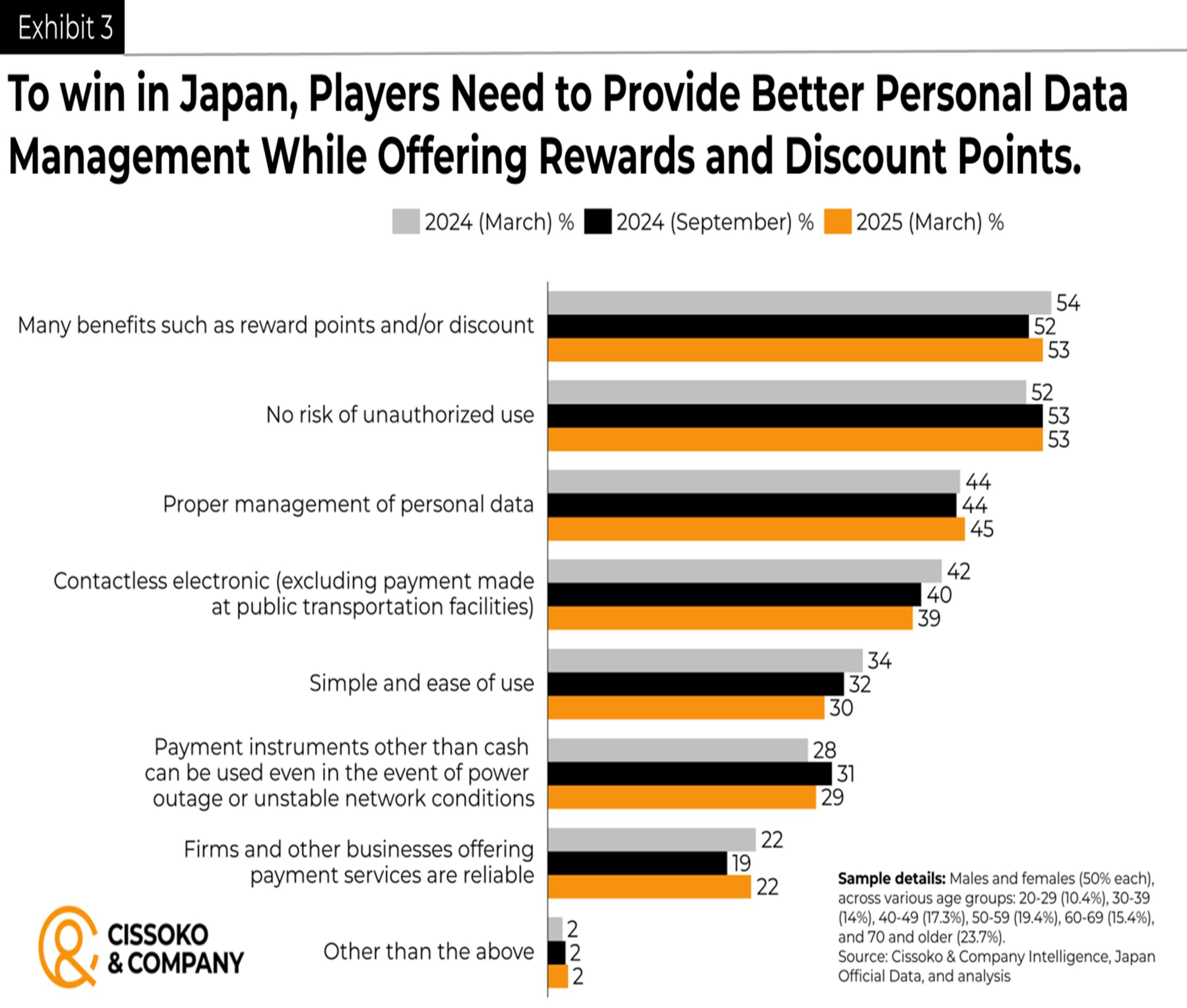
These encompass providing industry-leading standards in personal data governance and privacy, complemented by optimal reward points strategies and an enhanced user experience. For instance, our dialogues with diverse consumers indicate that ease of use constitutes a critical factor for busy individuals. This perspective partly explains the rising popularity of contactless payment methods.
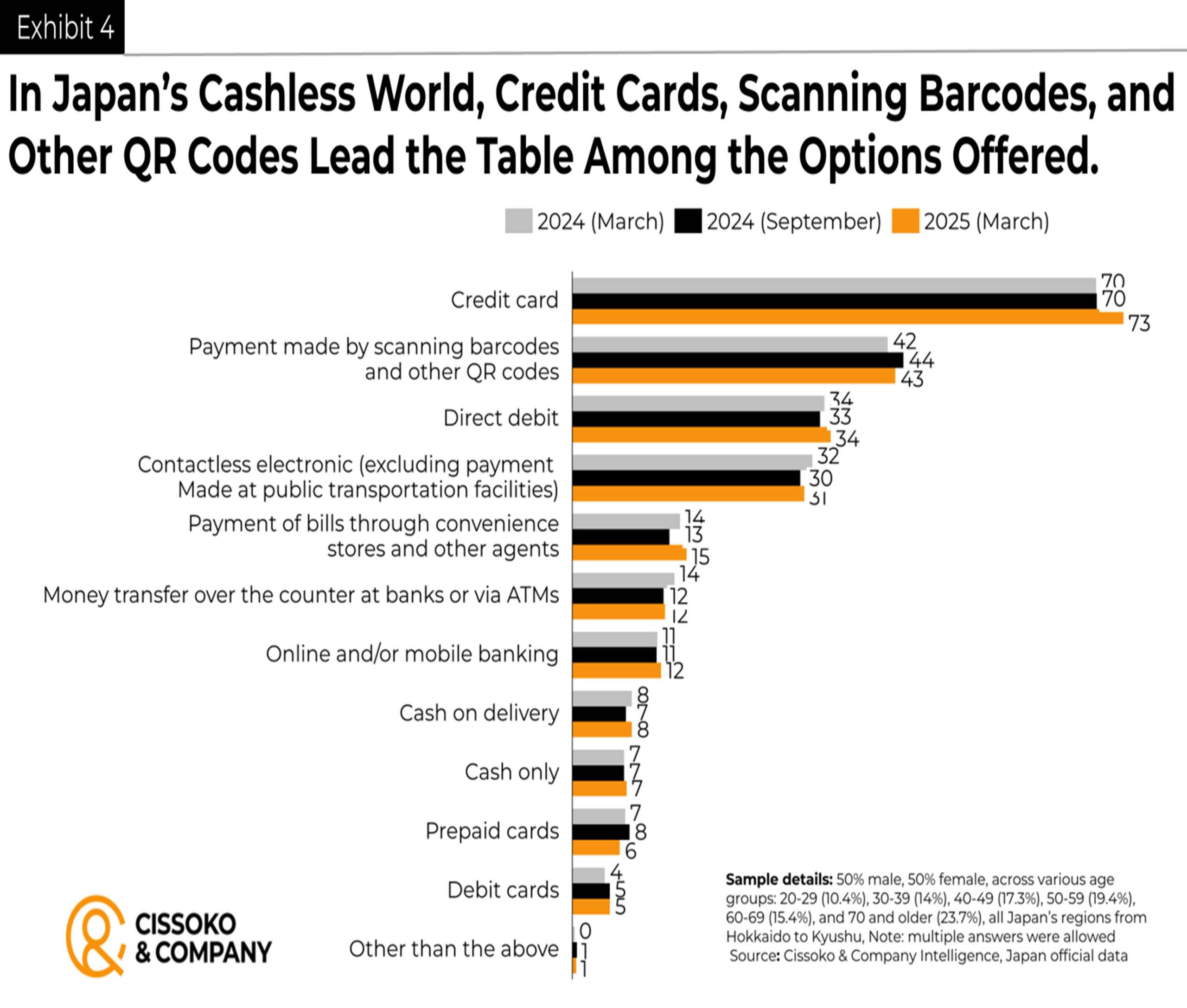
Indeed, within Japan’s cashless economy, credit cards, barcode scanning, and QR code payments have been at the forefront of the industry for an extended period. We anticipate that these trends will persist and expand across the fragmented payments ecosystem in the years to come.
Trends in Japan’s Cash and Cashless Payments for Taxes and Pension Premiums
Beyond traditional voluntary consumption segments, companies within the cashless payments industry can enhance their market share by focusing on the “obligatory consumption” segment. This category encompasses payments that individuals are required to make regularly, not out of personal preference, but due to legal obligations, such as taxes and pension contributions.

This segment is particularly crucial, as most individuals in Japan pay approximately 17,000 yen each month, amounting to roughly 204,000 yen annually. In essence, this sum surpasses the annual budgets of many individuals for clothing, footwear, and entertainment combined.

A noteworthy aspect is that this segment of the payments industry demonstrates greater stability compared to the inconsistent and unpredictable voluntary consumption segments within the consumer-packaged goods (CPG) and luxury industries.
Firms can succeed in Japan’s cash-powered economy amid trade tensions and AI disruptions by applying the key strategies discussed in this article, while avoiding long-standing industry misconceptions.
Get in Touch
We will respond to your message as soon as possible.
Insights to Win
Subscribe to our newsletter for in-depth analysis, reports, and our perspectives on business and economic issues related to the Japanese market and the global economy.