
Japan’s Business: Listening to 100,000+ Japanese Consumers, and Strategy Implications
In this era of tariffs disrupting the global economy, particularly those imposed on Japan’s exports, these disruptions will have significant effects in the years to come. As such, understanding how Japanese consumers perceive the state of the economy – past, present, future — and learning about the types of products and services they intend to increase or decrease their spending on is of crucial importance for strategists regarding pricing, demand planning, and inventory management, among other things.
Are business leaders and Japanese consumers aligned on the actual and perceived state of Japan’s economy? The quick answer is no, in many cases. For example, the economic health indicators that many CEOs and business leaders are likely monitoring, such as the GDP growth rate, GDP per capita, or the total size of an economy compared to others, are not particularly relevant to most Japanese consumers. As a result, many companies make incorrect strategic decisions and allocate resources based on flawed reasoning.
Japanese Consumers: How do They Assess the State of Japan’s Economy?
Instead, business leaders, CEOs, and boards should focus on daily reality indicators, such as income growth, consumers’ perceptions of their current economic situation compared to the previous year, and their expectations for future income relative to current levels.
Insights from this approach uncover deeper economic dynamics that traditional indicators often overlook. In essence, these strategic actions aim to answer: Are you feeling better about the economy now than you did a year ago? Do you think your economic situation will improve next year compared to its current state?
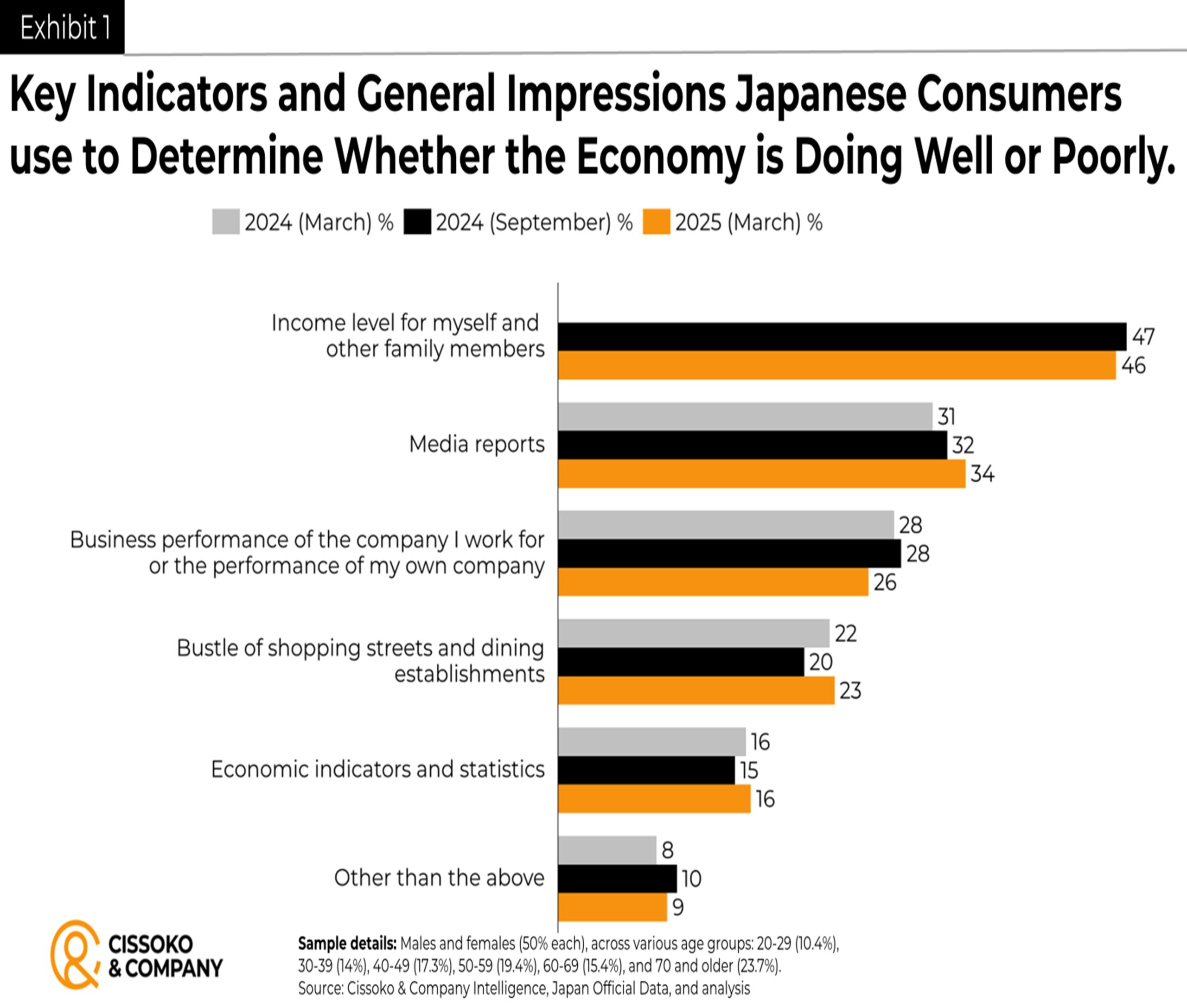
One of the most valuable aspects of this strategy is that it provides deeper insight into what consumers plan to cut back on and the types of products and services they might choose, based on their actual and projected income growth, as well as warning signs within the economy that are invisible to business leaders.
The Feelings (Impressions) of Japanese Consumers About the Economy, Past, Present, and Future Expectations
The quarterly trends in their feelings show a mixed picture with no significant change. On the one hand, the percentage of respondents who reported improved incomes decreased by one percentage point, while those who said their incomes remained the same increased by three points. This suggests that people with stagnant incomes are growing faster than those experiencing an overall income boost.
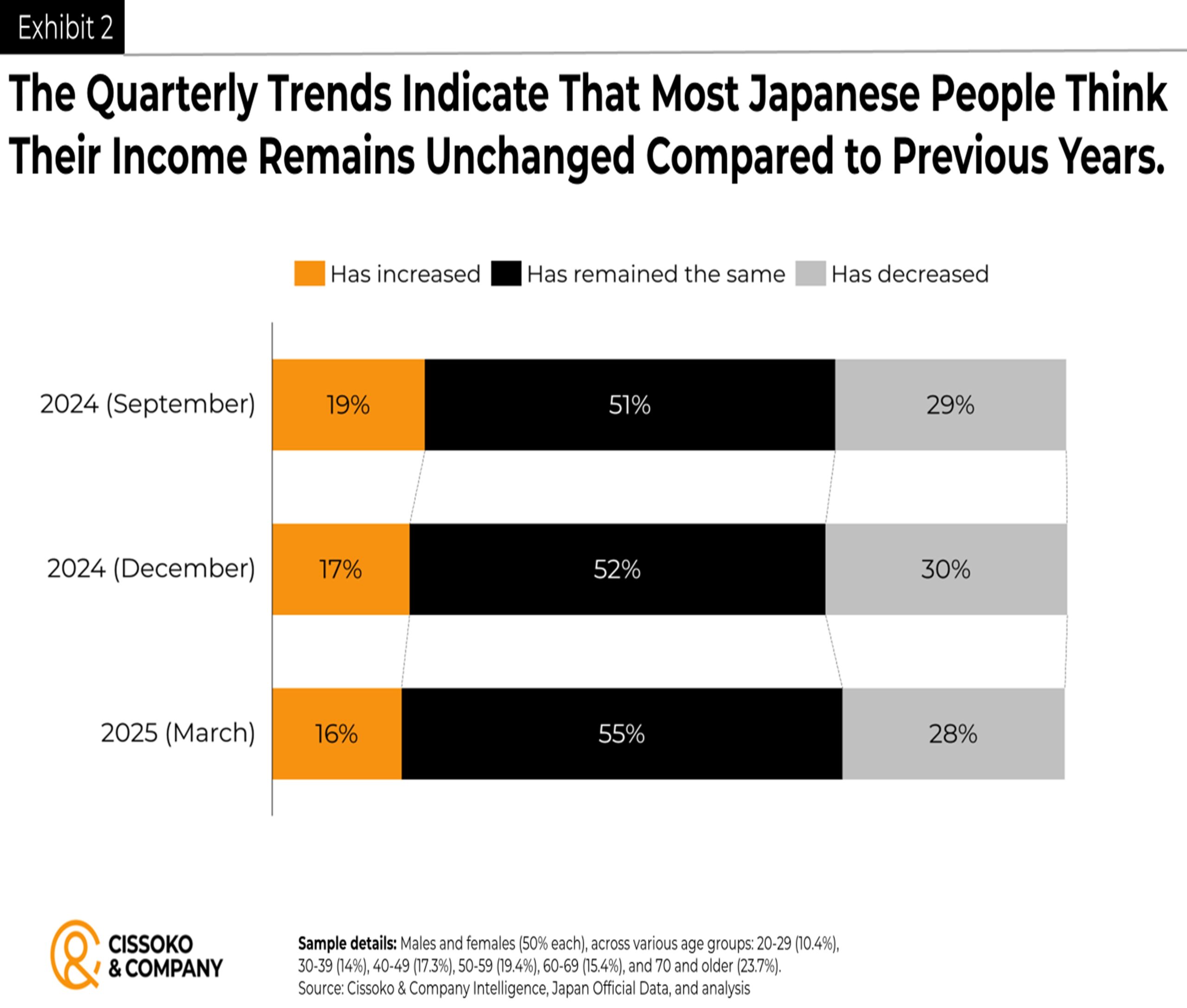
When inquiring about their future income expectations in comparison to the present, the majority of Japanese individuals do not anticipate a substantial increase in their income within the next twelve months, specifically by the conclusion of the fiscal year 2025. Consequently, it is improbable that consumers will exhibit increased expenditure beyond their current levels.
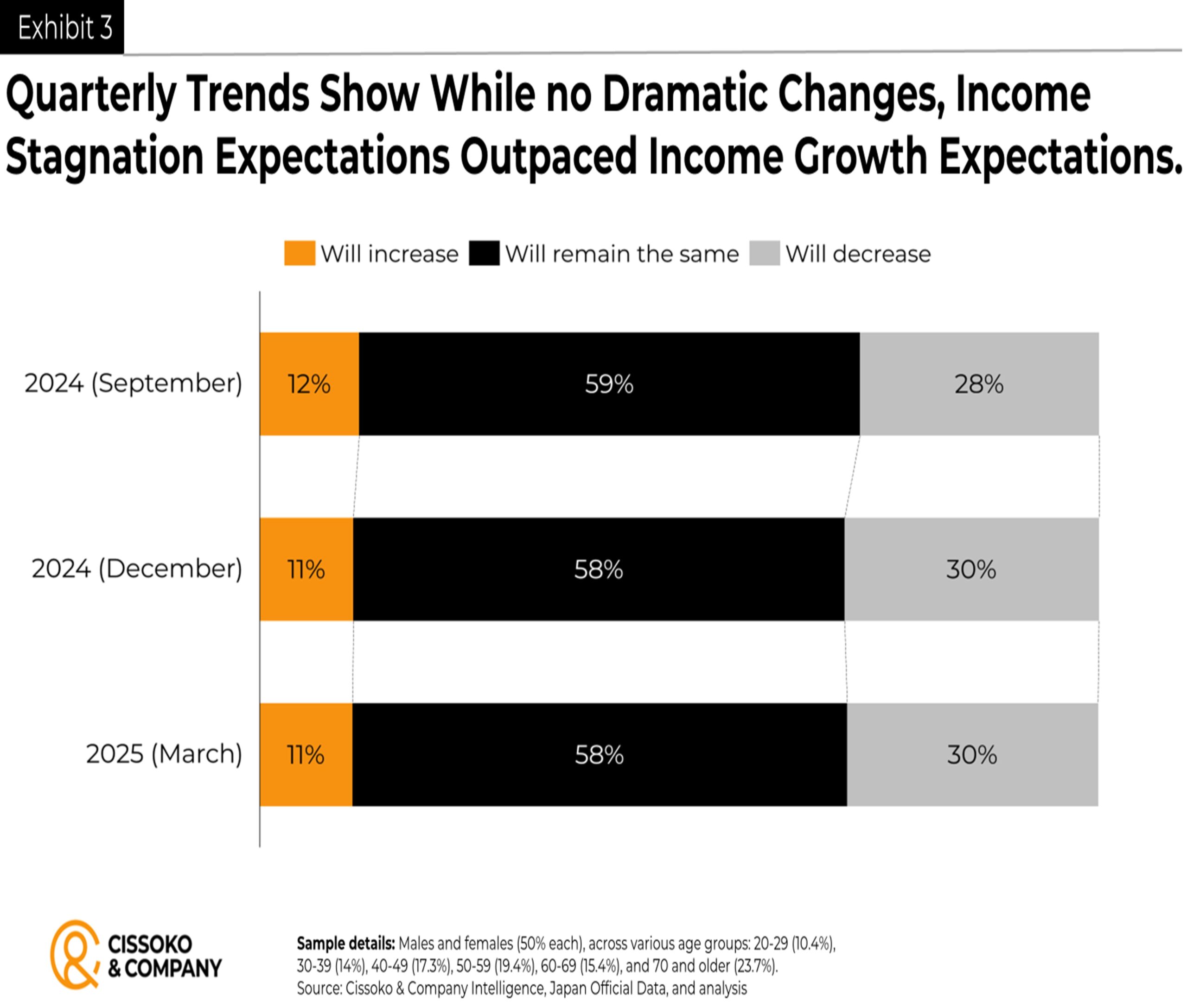
In essence, unless there is a significant change in expectations, the predominant focus of consumers will remain on essential daily expenses, and they will refrain from allocating funds to various other categories, including travel and tourism.
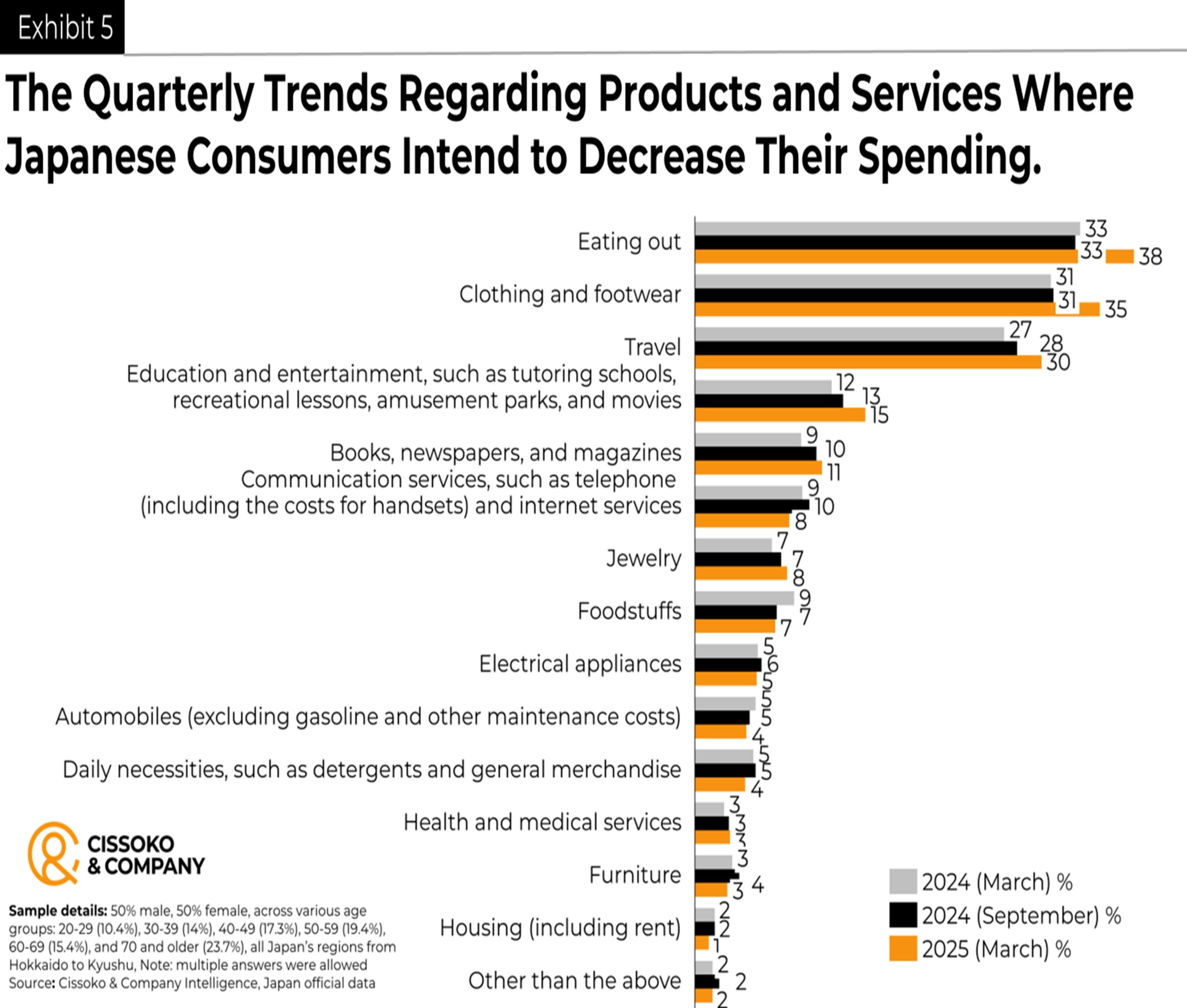
Which Types of Products and Services do Japanese Consumers Plan to Decrease or Increase Their Spending on?
In the context of our unpredictable global economy, distinguished by trade tensions and geopolitical rivalry, a practical approach to enhancing demand planning involves integrating more qualitative data into the process. This strategy can result in cost reduction, improved forecast accuracy, and streamlined production and distribution by augmenting supply chain flexibility, ultimately leading to higher customer satisfaction. Indeed, reliance solely on quantitative data is inadequate for improving forecast accuracy in our uncertain and rapidly evolving environment of trade tensions, where tariffs may be imposed abruptly, followed by temporary suspensions, and then renewed uncertainty.
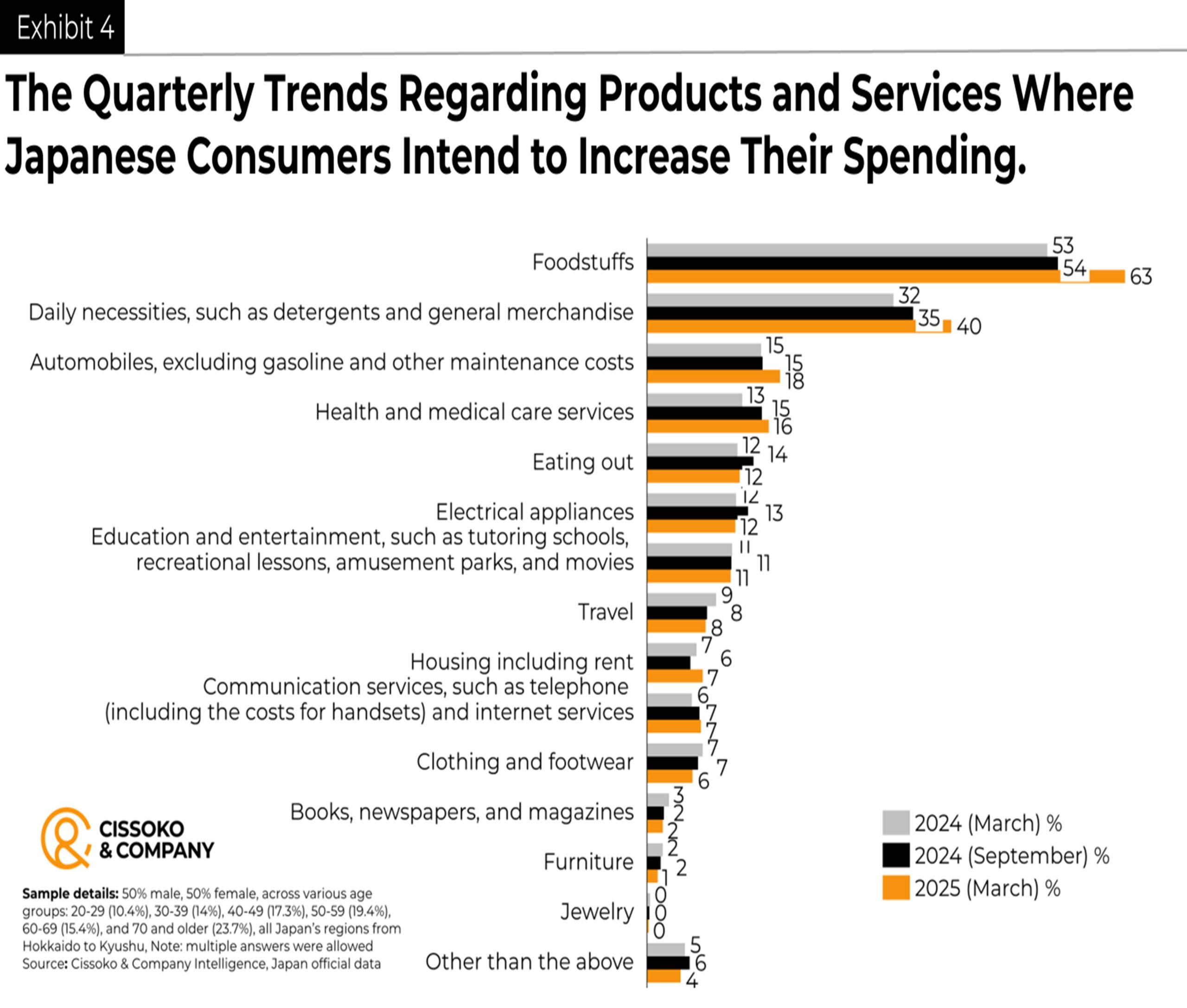
This highlights the importance of qualitative data, particularly about consumers’ future purchase intentions—specifically, whether they plan to decrease or increase their spending across various product categories, including groceries. For example, are they interested in buying more cars? Do they want to boost or cut back on dining out in the near future? What are the implications for sales forecasts and budgets? Are consumers noticing signs of a recession or other issues that analysts and planners might overlook? These are relevant questions that warrant consideration.
Japan’s business environment, similar to that of many other nations, has undergone substantial transformations in recent months since the inauguration of the Trump administration. This period has been characterized by mercantilist trade policies and escalating geopolitical tensions, which have unexpectedly disrupted global supply chains. Additionally, business executives are grappling with the productivity potential and the risks associated with artificial intelligence, as well as its ramifications for corporate performance. In this unfamiliar landscape, the conventional strategies that have historically driven the global economy over the past decade are becoming gradually obsolete. Consequently, achieving success necessitates swift learning and adaptation through innovative yet validated strategies.
Get in Touch
We will respond to your message as soon as possible.
Insights to Win
Subscribe to our newsletter for in-depth analysis, reports, and our perspectives on business and economic issues related to the Japanese market and the global economy.