
Passing Japan’s Technology Innovation 10% Litmus Test: Do You Have What it Takes?
In the world of technological innovation, predicting the success of a groundbreaking product early on, especially after its launch, is a challenging task when it comes to the adoption curve. Based on our experience, one of the best ways to forecast a revolutionary innovation is through what we call “Japan’s Technology Innovation 10% Litmus Test,” because of its broader and deeper insights into successful technology innovations over the past century.
In today’s fast-paced and highly competitive landscape of R&D and technological progress, especially since the early 21st century with the rise of Web 2.0 — characterized by a two-way communication model between technology providers and users — many metrics have been developed to predict or evaluate the success of innovations or product launches. These include metrics such as the number of active users and downloads within a short time frame, which help determine whether a product is likely to succeed or will become a winner, compared to similar previous innovations.

Nevertheless, empirical evidence from contemporary technology adoption trajectories suggests that, following the initial enthusiasm generated by pioneering technologists, numerous products fail to cross the so-called chasm, where they struggle to maintain the momentum established by innovators and early adopters. For instance, consider the audio application Clubhouse, which was launched in March 2020 amid the COVID-19 pandemic disruption.
This ‘invite-only’ platform, regarded as a new disruptor of traditional podcast formats, reached 10 million downloads within twelve months. Given the considerable hype and the misleading impression of exclusivity and elitism it fosters, some users sold their invitations on auction platforms to capitalize on the application’s early popularity. This practice enabled some individuals to access its features, such as listening to renowned experts in chat rooms on diverse topics, thereby alleviating some of the constraints imposed by lockdown conditions.
However, the preferred communication platform among Silicon Valley venture capitalists has diminished in significance as the world gradually recovers from the brink of the pandemic. In reality, the hype surrounding Clubhouse, driven by COVID-19, has substantially waned and been eclipsed by Meta’s metaverse enthusiasm, and more recently, by Generative Artificial Intelligence (GenAI). Currently, Clubhouse is facing challenges in maintaining its relevance and is implementing new features to enhance its viability. Consequently, predicting the success of a product based solely on early indicators, such as user counts and download figures, can be misleading
A metric that has gained recent popularity is the extent to which a technology or product innovation surpasses its previous versions or competing products. For instance, comparing Facebook with Line from Japan or WhatsApp with Instagram serves as key benchmarks. What complicates matters is that the application of this metric is inconsistent.
Some reports or commentaries may compare companies at the national level or based on download counts, such as the number of Line app downloads in Japan. Others might compare on an international scale, using metrics such as average revenue per user (ARPU), which is common among telecom industry players.
While tracking some metrics is better than none, the problem lies in the lack of comprehensive metrics that serve as reliable guides, including passing essential tests with proven (empirical) predictive power, which is crucial for a truly world-changing innovation. Inspired by the groundbreaking innovations of the 20th century, we introduce the concept of “Japan’s Technology Innovation 10% Litmus Test,” designed explicitly for game-changing products.
Japan’s Technology Innovation Litmus Test includes five key predictive metrics. The first three are part of the 10% Litmus Test, namely the Internet Test, the Japan Household Penetration Test, and the User Test. The remaining two assess the Enterprise Test and the Establishment Test, which use different metrics.
Passing the First Hurdle of Japan’s Technology Innovation Litmus Test
What does it take? It requires a product innovation to be quicker than the speed of the Internet’s penetration. In other words, to reach 10% of Japan’s households, the telephone took 76 years; it was surpassed by pagers, which took 24 years. That record was broken by FAX machines, which took 19 years.
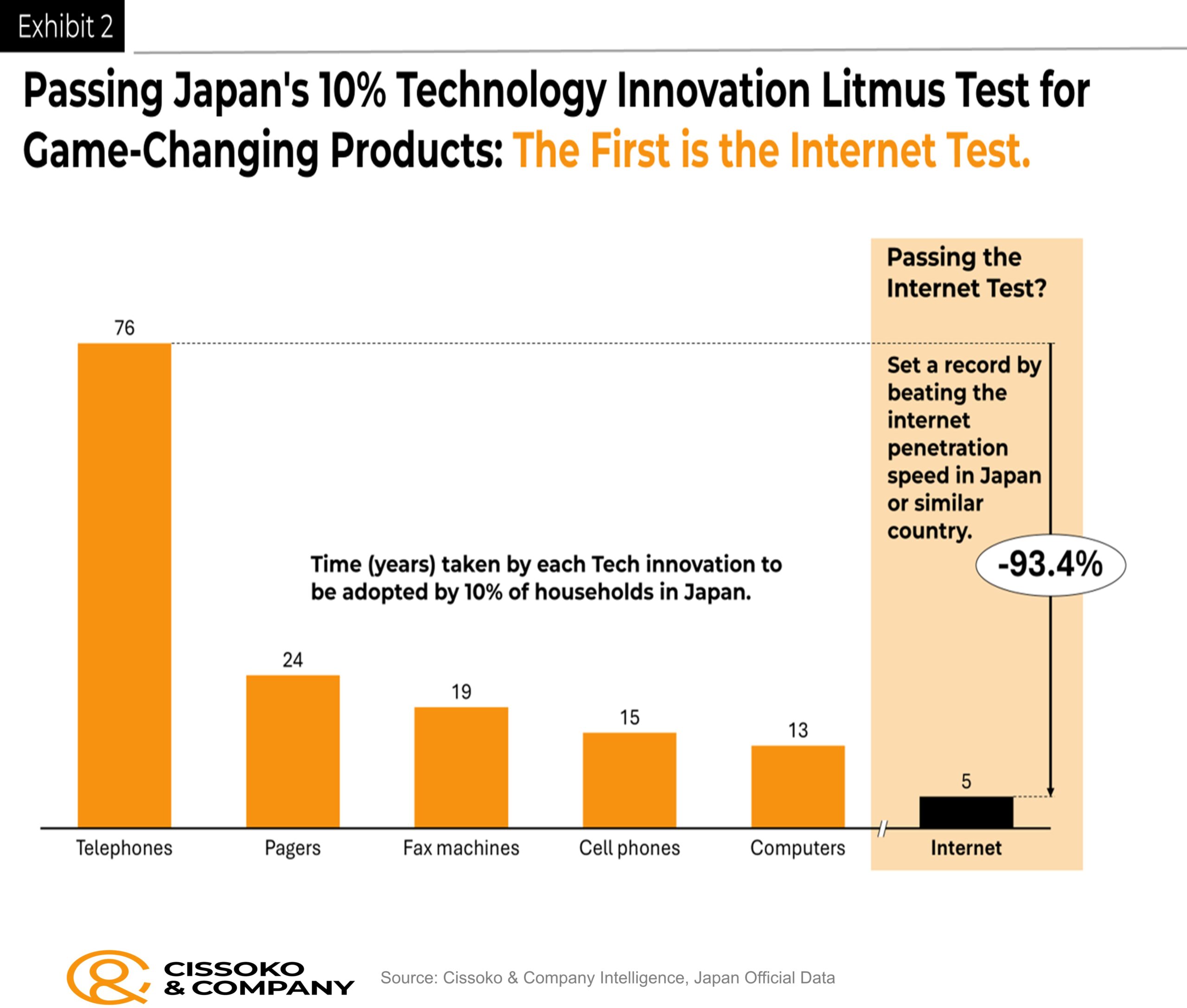
Similarly, cell phones overtook the FAX machines with their 15-year record. Additionally, computers surpassed that record two years earlier than cell phones. Finally, the Internet appeared and surpassed all others by reaching the same level of penetration across Japanese households in just five years.
Passing the Second Hurdle of Japan’s Technology Innovation Litmus Test
Similar to the Internet test, the Household Test is straightforward. Specifically, the product is required to reach 10% of households, or approximately 17 million individuals, within four years in a country with a population comparable to Japan’s.

This objective may be subdivided into monthly, quarterly, or annual milestones.
Passing the Third Hurdle of Japan’s Technology Innovation Litmus Test
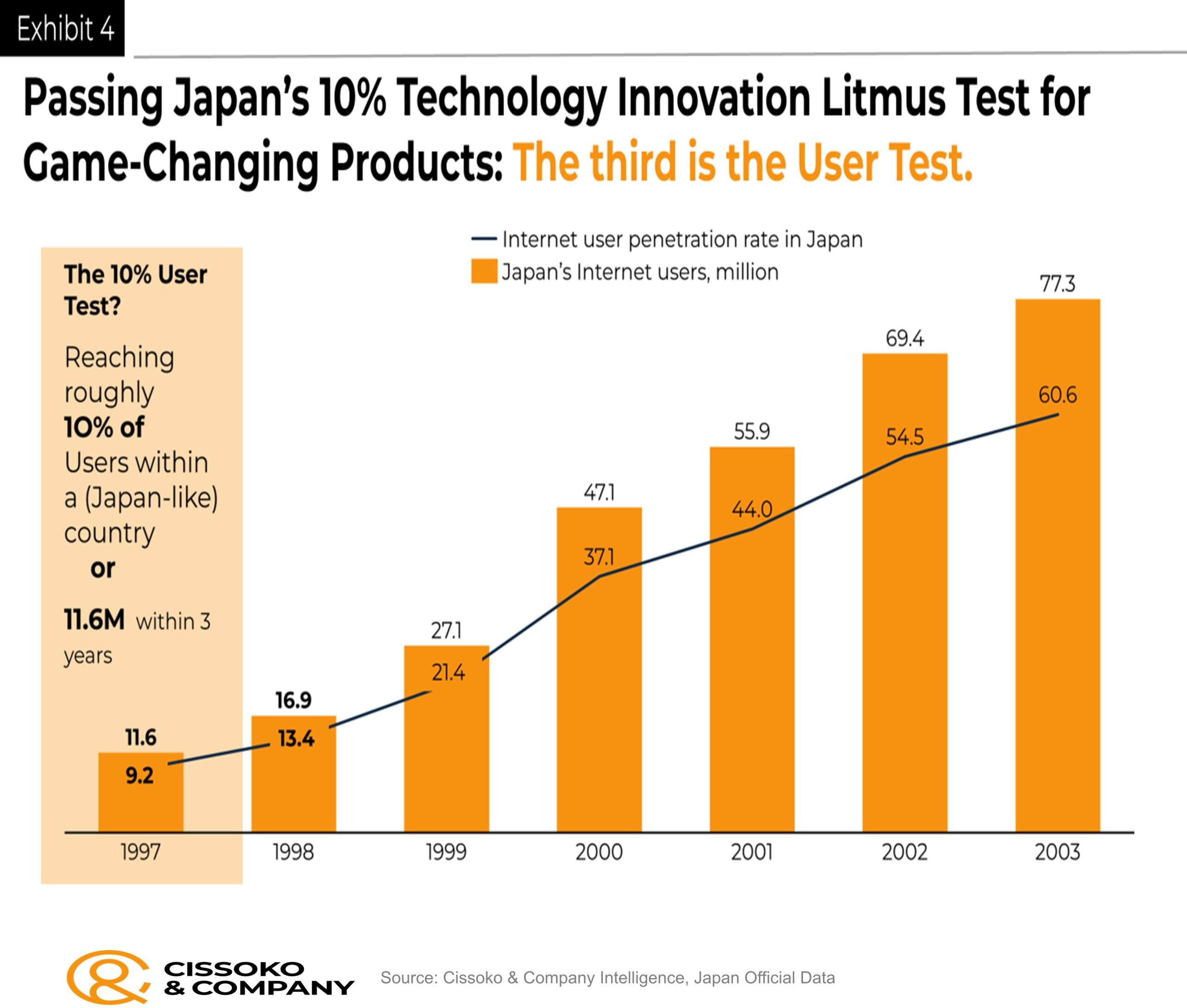
Given that numerous contemporary products and innovations are digital platforms or applications, entrepreneurs must address this challenge by aiming to reach 10% of users, approximately 12 million individuals in a country with a population comparable to Japan, within three years.
To be clear, participants are not required to meet all these criteria; they may focus their strategies on the aspects most relevant to their business models and industry.
The Fourth Hurdle of Japan’s Technology Innovation Litmus Test
Many innovators build their products to solve enterprise-related problems. Firms in this category need to reach approximately 50% of enterprises in Japan within two to three years, or in other similar nations with a comparable number of enterprises, including small, medium, and large firms.

Again, the goals of the entrepreneurs need to be set in a manageable manner through daily, weekly, and monthly milestones, among others.
The Fifth and Final Hurdle of Japan’s Technology Innovation Litmus Test
Unlike entrepreneurs focusing on large corporations, numerous innovators design their products for smaller enterprises, including retail outlets, manufacturing plants, and small office premises. Companies operating in these sectors must aim to reach approximately 12% of these establishments within three years.
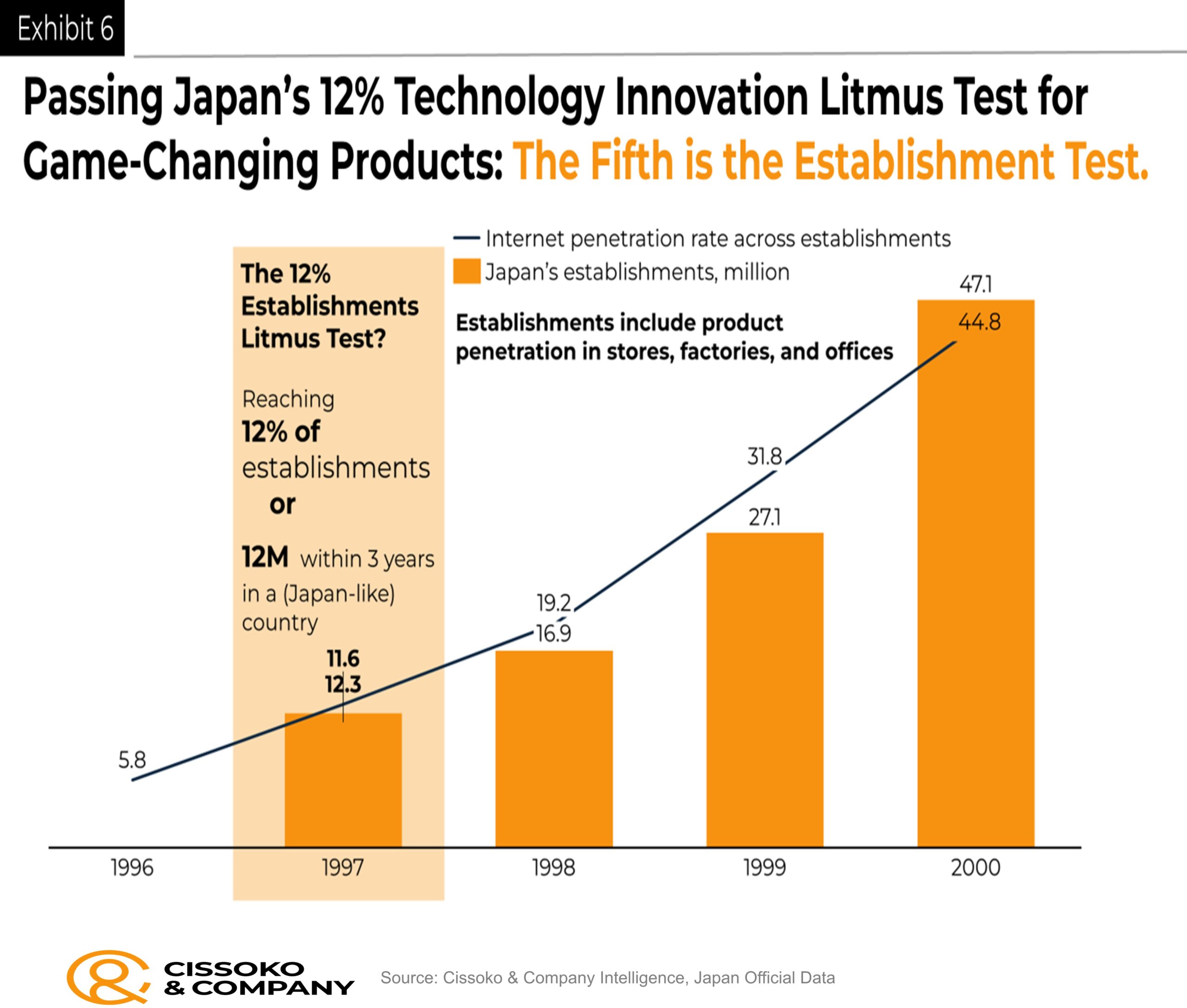
Consistent with previous considerations, this target should be contextualized within Japan or a comparable developed nation that possesses a similar number of establishments.
While numerous methods are available for evaluating successful products, encompassing metrics associated with technological innovation, we contend that Japan’s Technology Innovation 10% Litmus Test — despite its foundation on products and innovations from the 20th century — continues to be one of the most reliable indicators, arguably the most extensively tested in practical application, for assessing a groundbreaking technological innovation in the current era of artificial intelligence.
Get in Touch
We will respond to your message as soon as possible.
Insights to Win
Subscribe to our newsletter for in-depth analysis, reports, and our perspectives on business and economic issues related to the Japanese market and the global economy.