
Japan’s Entrepreneurship: The 10 Trends Shaping Japan’s Startup Competition — Founder Brief
Having an innovative product or process is one thing, but understanding the competitive landscape to develop a winning strategy and value proposition is entirely different. Japan’s startup scene is highly competitive and rapidly changing. Therefore, success depends not just on loving your idea, but also on knowing where to compete and where not to, especially given the fierce competition and limited resources available to entrepreneurs.
This is the third installment of our Founder Brief, titled “The Number Game: Winning Japan’s Startup Competition in the Age of GenAI.” The second installment bears the title “Japan’s Startup Trends: Solopreneurs Versus Teampreneurs, Male Versus Female Entrepreneurs.”

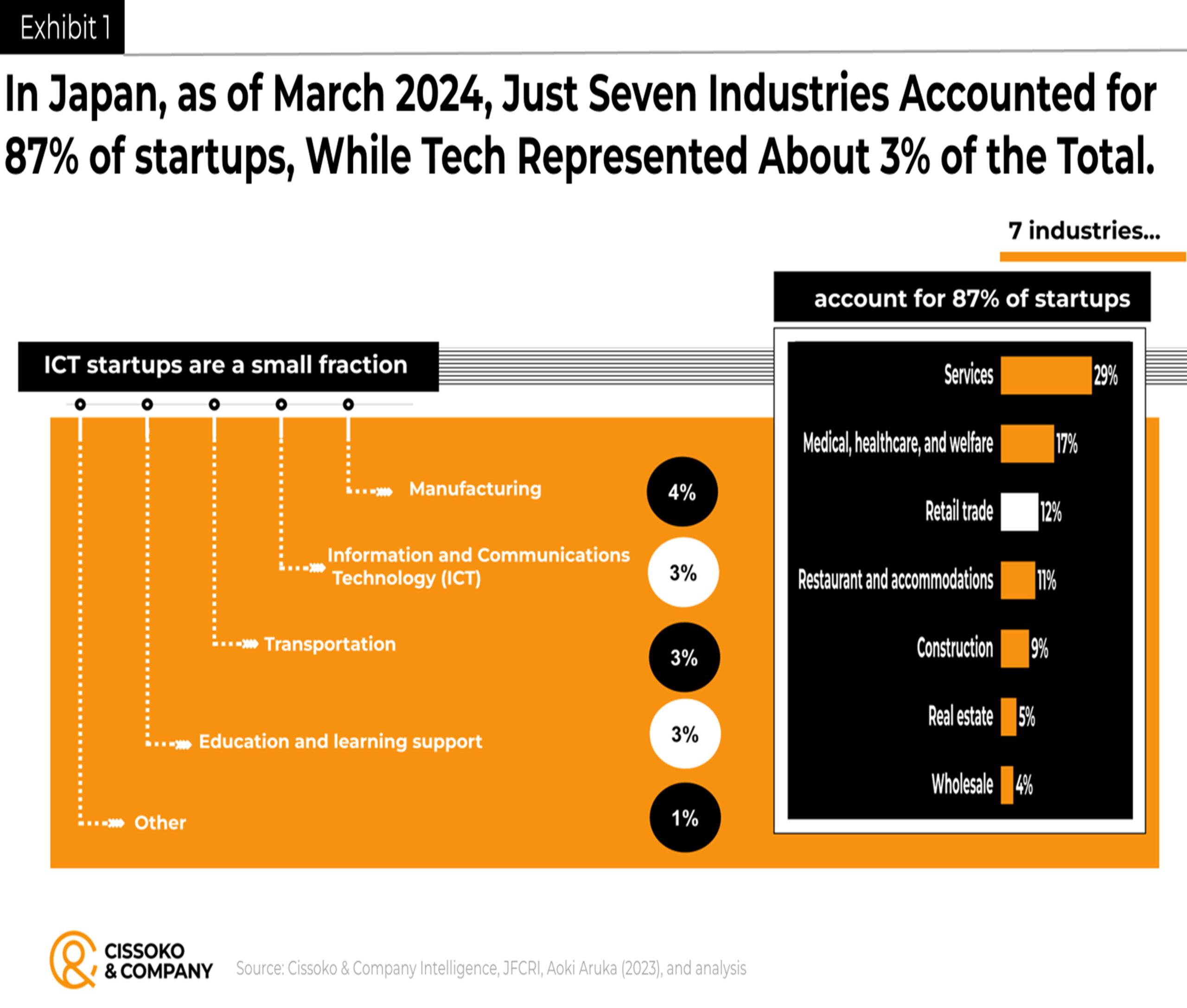
As of March 2024, seven industries accounted for 87% of startups in Japan, led by the services sector, which comprised 29%. It was followed by the medical, healthcare, and welfare industries, which accounted for 17%, and the retail sector ranked third, representing 12% of the startups. In other words, these industries are highly competitive and marked by fierce rivalry.
Therefore, success will require additional capabilities, including industry experience, a strong value proposition with differentiation, and sufficient financial resources to withstand competitive responses, as well as a reasonable time to breakeven. Moreover, the nature of the business model and the target market — specifically, whether it is B2B or B2C — will have a significant impact on cash flow volatility.
Only Seven Industries Account for 87% of Japanese Startups
Furthermore, it is wise to understand that, like most business plans, the initially beautifully crafted plan on paper will be disrupted over time, and a pivot will be necessary to thrive. In other words, the more competitive and crowded an industry is, the more founders will need to deploy one of the key pivots: namely, market pivot, product pivot, market segment pivot, sales channel pivot, supplier pivot, product input pivot, among others. Indeed, the more groundbreaking (or novel) the product or business model is, the more resistance and pushback the entrepreneur can expect, at least in the early stages, regarding the product adoption curve.
Once again, entrepreneurs should be cautious of several pitfalls, including the confusion among TAM, SAM, and SOM; the fallacy of believing in achieving a 3% market share within Y months based on questionable pricing assumptions; and dependence on static market assumptions driven by outdated data that do not account for increased competition in the upcoming months, among other concerns.
One effective method to mitigate the challenges previously discussed is to conduct rigorous assumption testing through bottom-up market sizing techniques. This includes metrics such as average revenue per user (ARPU), realistic purchase frequency, target customer usage rates, and benchmark-supported market penetration rates, which encompass the number of target customers, among other factors. Indeed, entrepreneurs are advised to extend their analysis by performing scenario-based sensitivity assessments. Such bottom-up exercises serve as a safeguard against the tendency toward wishful thinking commonly observed in top-down approaches.
Japan’s Startups: Which Industries are They Concentrated in?
We can analyze crowded industries from both the supply and demand sides. From a supply perspective, the most saturated industries tend to have low barriers to entry, requiring relatively few resources to join, with low differentiation, and most firms compete primarily on price. These are some of the initial considerations founders should evaluate when thinking about entering such industries. In other words, what is their differentiation strategy regarding their value proposition to avoid being commoditized across the board?
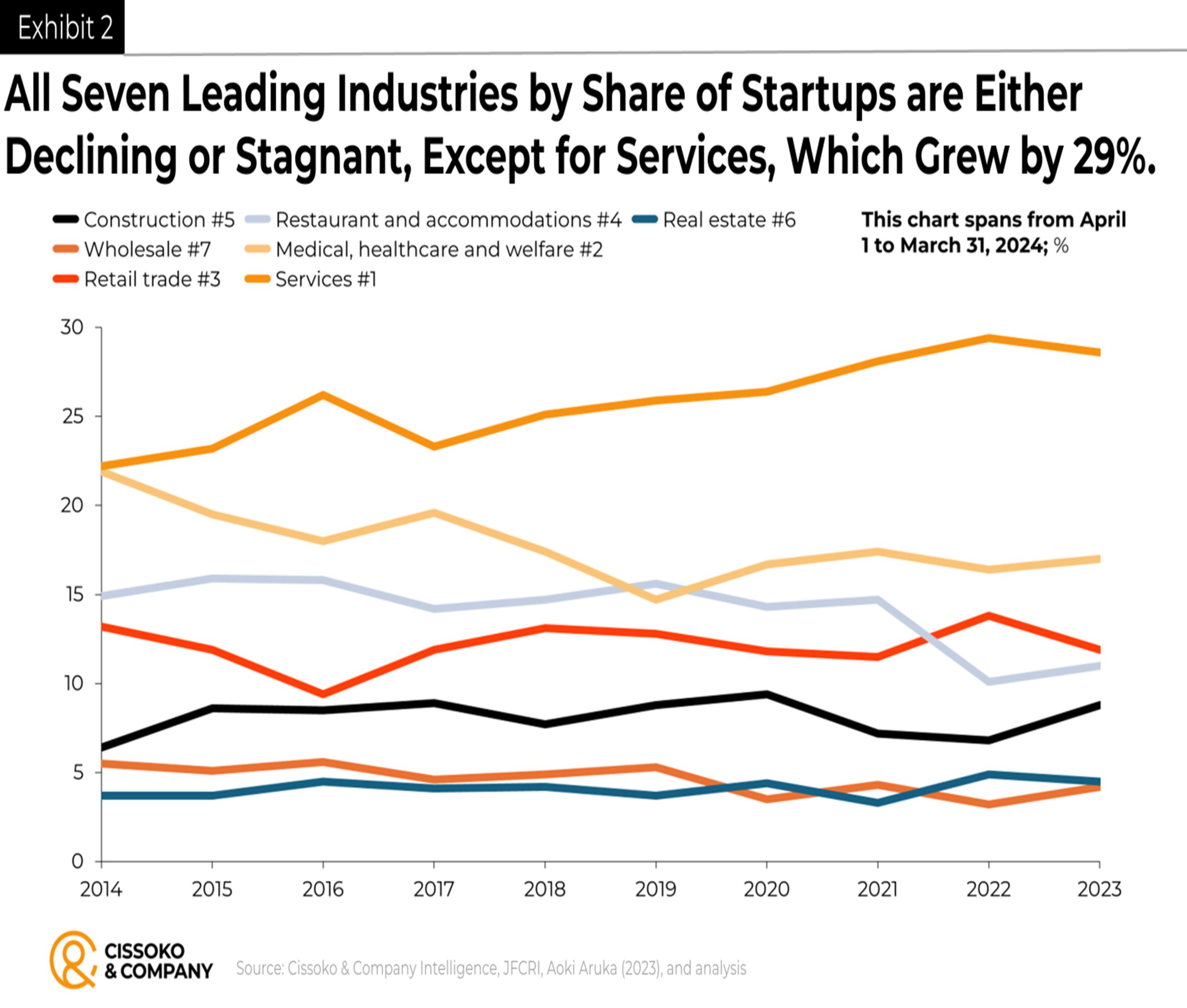
On the demand side, entrepreneurs need to assess their target segment in consideration of the industry’s lifecycle stage. Is it a new segment? Is it growing? Has it matured, or is it in decline? Conducting this fundamental analysis can provide valuable insights into developing an effective strategy, including whether the segment is worth pursuing given the scarce resources available to the entrepreneur and the optimal timing of the opportunity.
The Startup Landscape: Which Industries are Stagnating and Declining?
A similar analytical approach can be applied to relatively stagnant industries. Ask yourself why fewer people choose to enter compared to overcrowded markets. Is your innovative business idea truly game-changing compared to existing competitors? Do you possess growth strategies that others might have overlooked or are unaware of?
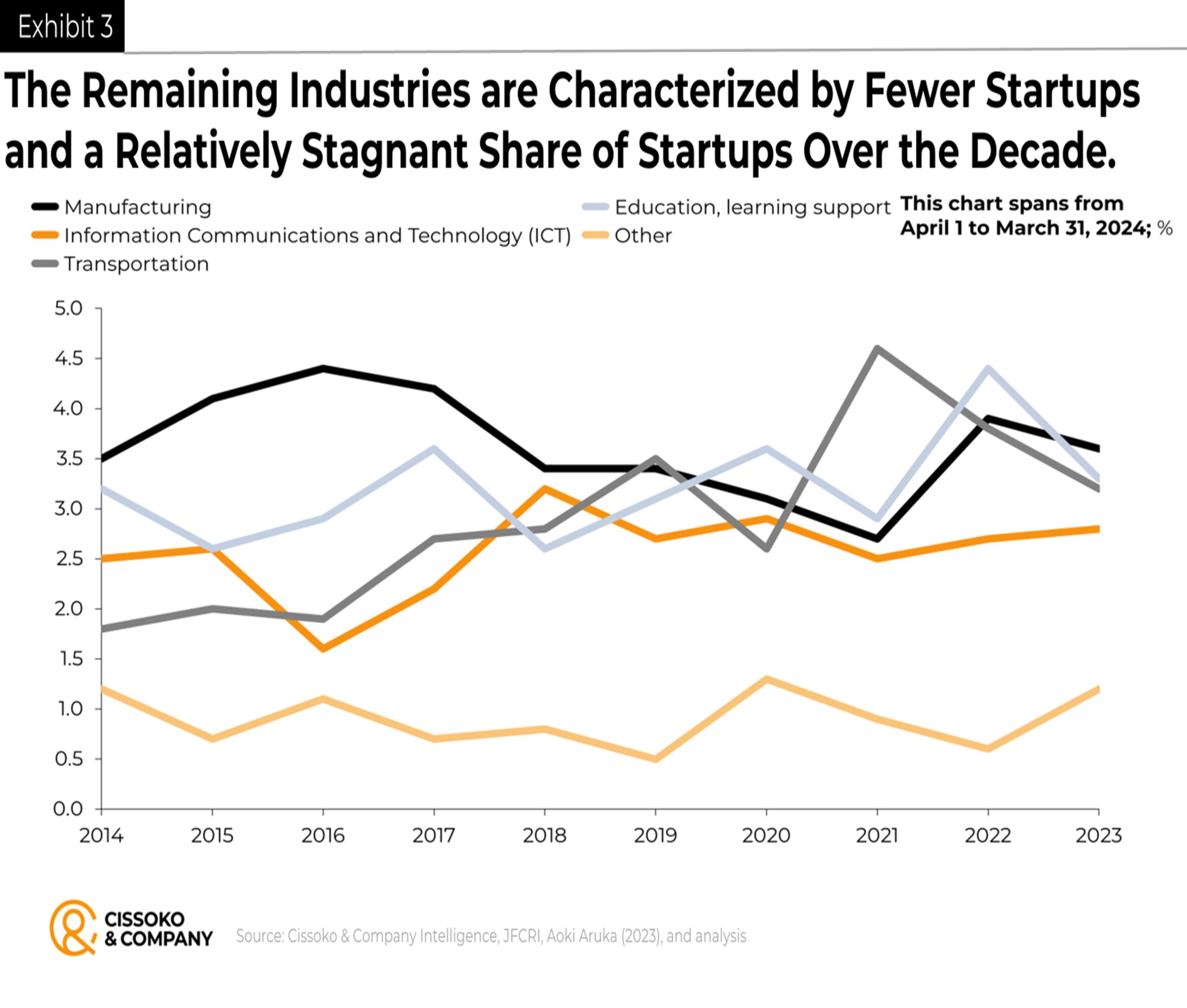
Since the industry or business segment is stagnating, can you meet your projected growth targets as expected? The key is to debias your thinking process by addressing various biases that cloud human judgment, such as the overconfidence bias, survivorship bias (which occurs when you analyze only the firms that survive, while ignoring those that have failed quietly or spectacularly), and confirmation bias, among others.
Get in Touch
We will respond to your message as soon as possible.
Insights to Win
Subscribe to our newsletter for in-depth analysis, reports, and our perspectives on business and economic issues related to the Japanese market and the global economy.