
Japan’s Entrepreneurship Trends: Startup Fundraising Strategies in the age of GenAI — Report Founder Brief
Over the past three years, three surveys have consistently shown a common truth in the age of artificial intelligence: startup fundraising remains the top challenge for founders in Japan. For many entrepreneurs, growth and survival depend on it. What steps can founders take in response to these trends? On average, how much do entrepreneurs need to contribute to their own fundraising in Japan to motivate other financial institutions to increase their support?
In this fourth installment of our Founder Brief Report, “The Number Game: Winning Japan’s Startup Competition in the age of GenAI,” we provide our time-tested guidance.
In the second part of this Founder Brief, we discuss Japan’s startup competitive trends, including solopreneurs versus teampreneurs, male versus female entrepreneurs, and startup trends related to business legal entities.
The third installment is titled “Japan’s Entrepreneurship: The 10 Trends Shaping Japan’s Startup Competition.” You can read each article (or report) in your preferred order.

Indeed, to grow and thrive, startup founders often raise funds through various means, including their own savings and contributions from family members such as spouses, parents, siblings, and other relatives.
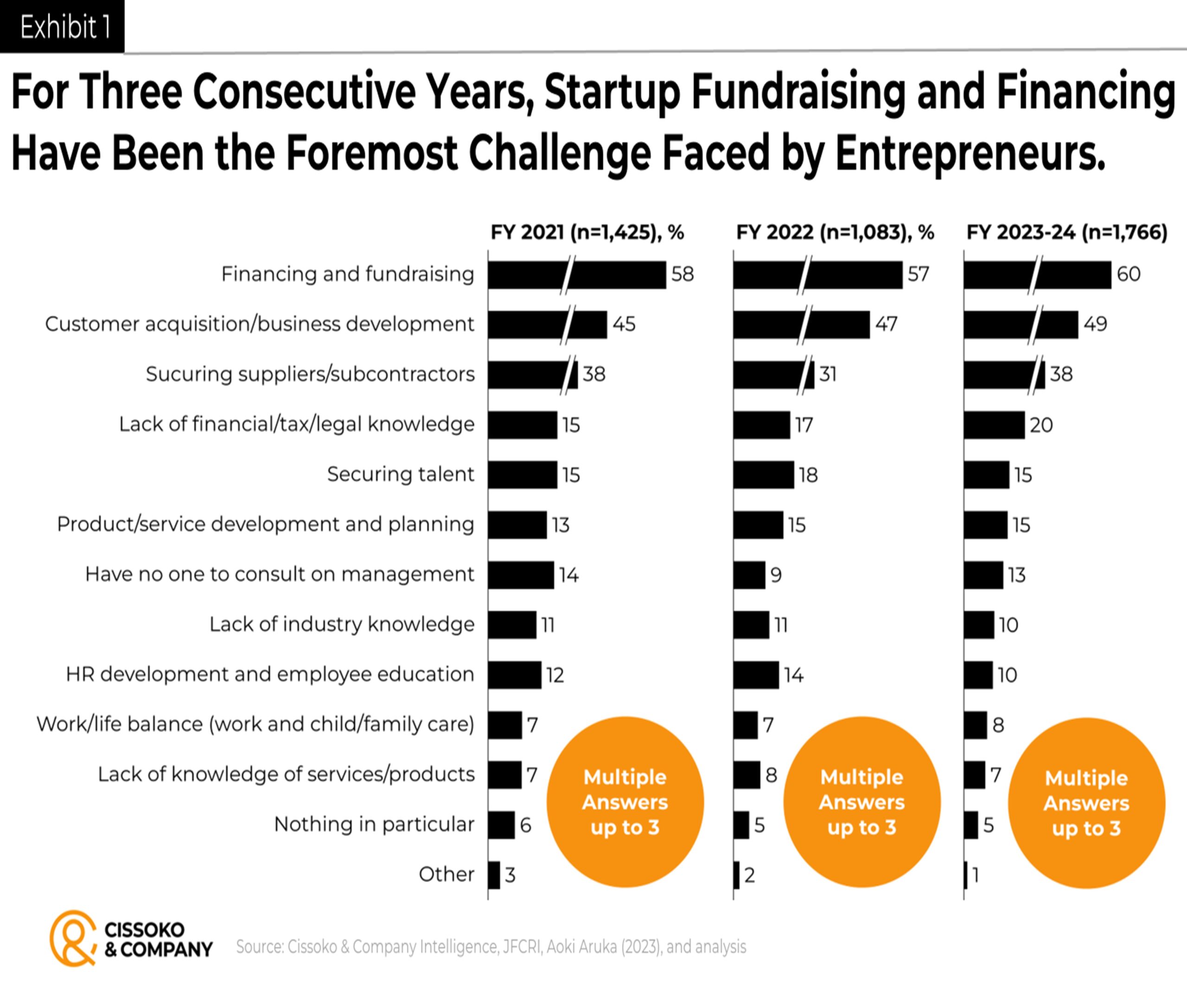
Additionally, many seek funds from friends, acquaintances, and through highly sought-after sources such as venture capital firms and angel investors (seed). Furthermore, founders can also borrow money from public and private financial institutions, among other sources.
Fundraising Trends Over the Past 30 Years
Over the past 31 years, through March 2024, the average fund raised by startup founders has been trending downward, particularly since fiscal year 2005. To win support from financial institutions as before, founders need to do more to reverse the trends before it is too late.
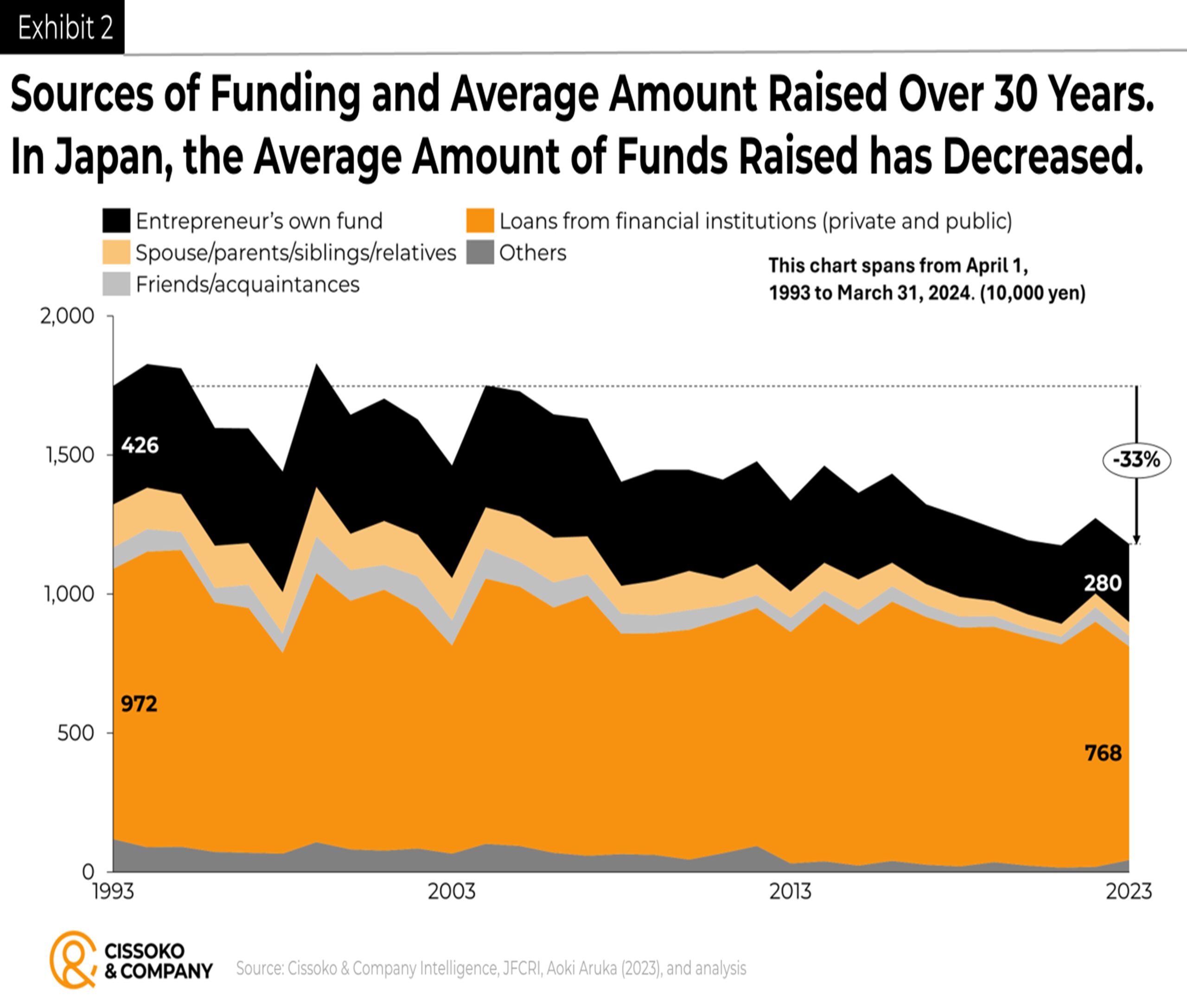
Indeed, to succeed in this age of GenAI, founders need more financial support, not less. Unfortunately, the trends suggest otherwise. Two events that are occurring simultaneously partly explain the downward trends in the amount raised by the startup entrepreneurs in the Land of the Rising Sun.
Unlike before fiscal 2005, the average founder’s contribution to their own fundraising has been decreasing. This is partly due to the declining initial costs of starting a business in Japan, which have declined over the past decade. In fact, initial expenses for starting a company have decreased by a remarkable 32% over the past 31 years, through March 2024. This decline is thanks to technological advancements in data storage and management (cloud computing), technology infrastructure, and digitalization that have occurred since the early 21st century.
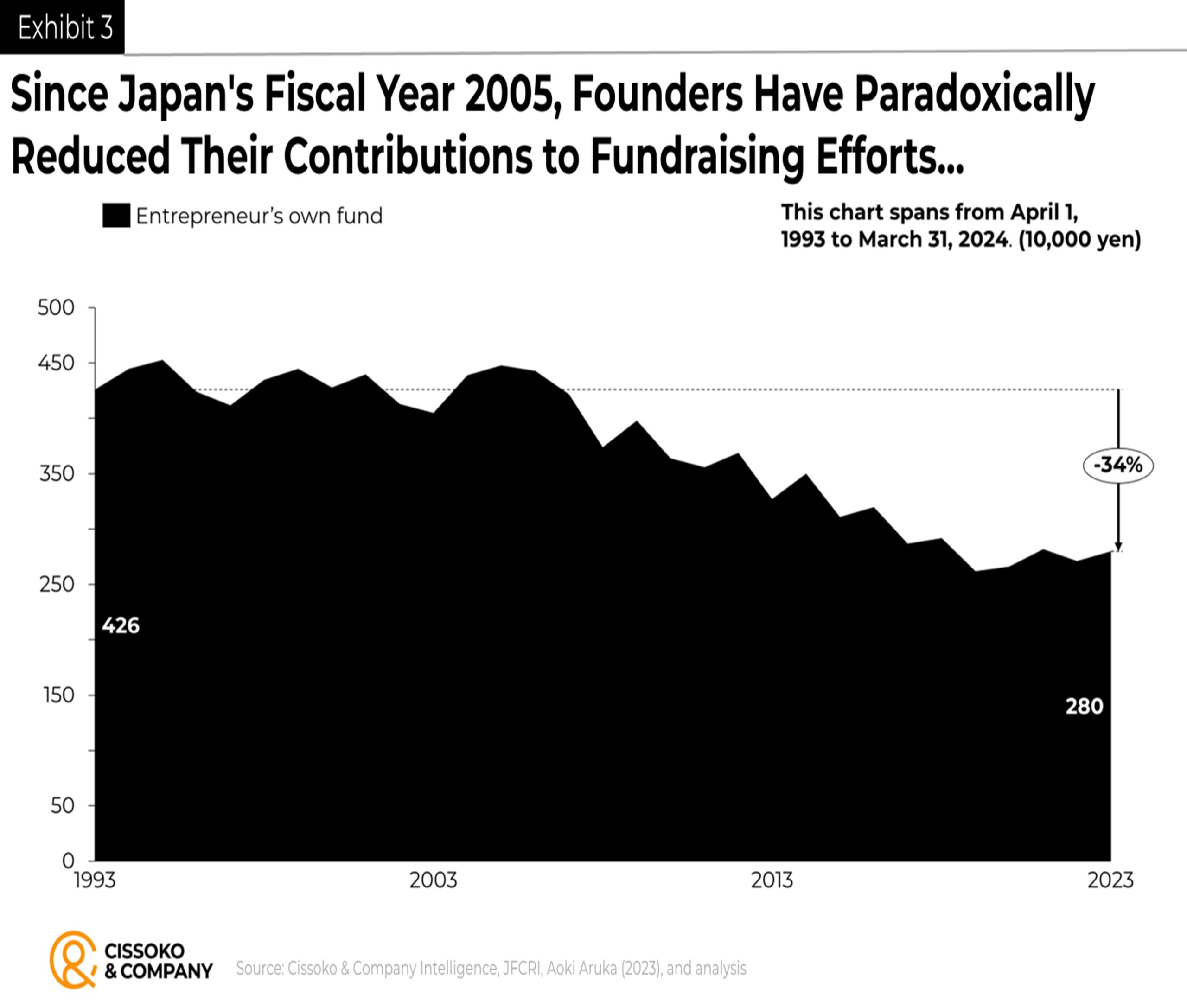
Like Newton’s Third Law of Motion, also known as the Law of Action and Reaction, which asserts that for every force (action) exerted by one object on another, there is an equal and opposite force (reaction) exerted by the second object back on the first. Thus, as the founders gradually decreased their contribution to their own fundraising since fiscal year 2005, financial institutions, too (public and private), also reduced their average loan sizes over the same period. Predictably, since fiscal year 2005, the average amount raised by startup founders has been decreasing.
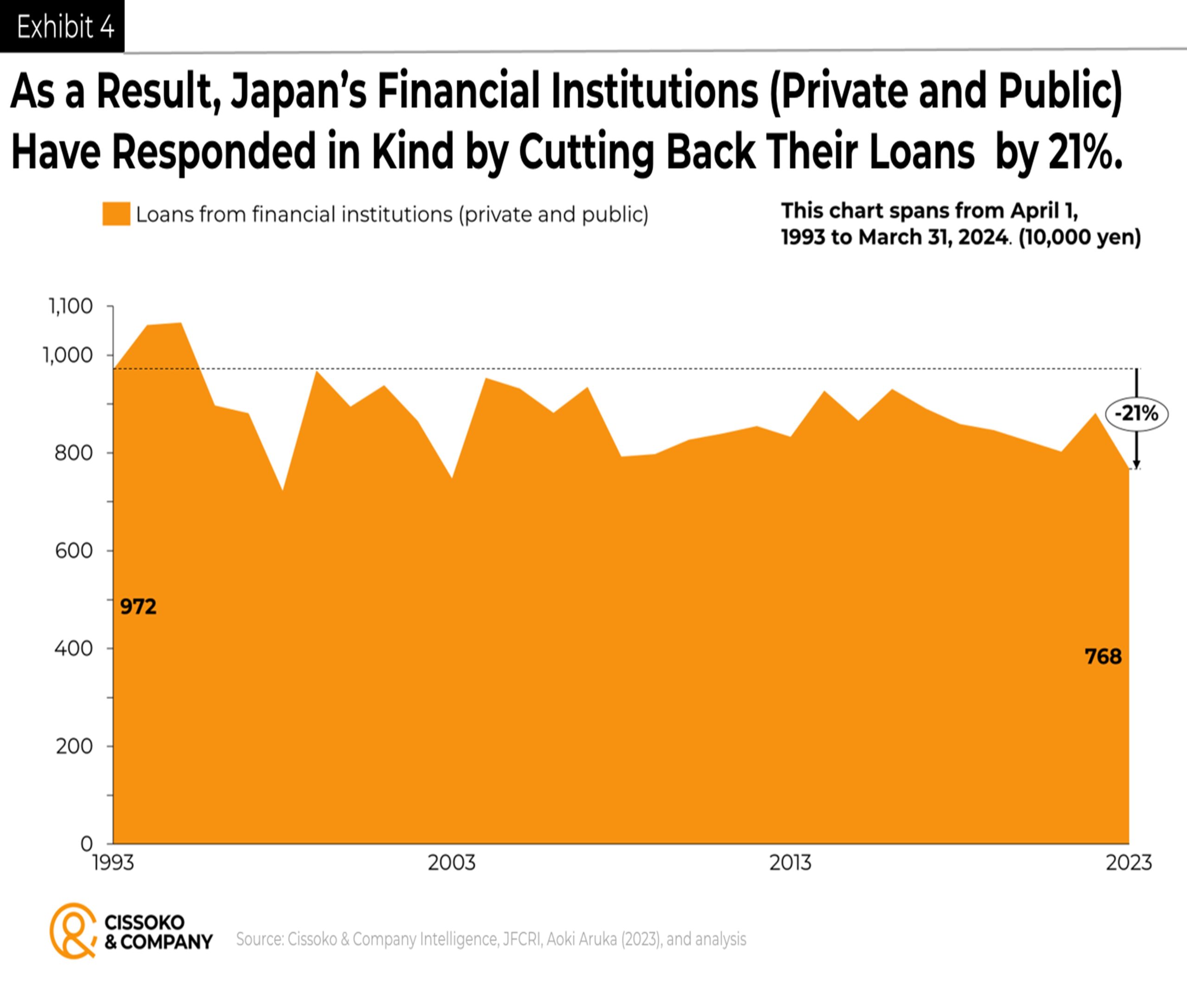
Indeed, no one understands and believes in innovative products and business models more than the founding team. Therefore, encouraging other investors to contribute more money to the business requires founders to invest more, not less, as has been the case in Japan since fiscal year 2005. In other words, how much, on average, do founders need to increase their own funding contributions?
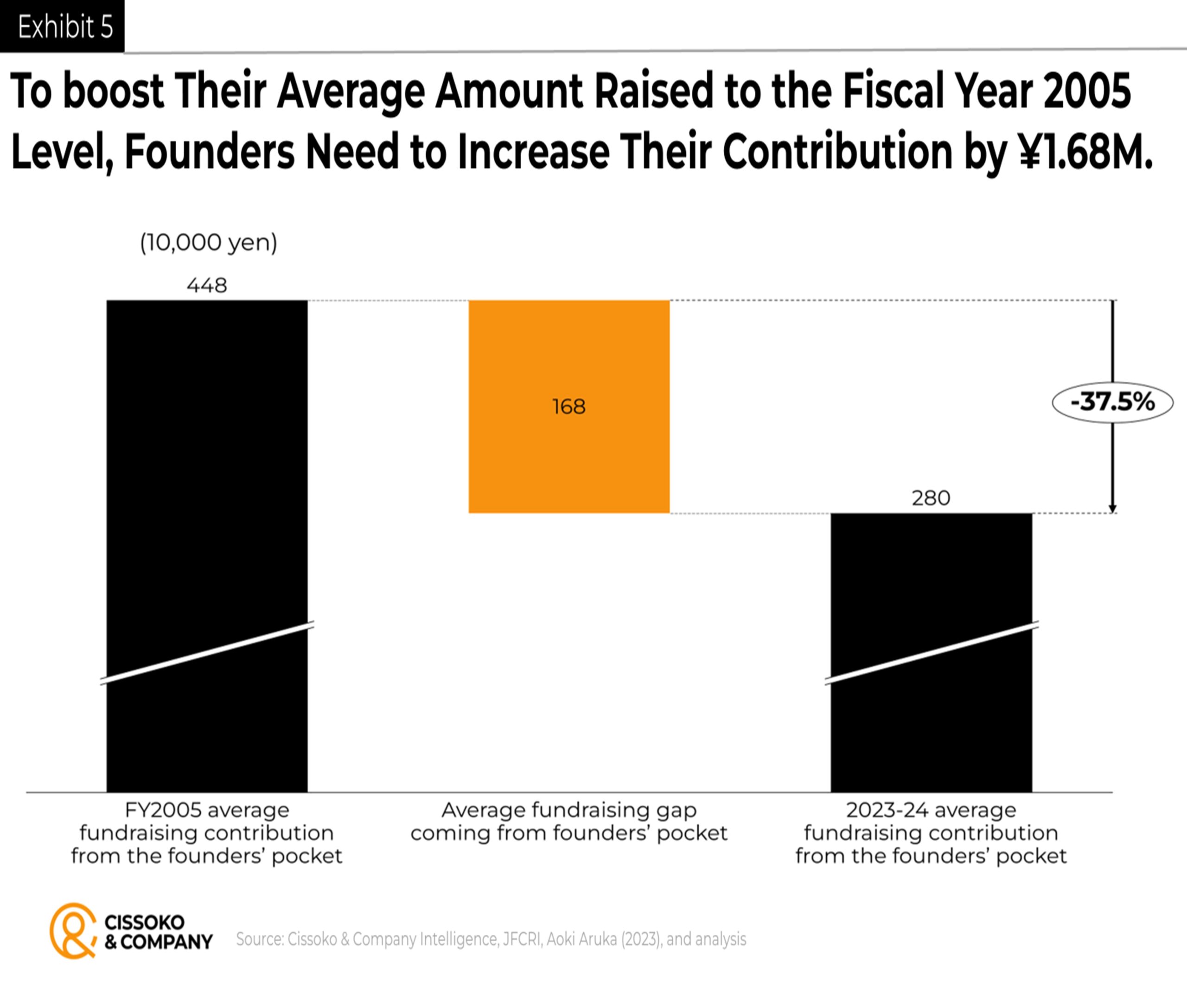
Our analysis indicates they should add an extra 1.68 million yen to their average actual contributions of 2.8 million yen, which would increase their total raised amount to nearly 13.5 million yen, excluding any additional contributions from financial institutions.
Fundraising Beyond Venture Capital: Winning Through Financial Institutions
Startup fundraising through venture capital is the most coveted prestige among entrepreneurs in this age of artificial intelligence. However, globally over the past few years, only 13.7% of startups have secured the valuable backing of VCs. When examining specific segments, such as green (climate tech) innovation in Japan, the percentage drops even further, to about 5%. Indeed, venture capital firms aim to fund companies they believe are not only innovative but also scalable, promising them exceptional returns.
As a result, they are very selective and extremely rigorous, because it is no secret that many startups, while highly promising on paper, often fail spectacularly later when flaws in the product or business model innovations become obvious or when the economics of the business model make it difficult to generate value.
In other words, the odds are against many aspiring entrepreneurs trying to find that golden opportunity. Are there other options worth the effort of founders in their quest for funding disruptive innovations? While there are no shortcuts to getting funding, what can entrepreneurs learn from successful companies in Japan and elsewhere about their partnerships with financial institutions?
Broadly speaking, we can classify the types of financing that businesses seek into three categories: capital investment funds, business operating funds, and funds for new business and product development. Additionally, different types of financial institutions where startup founders can apply for loans include commercial banks, regional banks, credit associations, cooperative banks, and government financial institutions, among others.
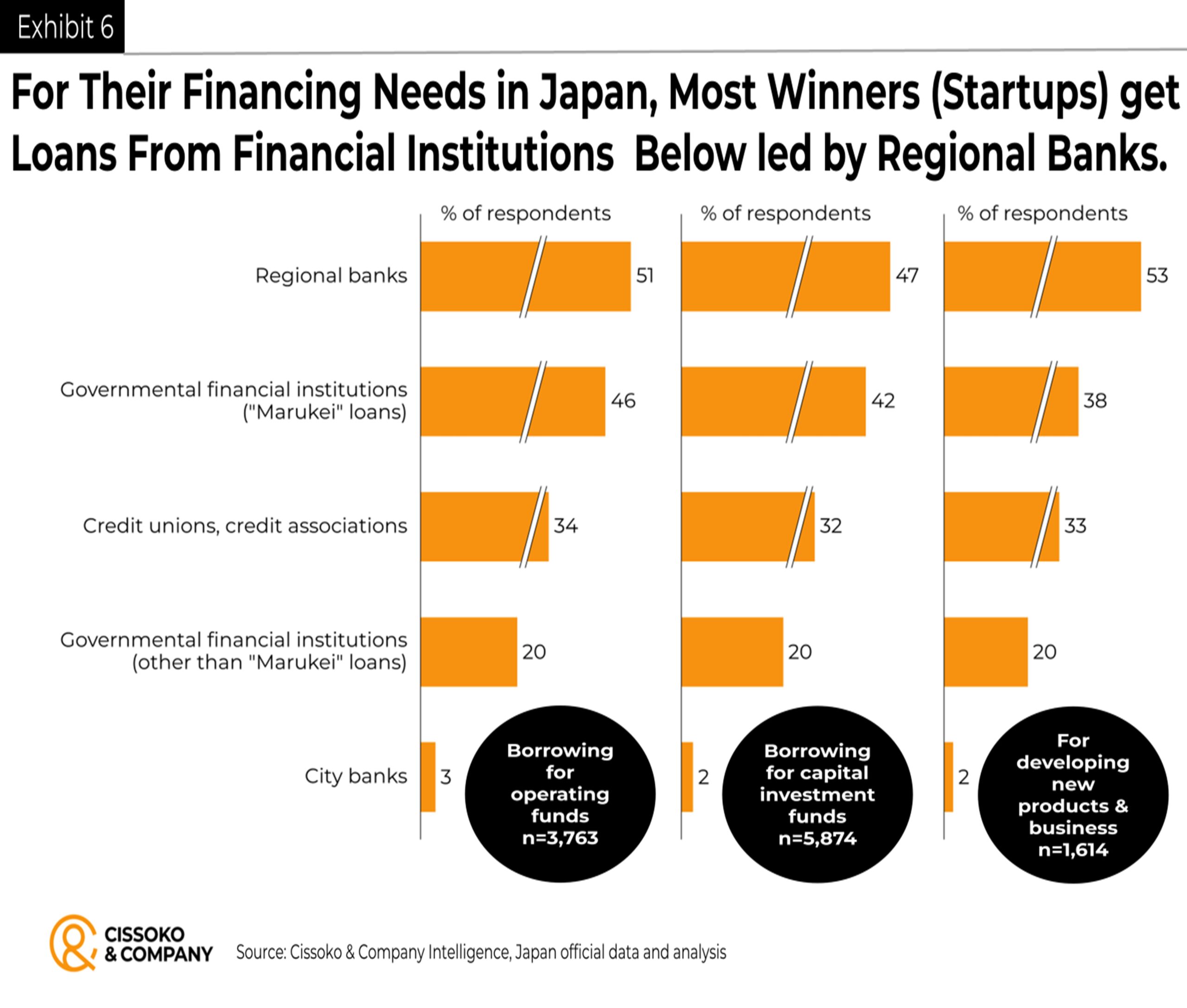
Our analysis shows that most small businesses (startups) borrow from regional banks (almost 50%), followed by government financial institutions (“Marukei” loans) (about 40%), and around 30% borrow from credit unions and credit associations.
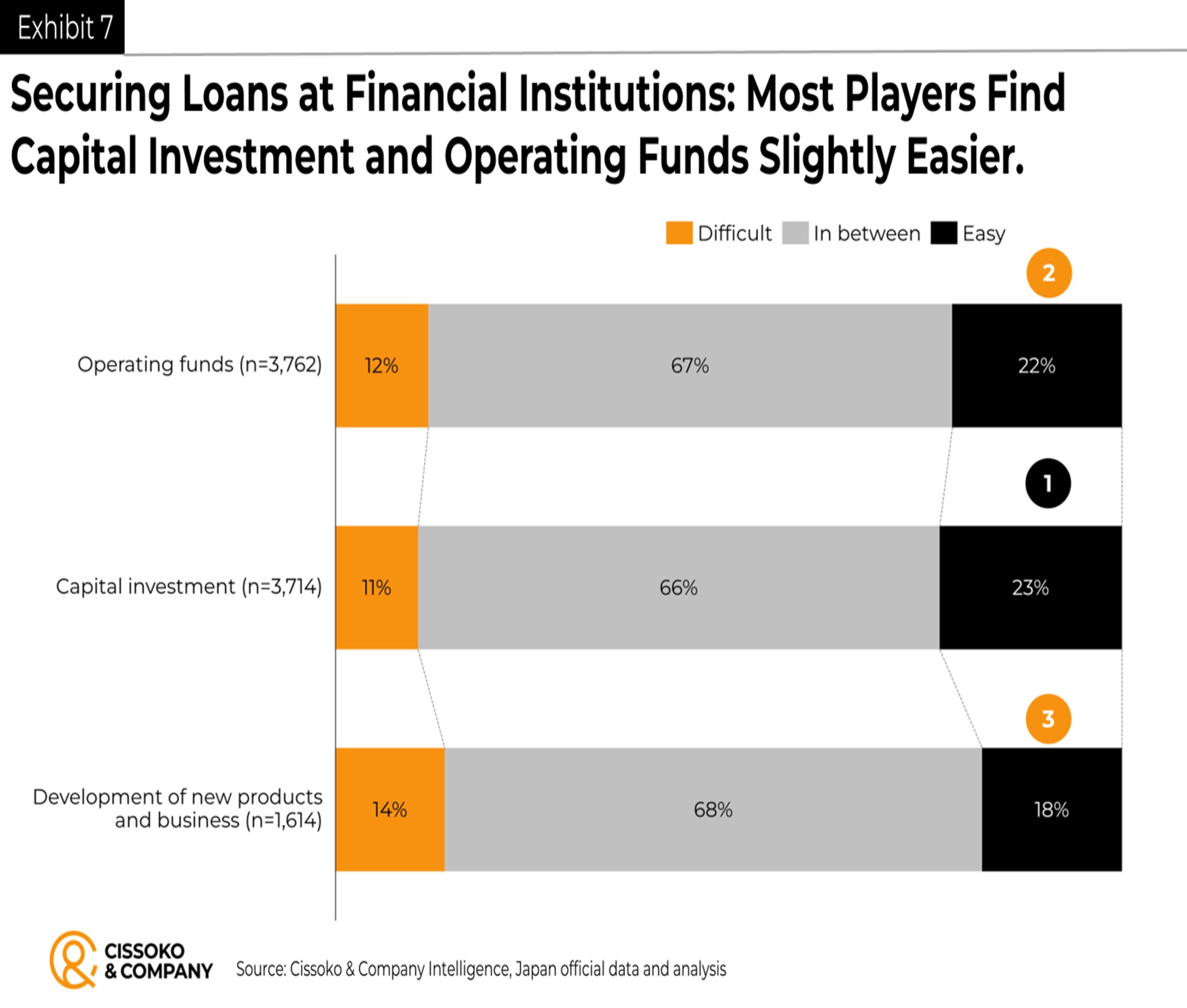
While it can be challenging to obtain loans as a startup in Japan and beyond, further analysis revealed that securing loans for capital investment and operating funds is slightly easier than financing a brand-new product or business concept development. As a result, 28% of small businesses (startups) count on themselves when financing brand-new product development, compared to capital investment and operating funds, where most rely on financial institutions.
Therefore, startup founders need to rethink and craft a winning strategy when it comes to securing loans from financial institutions, given that they come in many forms, and success depends on what the founder requests from each type of financial institution and for what purpose.
Having a fundraising strategy in this age of artificial intelligence is imperative for a startup’s success. In our experience, in many cases, winners are not those with the best ideas and business models, but those who win the fundraising competition on top of a stellar business concept. Moreover, many great entrepreneurs are unknown not because of their flawed ideas, but because they lack funding or a suitable financing source to propel them to stardom.
Get in Touch
We will respond to your message as soon as possible.
Insights to Win
Subscribe to our newsletter for in-depth analysis, reports, and our perspectives on business and economic issues related to the Japanese market and the global economy.