
Assessing Startup Performance: Can Your Startup Beat Japan’s Micro Businesses? Report Founder Brief
The expectations from startup entrepreneurs are incredibly high. A food for thought for founders is this: Can your startup outperform Japan’s micro businesses (small businesses) in this era of artificial intelligence?
In other words, can your startup create more value through product or business model innovation by increasing sales and profits more than traditional micro businesses?

As mentioned elsewhere, unlike publicly traded companies with readily available data, privately held firms pose significant challenges for founders and investors, including venture capitalists, angel investors, and other financial institutions, especially in evaluating performance, benchmarking, and managing startups.
Are there frameworks or methods that can help startup entrepreneurs and their backers effectively assess performance? Startups are known for challenging the status quo by creating value, but when they fail to capture value through genuine high growth (sales, not misleading metrics), are the disruptors being quietly disrupted?
For benchmarking and clarity, we have compiled the average sales of Japan’s micro businesses (with 1-10 employees) across nearly all industries, which are similar in size to most startups from seed to Series A and sometimes Series B around the world. To make the analysis as comprehensive as possible, we compiled the average sales of micro businesses (also known as small businesses), regardless of their legal structure (corporations or sole proprietorships).
Then, we compiled the average sales by distinguishing between the legal structures. That is, by separately compiling the sales of registered corporations and sole proprietors, since the type of business entity may influence sales performance. We also know that many startups are not registered corporations, at least in their early stages of development. Therefore, separating sales by legal structure on one hand, and regardless of the legal entity of the micro business on the other, helps provide a more accurate comparison.
Sales of Japan’s Micro Businesses (Small Businesses)
Across all industries in our sample, the average sales of micro enterprises, regardless of legal structure, total 125.7 million yen, with a median of 33.4 million yen.

Leading the list are electricity, gas, heating supplies, and water industries, with average sales of 1.3 billion yen.
Sales per Employee at Mico Businesses (Regardless of Legal Structure)
The average sales per employee amount to 20 million yen, with a median of 12.6 million yen.
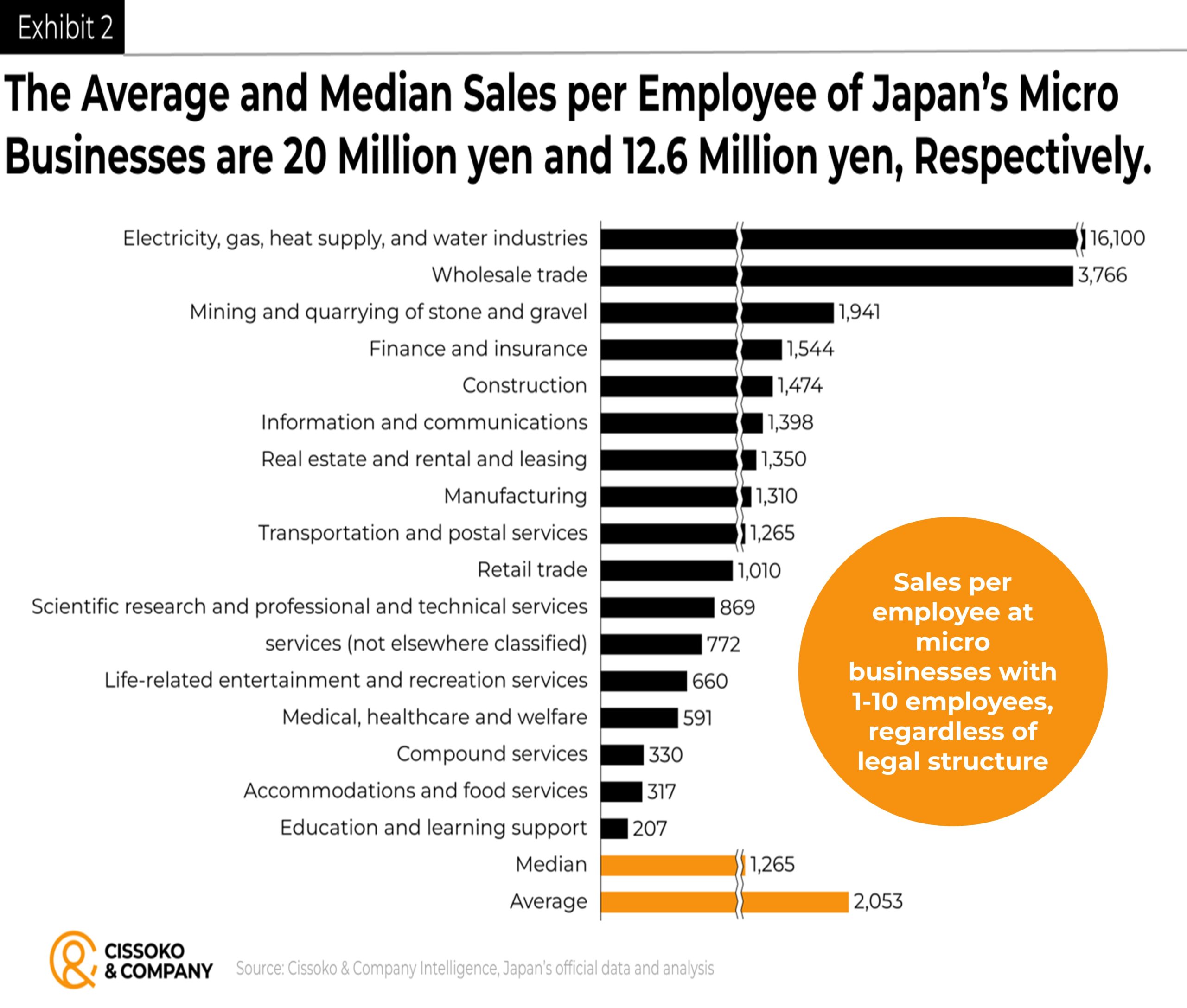
Once again, the electricity, gas, heating supplies, and water industries occupy the forefront, with an average of 161 million yen in sales, followed by the wholesale trade (refer to the chart below).
Sales of Micro Businesses Registered as Corporations
Micro businesses registered as corporations have higher average sales. In fact, these firms sell an average of 155.7 million yen, which is 23% more than when the legal structure was not considered in sampling these small businesses in the era of artificial intelligence.
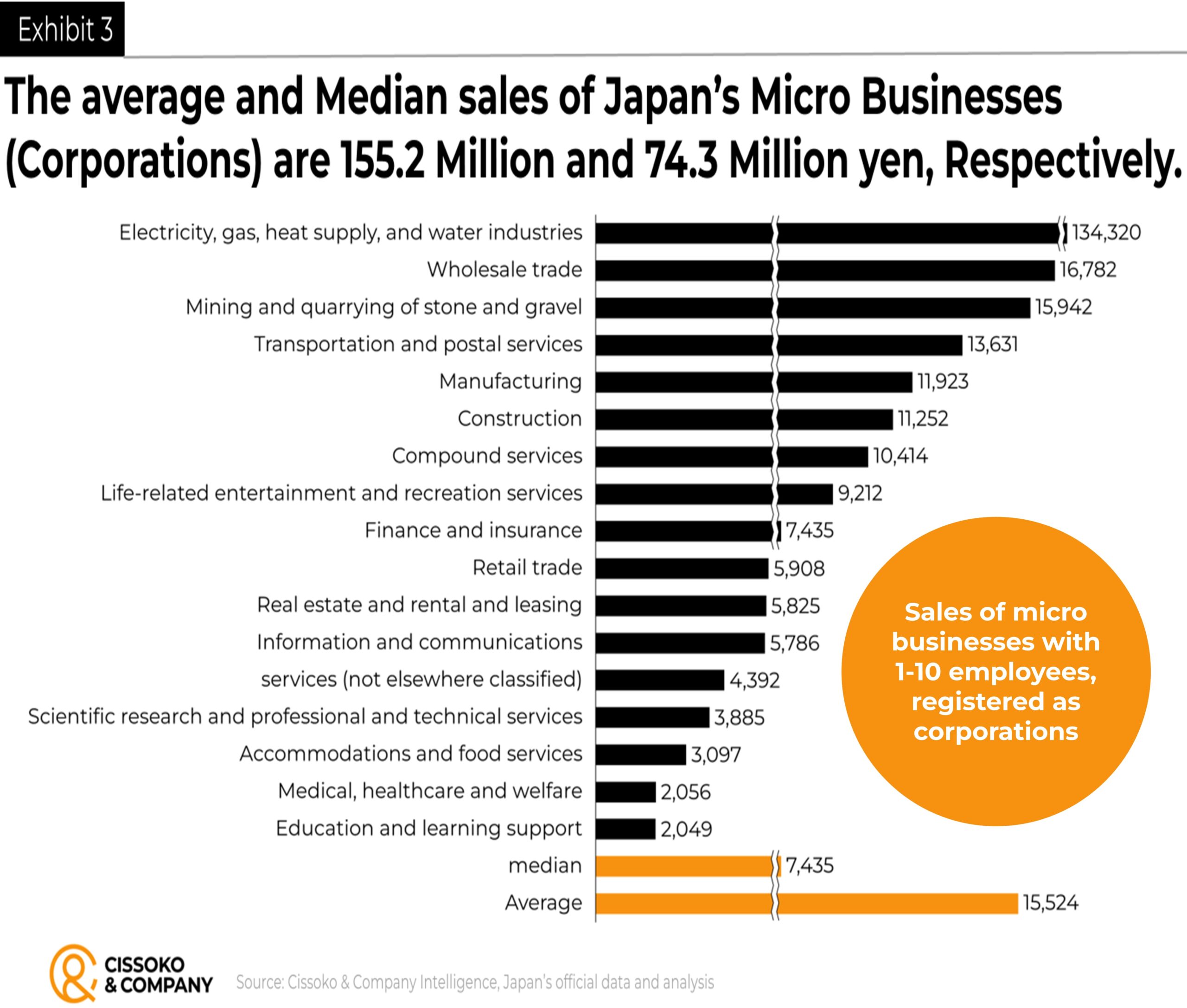
Similarly, the median of 74.3 million yen is also twice as high as before, indicating that a company’s legal structure can have a significant impact on revenues, especially for small businesses.
Sales per Employee of Micro Businesses Registered as Corporations
Similar to the average total revenues (sales) per business, companies registered as corporations tend to have higher average sales per employee.
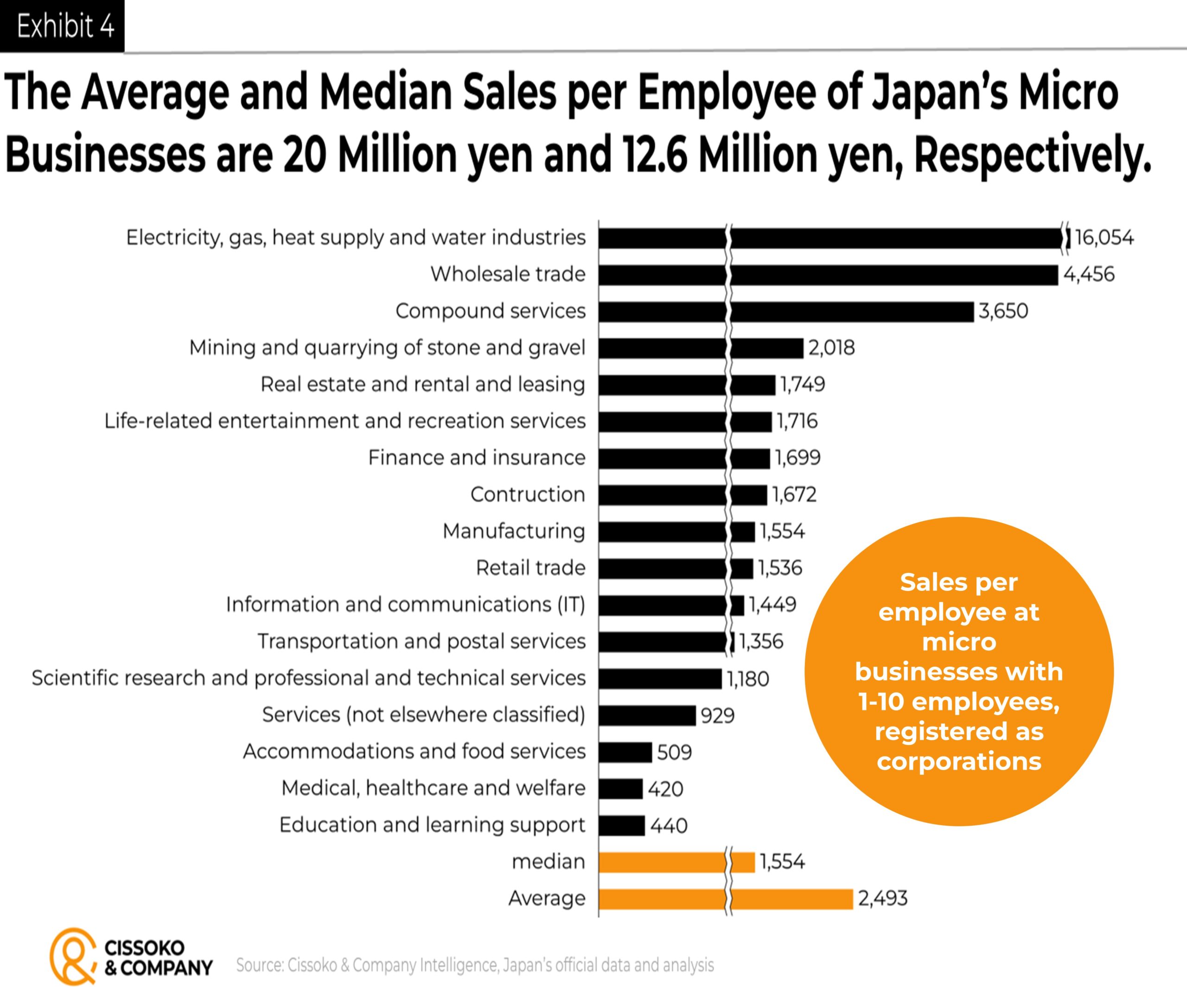
Specifically, the typical company reports approximately 25 million yen on average and 15.5 million yen as the median, which are noticeably higher than the figures mentioned earlier.
Sales of Micro Businesses Registered as Sole Proprietorships
Unlike registered corporations, sole proprietorships have lower average and median sales figures. That is, 11.8 million and 9.8 million yen, respectively.
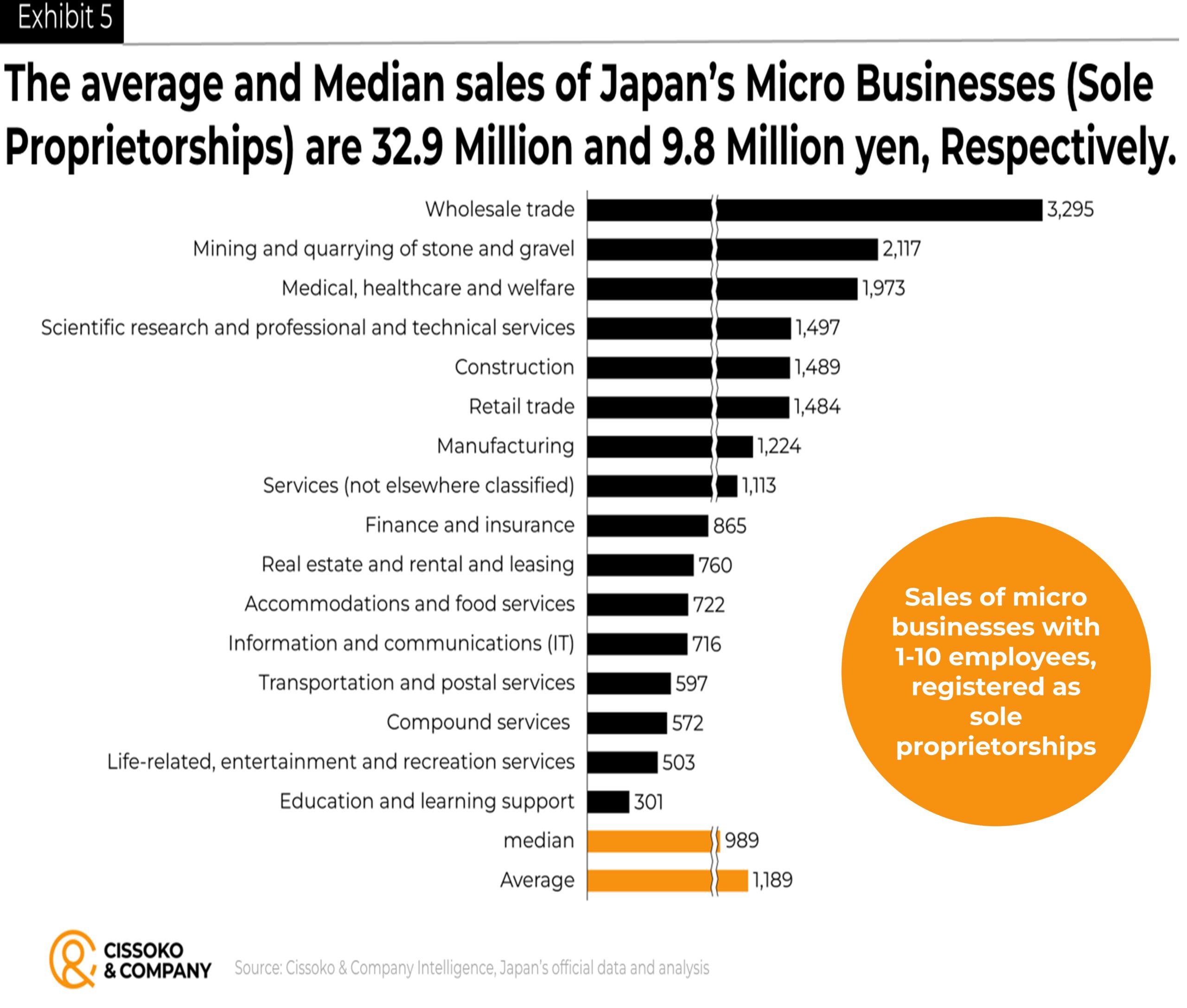
The difference in sales figures between registered corporations and sole proprietors lies in the fact that most industries that generate over one billion yen in annual sales, such as electricity, gas, heating supplies, and water industries, are almost all corporations by their legal status.
Sales per Employee of Micro Businesses Registered as Sole Proprietorships
Like their lower annual sales per business, the average sales per employee tend to be significantly lower than those of registered corporations.
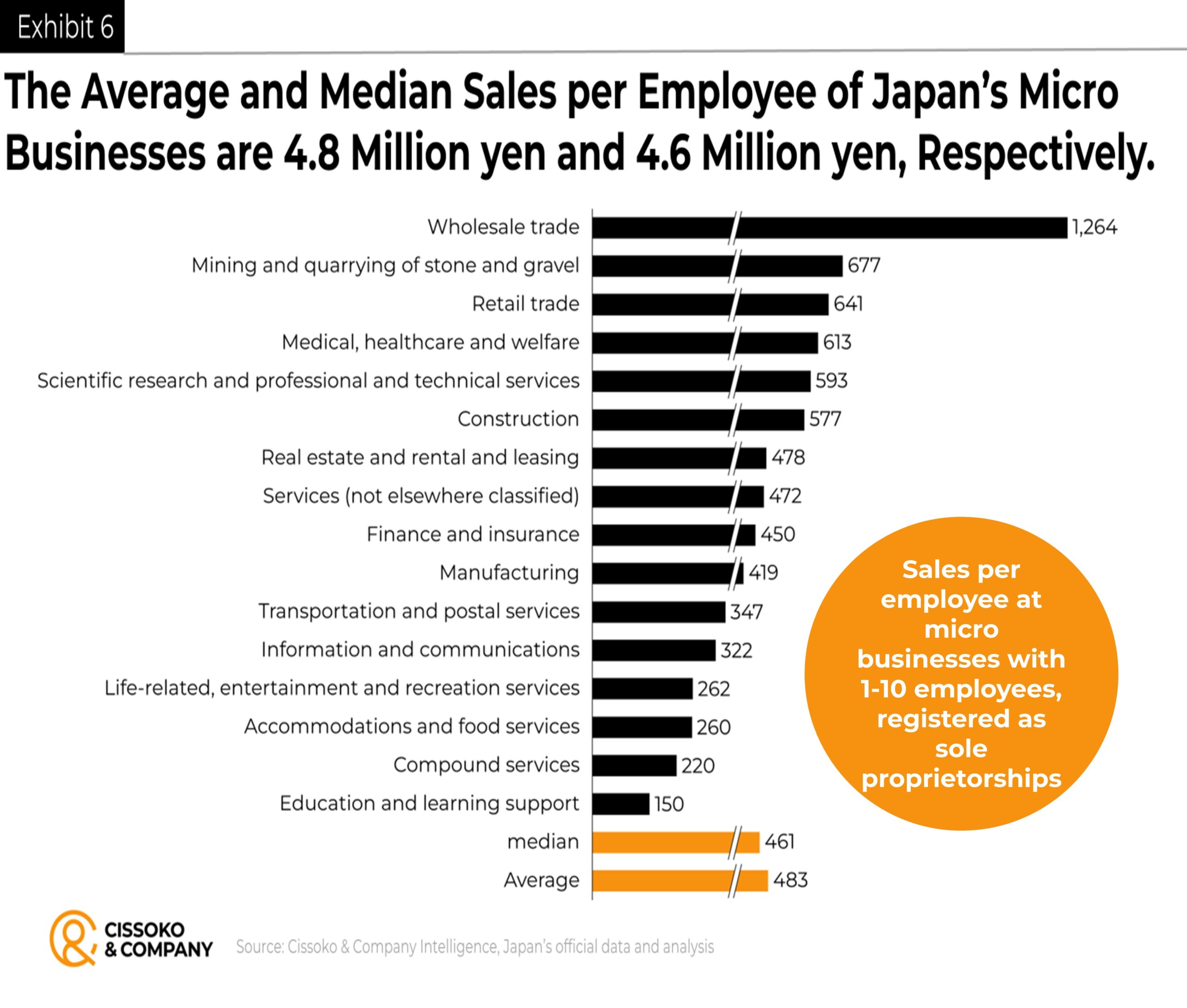
That is, the average and median annual sales per employee are 4.8 million and 4.6 million yen, respectively.
Why is it Time for Startups and Their Backers to Assess Performance Against Micro Businesses?
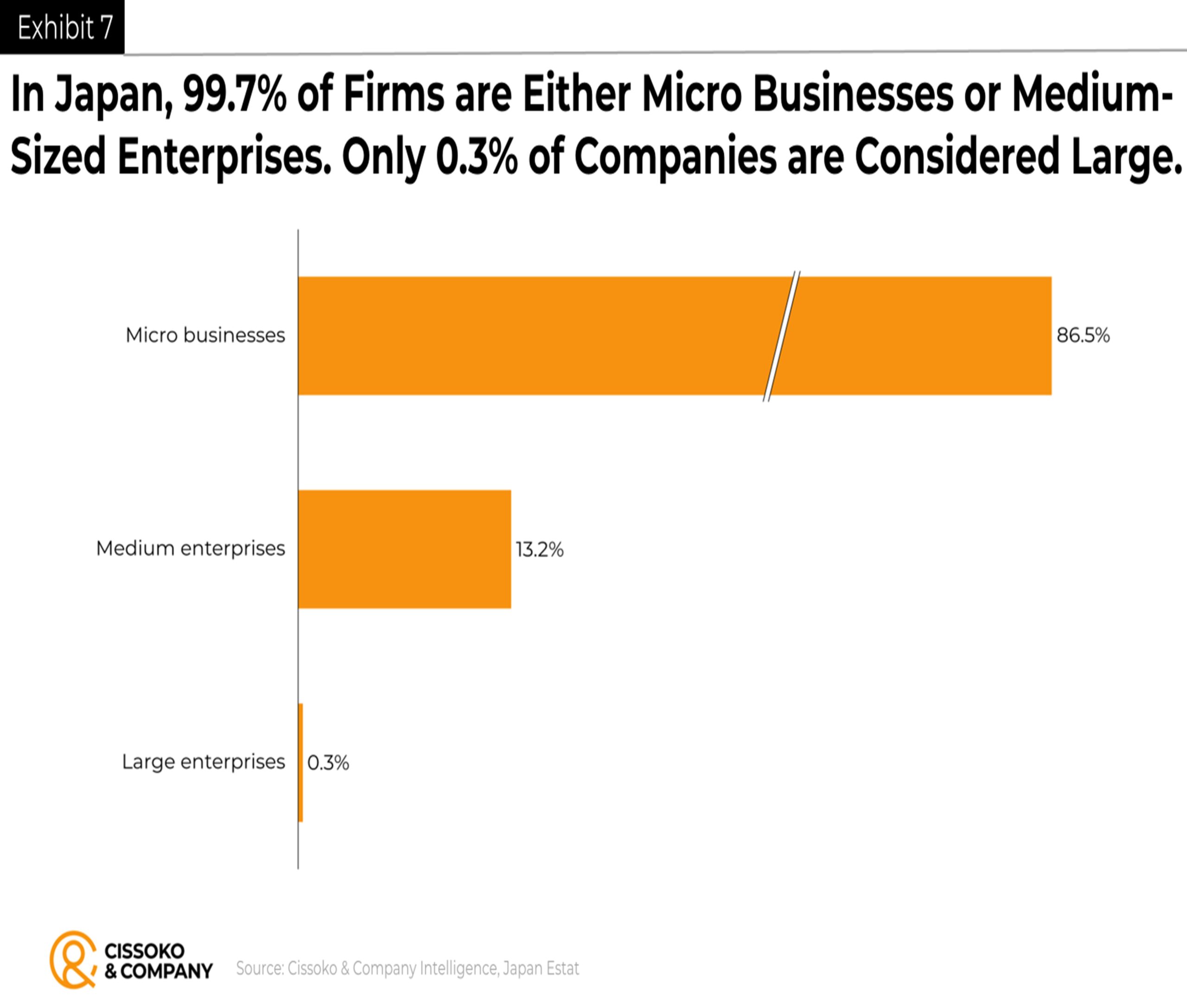
Again, micro businesses (small businesses) are some of the best peers against which we can assess the performance of startups, as they resemble them in many ways, such as the number of employees, even if they are not innovative, ambitious, or disruptive like leading startups. For one thing, in Japan, as well as in most countries, small and medium-sized businesses dominate the economic landscape. Consider this: only 0.3% of firms in Japan (11,000 companies) are considered large, but they account for 47% of the country’s GDP.
Assessing the Average Sales Performance of Japan’s Startups
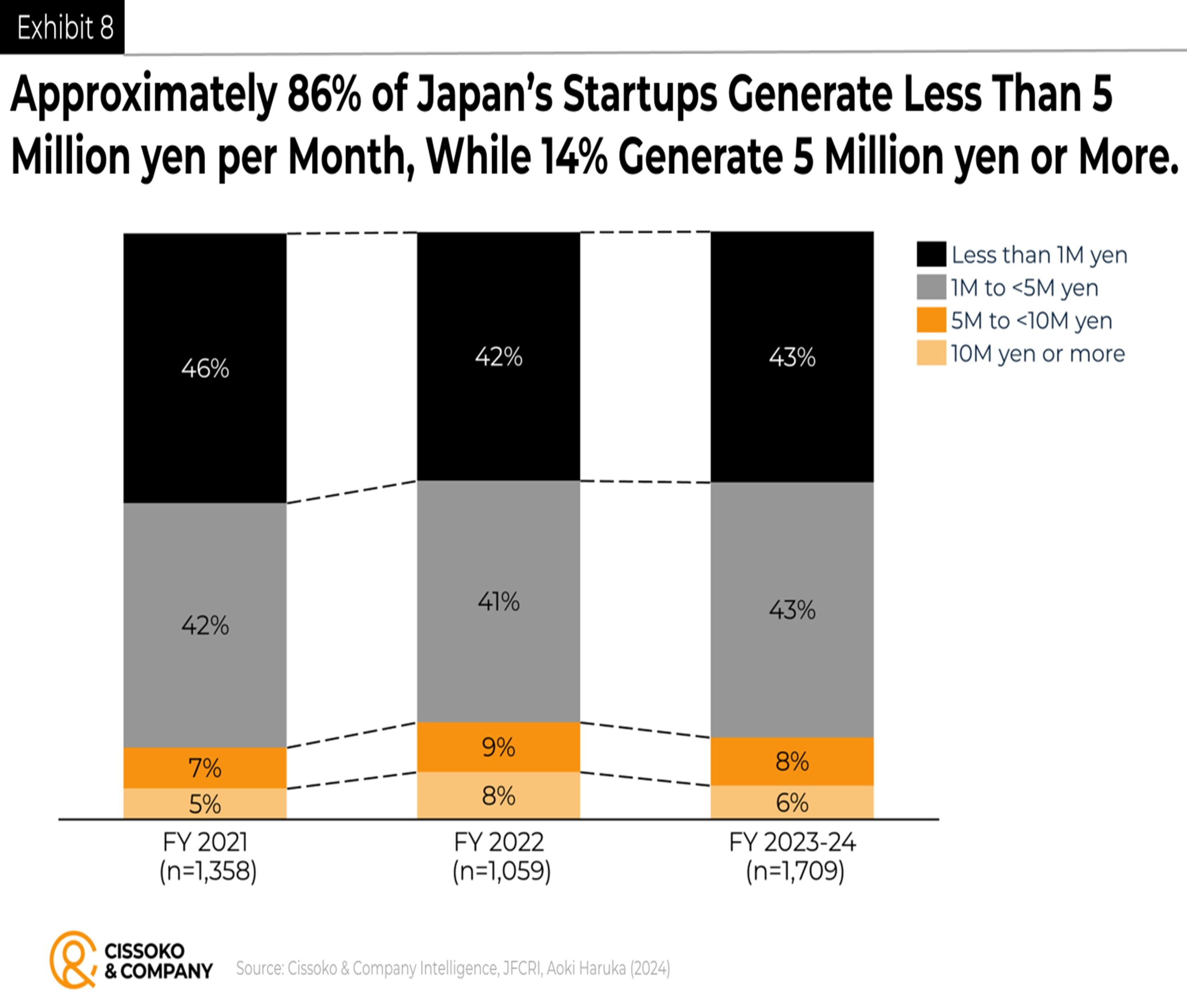
Recently, the distribution of monthly sales among Japan’s startups has been as follows: about 43% of startups made less than one million yen in sales; roughly the same percentage (43%) reported sales between one million and five million yen; and the remaining 14% recorded monthly sales of five million yen or more.
Furthermore, analysis shows that over the past three years through April 2024, startups on average sold 3.4 million yen per month.
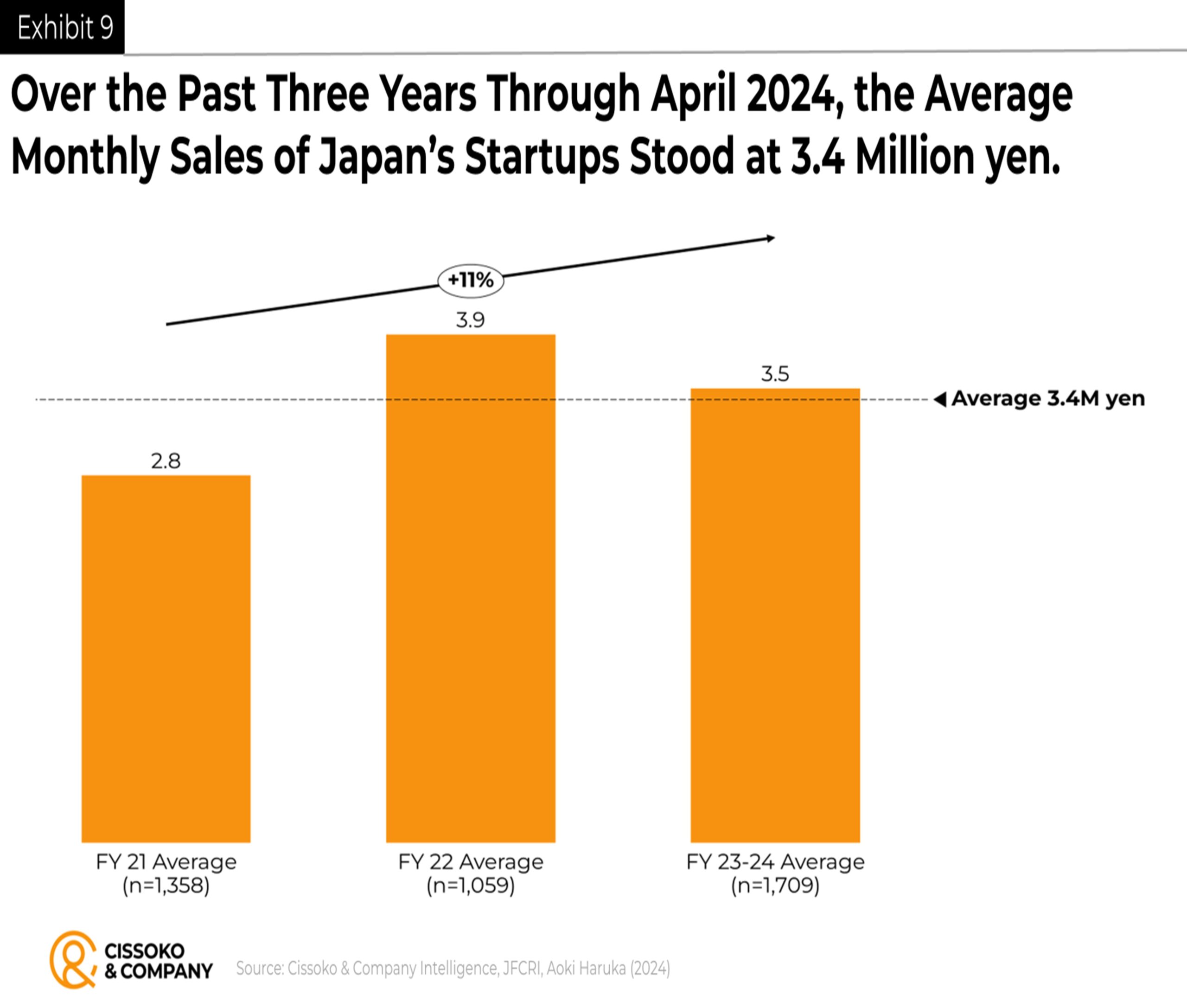
While not too bad, depending on various factors, we don’t believe that kind of monthly sales level is enough to surpass Japan’s average micro business in annual revenue.
Comparing Startups’ Average Sales Performance With Micro Businesses
It appears that the average Japanese micro business, regardless of its legal structure (corporations or sole proprietorships), generates three times the revenue of the average startup in our sample, amounting to 126 million yen (for legacy micro businesses) compared to 41 million yen for the startup disruptors. In other words, it appears that disruptors are being disrupted in silence when it comes to value capture.
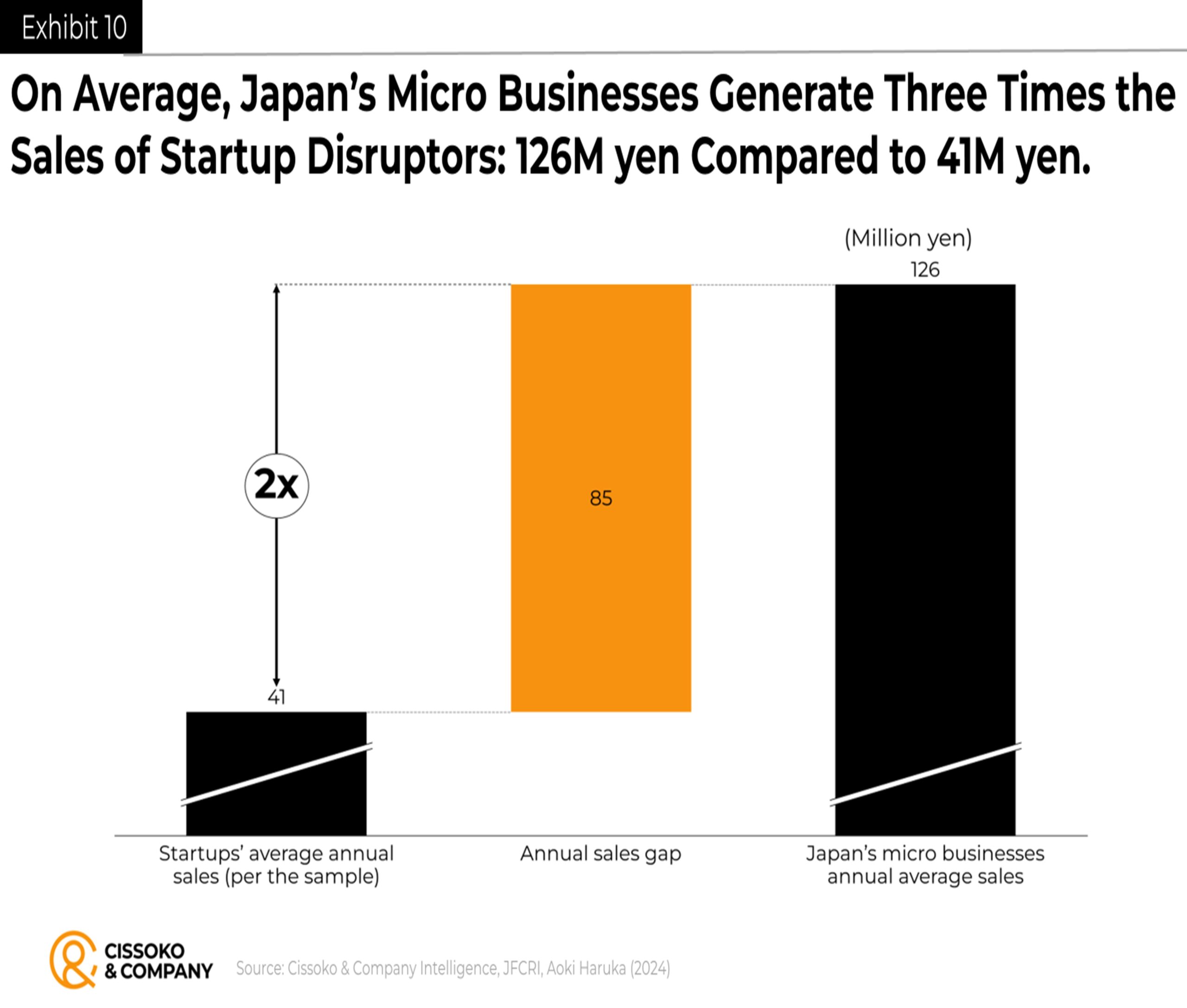
Again, startup founders and their backers, such as venture capital firms and other financial institutions, need to carefully assess startups’ performance by applying the framework outlined in this analysis.
Indeed, without this benchmarking throughout the startup lifecycle, stakeholders may waste time and resources on a business model or product innovation that is unlikely to succeed.
Above all, this type of exercise can be an excellent benefit for all stakeholders because it shifts the business focus not only on value creation (where most startups excel), but also on value capture through sales and profits (the biggest challenges facing many startup ideas) before it becomes too late.
Get in Touch
We will respond to your message as soon as possible.
Insights to Win
Subscribe to our newsletter for in-depth analysis, reports, and our perspectives on business and economic issues related to the Japanese market and the global economy.