
Startup Financing Through Financial Institutions: What You Need to Know to Win — Report Founder Brief
It is widely recognized that the primary objective of startup fundraising is to secure investment from venture capitalists. However, for most founders, securing such essential funding remains relatively low. Consequently, over 60% of entrepreneurs are compelled to bootstrap or seek financing from financial institutions, which often impose numerous conditions or, in the worst cases, reject loan applications when startups do not meet fundamental lending requirements.
Indeed, there are no shortcuts to startup fundraising or financing. However, how can founders improve their chances of securing loans from financial institutions? What knowledge must entrepreneurs have about the entire process of obtaining funding through banking channels? Additionally, what information should founders know to effectively navigate the processes of attracting investment and securing government grants and subsidies?
What Kind of Business Information are Lenders More Likely to Request From Startups?
Many entrepreneurs remain unaware of, or unsure about, the types of documents needed when applying for loans at financial institutions during their fundraising efforts, as they are too focused on product and business model innovations.
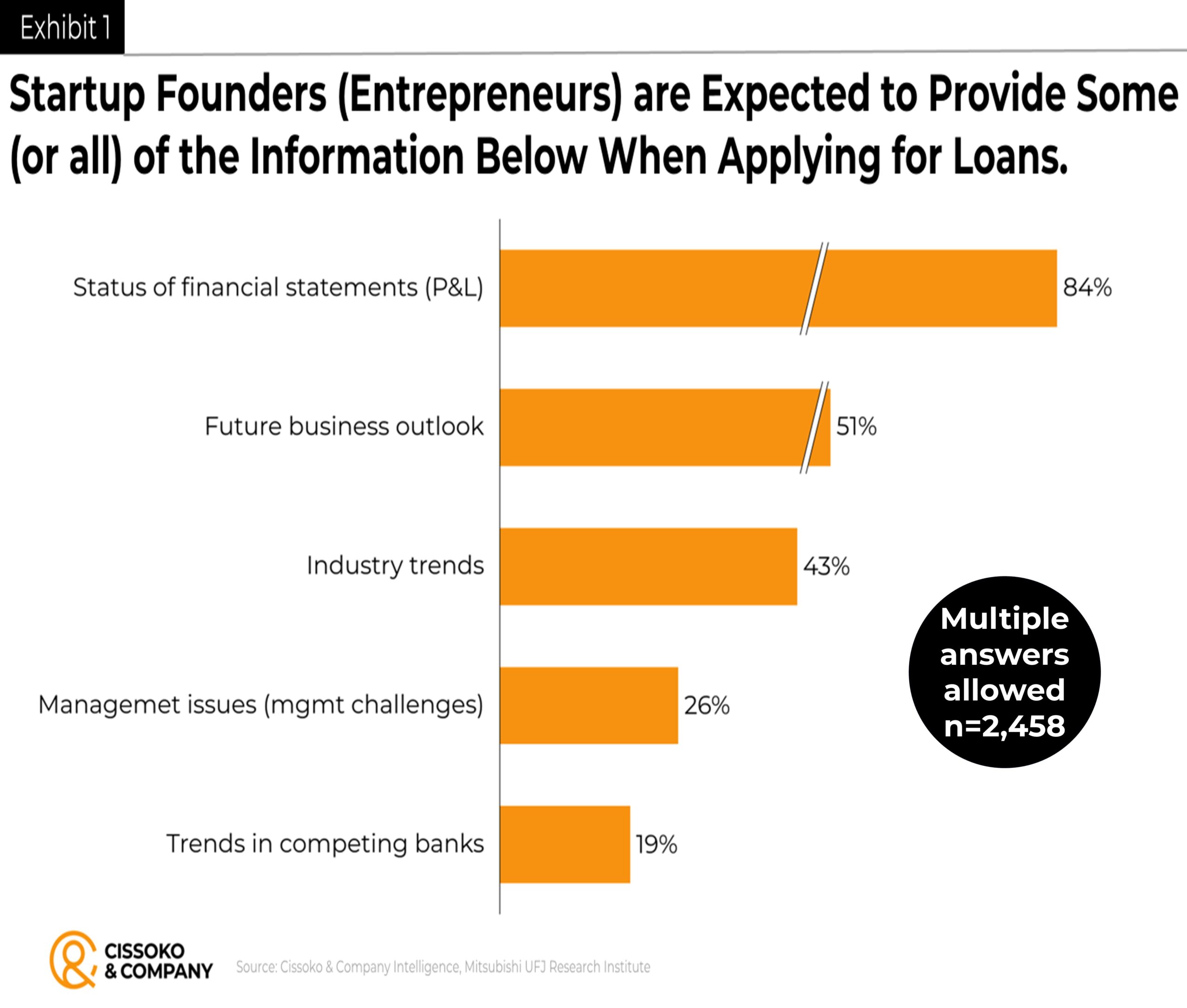
Our analysis shows that the top three types of information financial institutions are likely to request are details of entrepreneurs’ financial statements, their business outlook, and key industry trends.
How Many Meetings With Financial Institutions Should Entrepreneurs Expect at Various Startup Stages?
Borrowing from financial institutions is a partnership between a borrower and a lender. Therefore, founders who wish to be financed through this route should be familiar with the lender’s internal workings, particularly its primary lender.
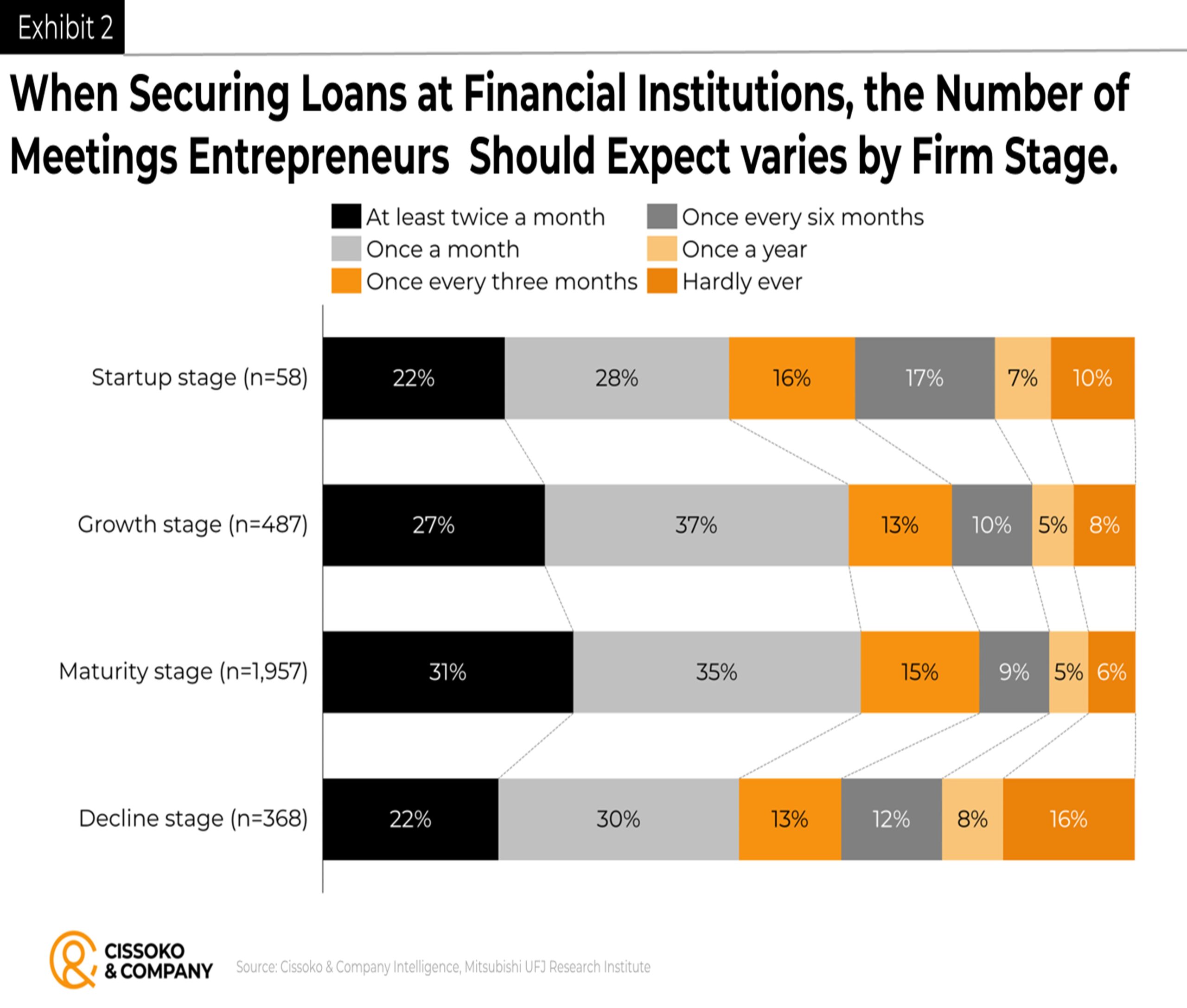
For example, the number of meetings they should expect ranges from once a month to twice or more, depending on the startup’s growth stage. In some cases, entrepreneurs should rarely expect to meet with their lenders.
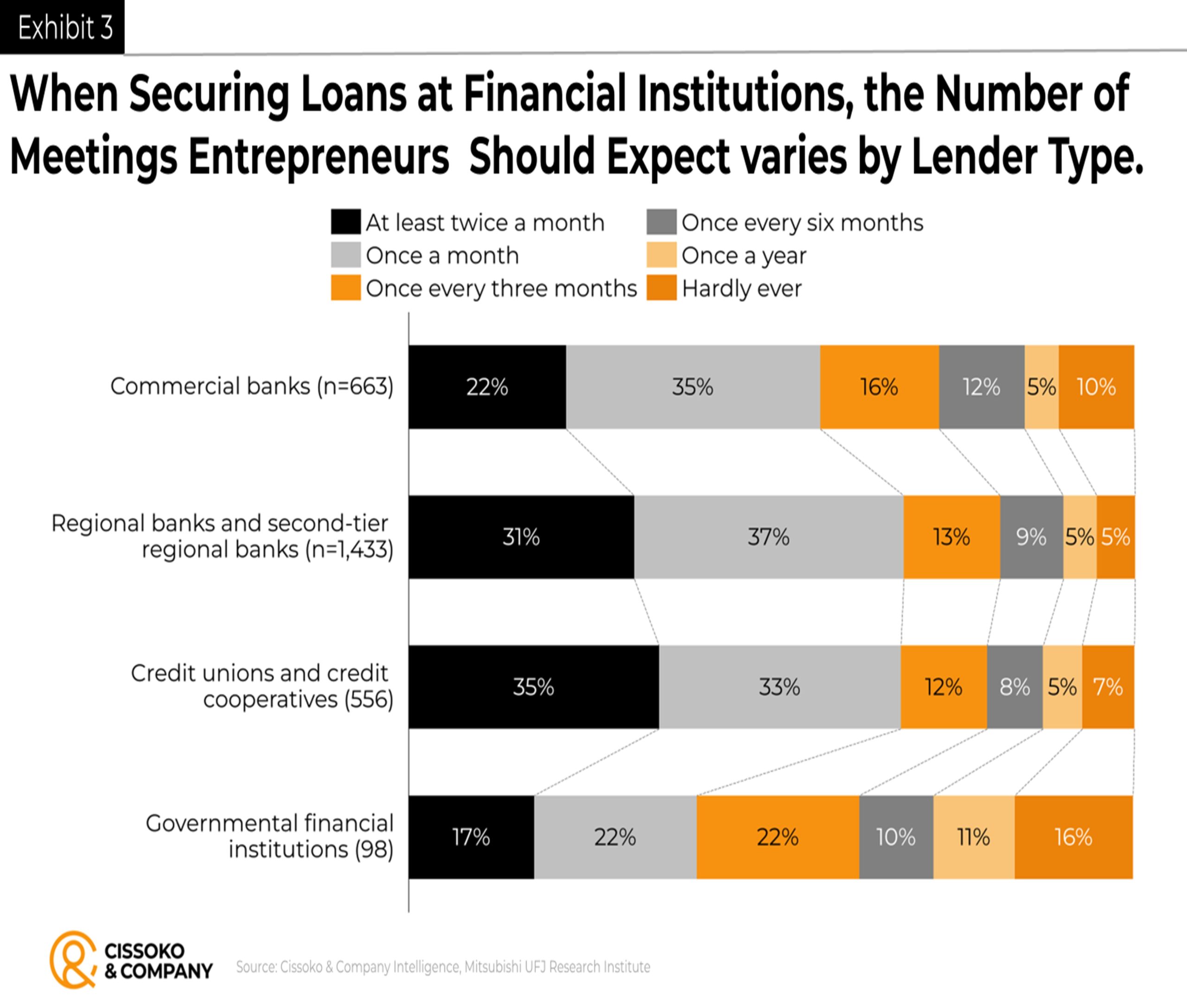
Given that lenders come in many shapes and sizes, entrepreneurs need to grasp the degree to which the number of (loan) meetings depends on the type of lender where founders apply. As such, knowing the difference matters for fundraising strategy.
Why are Many Startups Denied Loans (or Rejected)?
Beyond collateral (security), loan applications from startup entrepreneurs are rejected primarily due to three reasons.
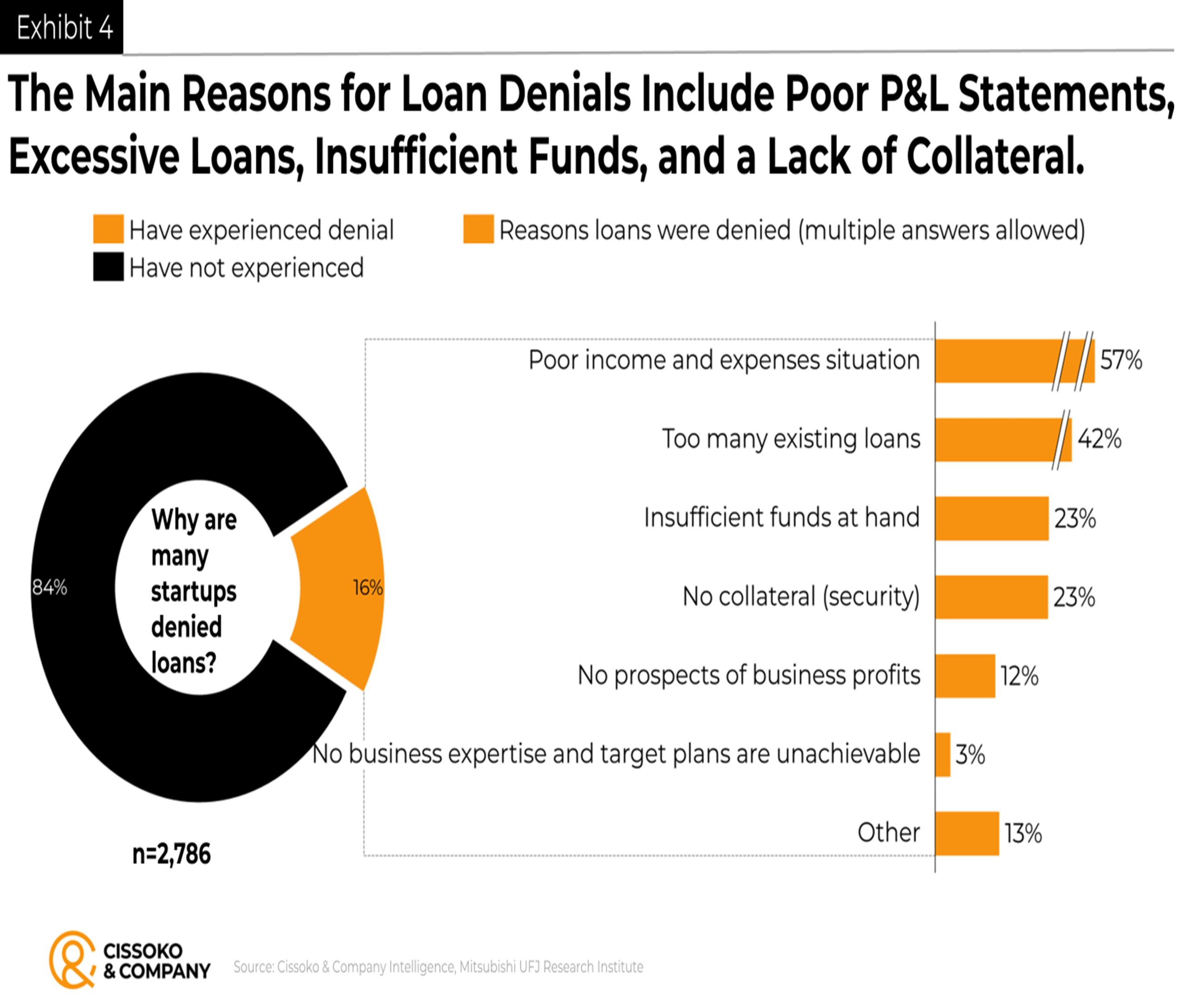
Poor income and expenses regarding their financial statements, followed by too many loans from other financial institutions, and insufficient funds at hand at the time of their application.
Over the Duration of the Loan, What Kind of Changes are Lenders More Likely to Accept From Startups?
Indeed, the global economy has become more volatile, complex, and uncertain, intensified by the rise and dominance of technological innovations, especially artificial intelligence.
Given this unpredictability, many potential borrowers from financial institutions want to know what changes can be made during the term of their loans. We found that capital payment deferrals, extending the payment period by about a year, and interest rate reductions are possible in many cases.
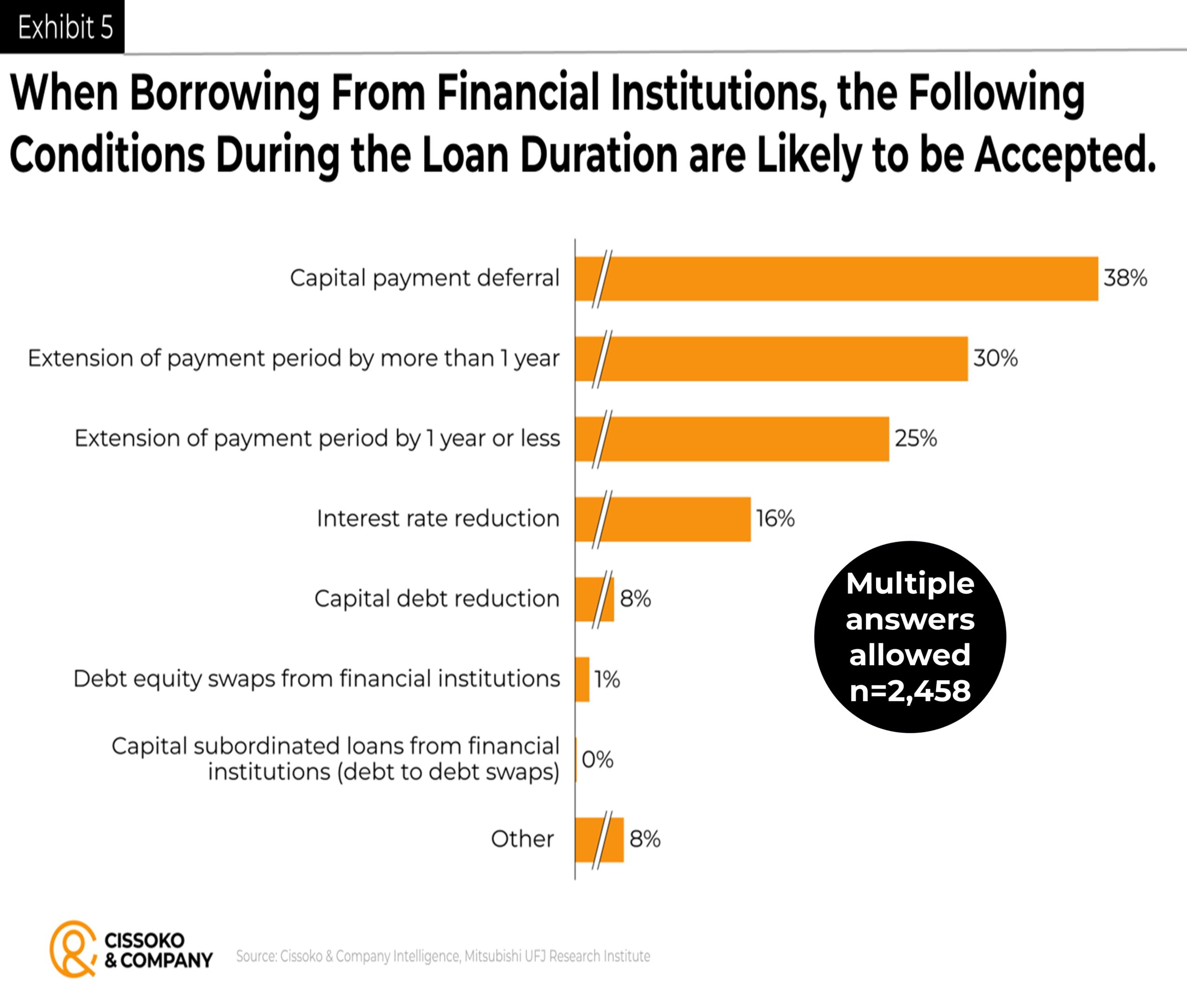
When it comes to borrowing from financial institutions, attracting venture capital investments, and securing government grants or subsidies across various growth stages—from launching a startup to reaching maturity—those that are more established tend to have an unfair competitive advantage.
To assess the relative performance of startups at different growth stages, it is essential to evaluate them across three principal fundraising aspects. These encompass obtaining loans from financial institutions, securing investments from investors such as venture capitalists, and the discrepancy between entrepreneurs’ requirements and investors’ expectations, as well as the experience required to navigate loan procedures through financial institutions and investors. The initial analysis below underscores the disadvantages faced by newly launched startups when compared to those in early growth and maturity stages.
Financing a Startup Through Financial Institutions: How Disadvantaged are the Newly Established Firms (Startups)?
Compared to the other two stages in the startup’s lifecycle, funding a venture is far harder at this stage than at the initial growth or expansion stage. As such, founders need to rethink their fundraising strategies when launching a new startup, given this inherent competitive disadvantage. As we all know, in the business world, there is no “free lunch.”
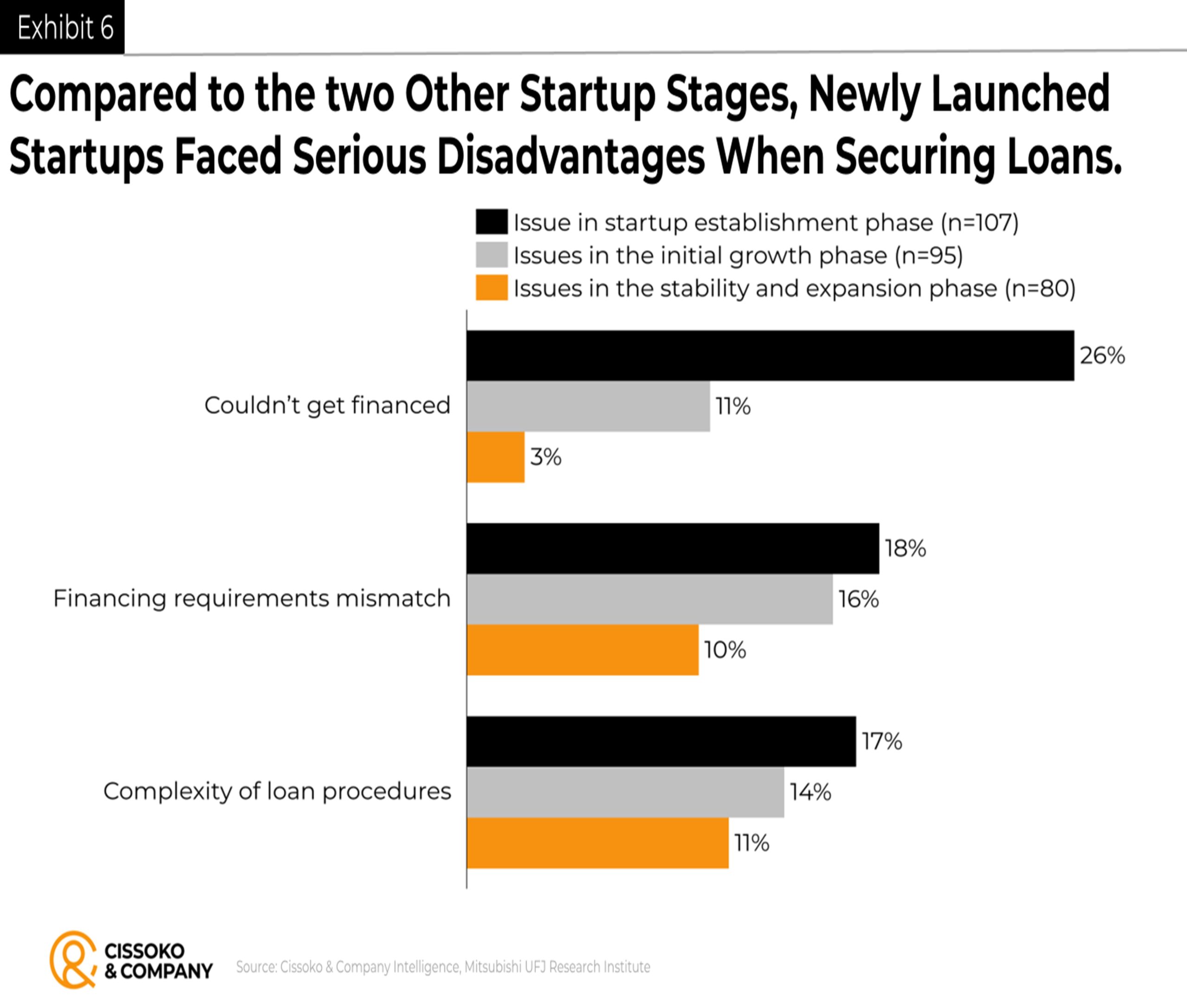
Thus, the onus is on founders (entrepreneurs) to ensure their financial house is in order. That is, they need to have clean, up-to-date financial statements that third parties, such as financial institutions and investors, can readily access upon request and that demonstrate the economic health of their venture. Failure to have such documents raises a red flag about the founders’ understanding of management in the age of GenAI.
Attracting Investments From VCs and Other Investors: How can the Newly Launched Startup Compete?
Similarly, when it comes to attracting investments and gaining investors’ interest in their business idea, newly launched startups face disadvantages compared to the other two stages. These stem from a lack of trust in their untested business idea, a poor understanding of the complexity of investment procedures, and failure to meet investors’ funding requirements.
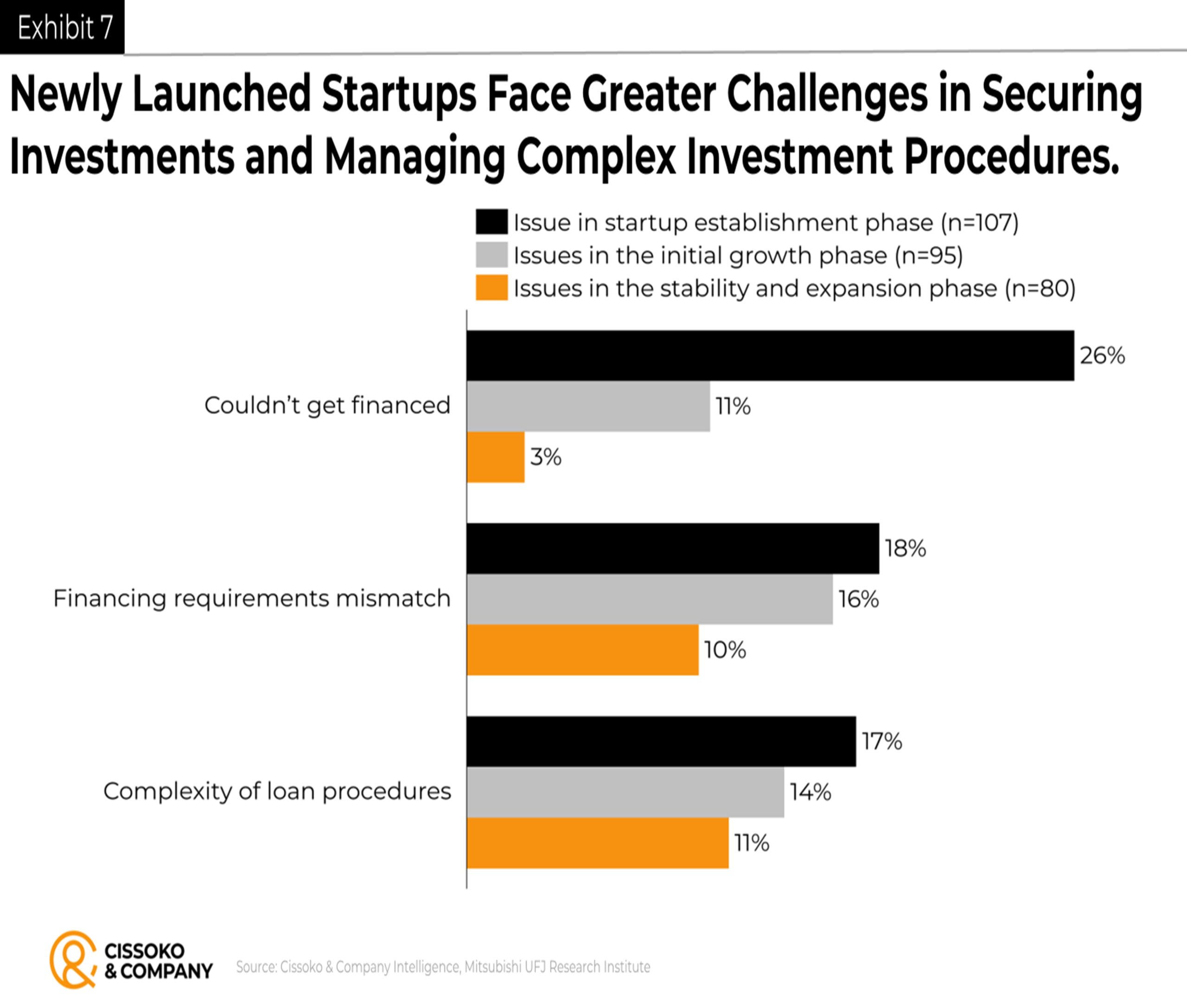
As such, success requires more education about the intricacies of attracting funding, especially in the early stages of the startup, and learning the vocabulary of the venture capital world, such as “term sheet,” as well as basic venture capital investing math (i.e., pre-money and post-money valuation, etc.).
Attracting Grants/Subsidies: Why Some Succeed Where Others Fail?
Unlike the two other fundraising situations mentioned earlier, when seeking grants or subsidies, newly launched startups can improve their chances of securing more funding by educating themselves and researching the government support available to startups at each stage of their lifecycle.
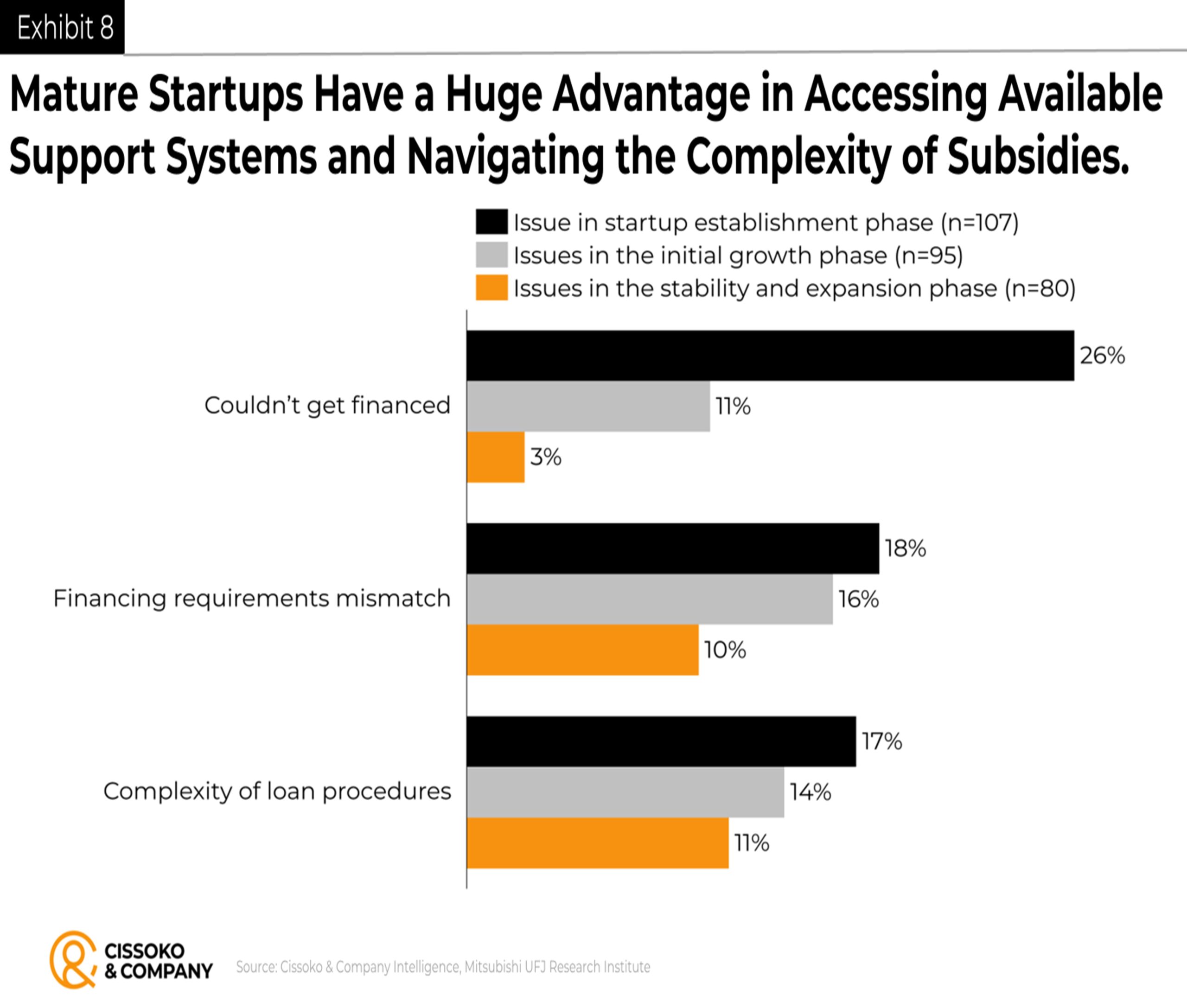
For one thing, newly established firms, although more subsidized than in the other two growth stages, still struggle to navigate the complexity of obtaining grants or subsidies, which ultimately hampers their fundraising prospects in Japan and beyond.
Indeed, armed with the insights from this report, we believe that startup entrepreneurs can improve their chances of building better relationships with financial institutions. Above all, founders can increase their chances of securing loans in this era, when venture capital fundraising is beyond the reach of many entrepreneurs due to intense competition for scarce resources.
Get in Touch
We will respond to your message as soon as possible.
Insights to Win
Subscribe to our newsletter for in-depth analysis, reports, and our perspectives on business and economic issues related to the Japanese market and the global economy.