
Japan’s Innovation and Entrepreneurship: New Product Development (NPD) Trends
In today’s business environment, driven by artificial intelligence and technological innovation, having new product development (NPD) capabilities is now crucial for thriving rather than just surviving the disruption compounded by geopolitical threats.
Indeed, technological progress has lowered many industries’ barriers to entry, with the spread of AI tools making tasks that were once reserved for highly skilled employees more accessible to a broader range of workers. Consequently, many industries are struggling to manage the surge of low-quality products and the standardization driven by automation, which has squeezed profit margins.
As a result, survival depends on building capabilities across several key areas of the product development lifecycle, including ideation, concept development and testing, business re-evaluation of the concept’s financial viability, design, engineering (including prototyping), validation, and commercialization (product launch), among others.
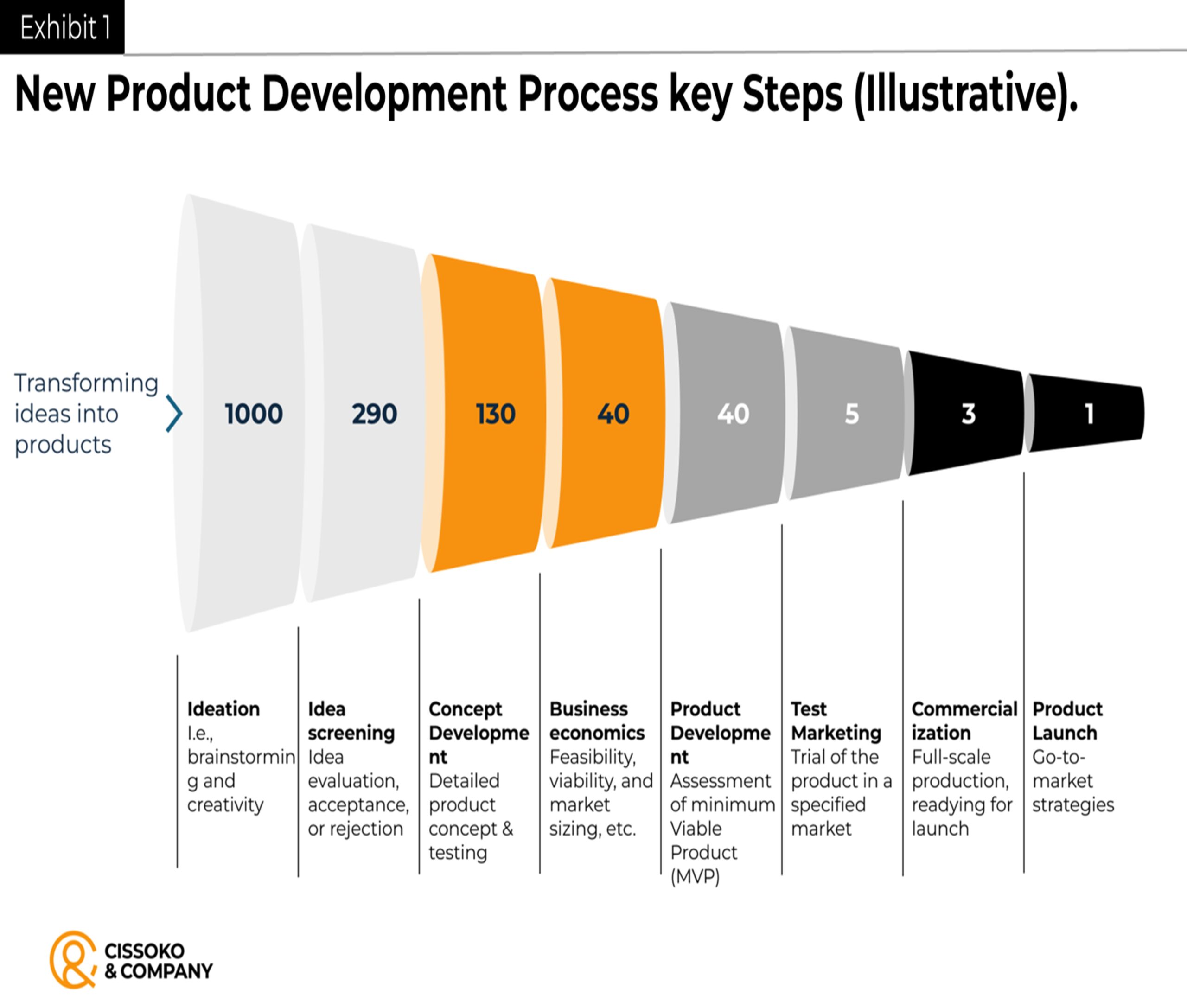
To improve product quality, cross-functional product development teams are essential to expand the idea pool. Indeed, product quality matters not just for business reputation but ultimately for success in a rapidly changing competitive environment. Japanese firms did not dominate global markets over the past decades by luck but through the systematic implementation of processes and techniques such as total quality management (TQM), focusing on product safety, durability, and usefulness, and meeting or exceeding customer expectations.
Moreover, creativity plays a crucial role in new product development. High product failure rates during this process often stem from a lack of, or poor, creativity processes across the board.
In our AI-driven economy, beyond traditional creative tools for ideation (brainstorming), product design, project evaluation, and portfolio analysis (including agile project management), AI-powered tools for creativity have proliferated in recent years, enhancing productivity in the creative process involved in new product development—from onsite projects to managing hybrid teams.
While software-enabled creativity can be helpful, companies must be cautious of its limitations, especially in idea evaluation, given the feasibility, desirability, and financial investments required to make a product successful in the marketplace.
Therefore, developing new product capabilities in this age of generative AI will demand a relentless focus on quality and creativity, since creativity is a learnable skill that can be cultivated through training and aligned incentives. This is important because innovation requires novelty, differentiation from existing products, and increased usefulness and customer benefits.
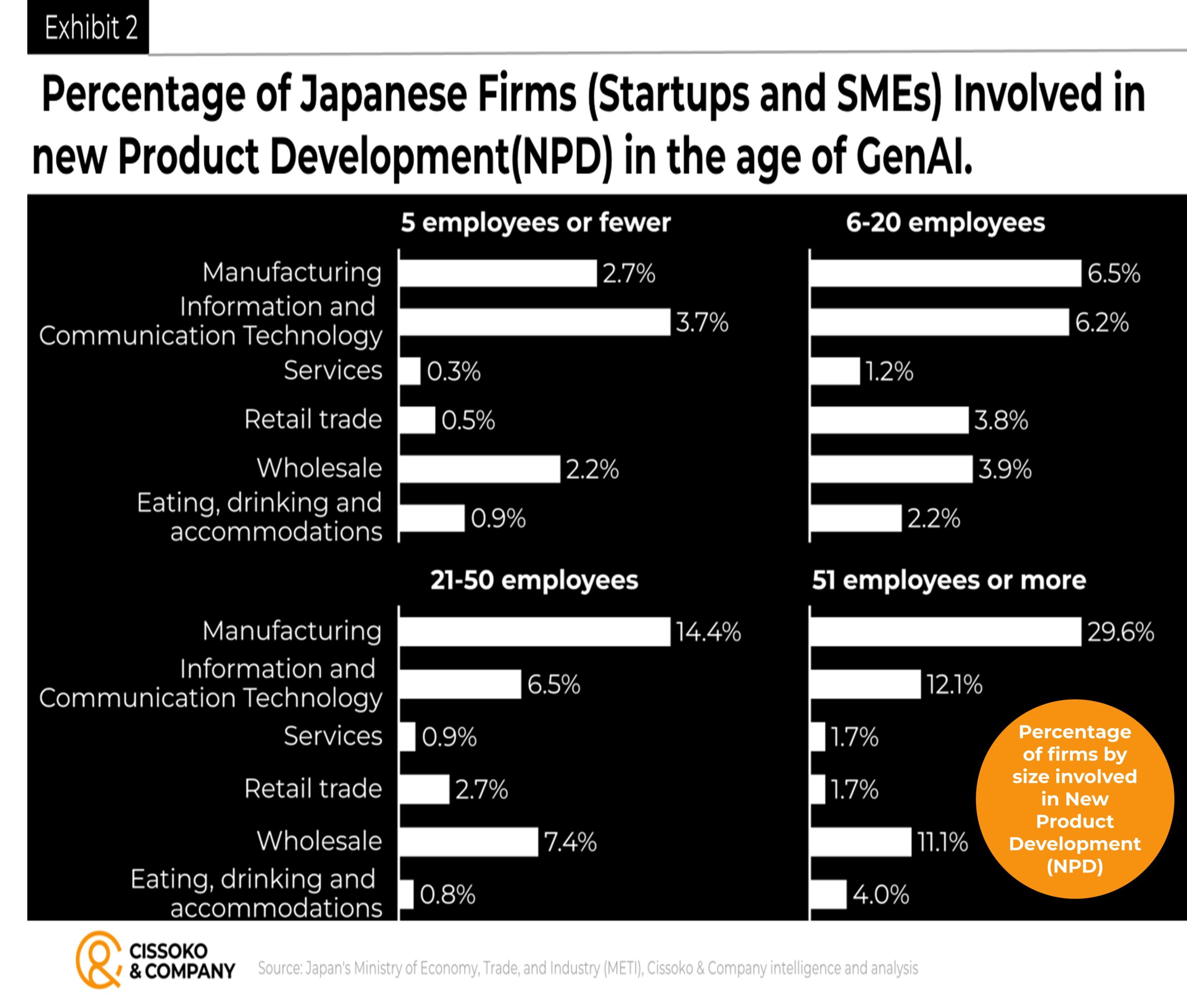
Our analysis of Japanese players in new product development indicates that micro and smaller businesses across industries lag behind their mid-sized competitors, measured by the percentage of firms engaged in new product development amid AI-enabled startup competition.
As competition intensifies and product lifecycles shorten, survival will depend on building the right capabilities to develop winning, repeatable formulas for new product development, leveraging differentiated technological features, and a value proposition that beats the competition.
Like most aspects of business, the customer is king, and new product development is no exception. Capabilities and products must be grounded in customer needs or proven potential demand. Failing to focus precisely on the customer and market needs leads to frustration and high product failure rates.
Furthermore, new product development capabilities rooted in an entrepreneurial culture, supported by reduced bureaucracy and top management commitment, offer a strong competitive advantage in speed to market, increasingly distinguishing market leaders from laggards.
If experience teaches anything, it’s that organizational structure can either hinder or boost a firm’s innovative abilities. Therefore, in this age of artificial intelligence, companies need to reevaluate their organizational structure, ask tough questions about whether their existing setup—too formal, bureaucratic, or centralized—is impeding success, and take the necessary steps to make improvements.
Get in Touch
We will respond to your message as soon as possible.
Insights to Win
Subscribe to our newsletter for in-depth analysis, reports, and our perspectives on business and economic issues related to the Japanese market and the global economy.