
Strategy Amid Global AI Competition: What Separates the Winners From the Rest? Report CEO Brief
Strategy is one of the most overused terms in management’s lexicon. For one thing, over the past decade, there have been many definitions of strategy, rooted in diverse economic and management traditions, that business leaders can remember in their lifetimes.
We transitioned from fundamental aspects, such as industry structure (the positioning school), to firms’ resources (resource-based view), to dynamic capabilities and decision-making processes, among others. For instance, within Michael Porter’s positioning school at Harvard, strategy is regarded as the creation of a distinct and valuable market position through the deliberate selection of a different set of activities to provide a unique combination of value. This process entails making trade-offs and ensuring activities are aligned to support this position, rather than merely achieving operational efficiency.
In this perspective, Porter posits that genuine strategy requires making explicit decisions about which activities to avoid, since certain competitive pursuits are mutually exclusive. Considering this trade-off imperative, strategy has increasingly been conceptualized in recent years as a matter of choice. That is, determining where to compete, how to achieve success, and, frequently, with what resources to engage in competition.
Simply put, all these theoretical frameworks fundamentally involve decision-making processes concerning the timing of decisions and the progression towards executing or transforming the lofty strategic plans from conceptualization into tangible outcomes. In essence, this pertains to transitioning from a theoretical strategy on paper to resource allocation for its effective implementation.
To comprehend the factors that distinguish successful entities in translating strategic initiatives into desired outcomes, we examined numerous strategic investment choices across various corporate strategy levers, including mergers and acquisitions (M&As), technology investments, and research and development (R&D) for innovation, among others.
Additionally, we conducted a comparative analysis of companies based on the time required to execute their strategic decisions, accounting for the competitive landscape characterized by intense rivalry in the era of artificial intelligence. This competition aims to enhance productivity by deploying analytical AI, Generative AI (GenAI), and Agentic AI across organizations.
Strategic Investment Decision-Making Amid Global AI Competition
Numerous scholars and practitioners have long acknowledged the significance and positive influence of rapid decision-making on corporate performance, particularly given the constraints imposed by corporate bureaucracy prior to advancing strategic investment decisions.
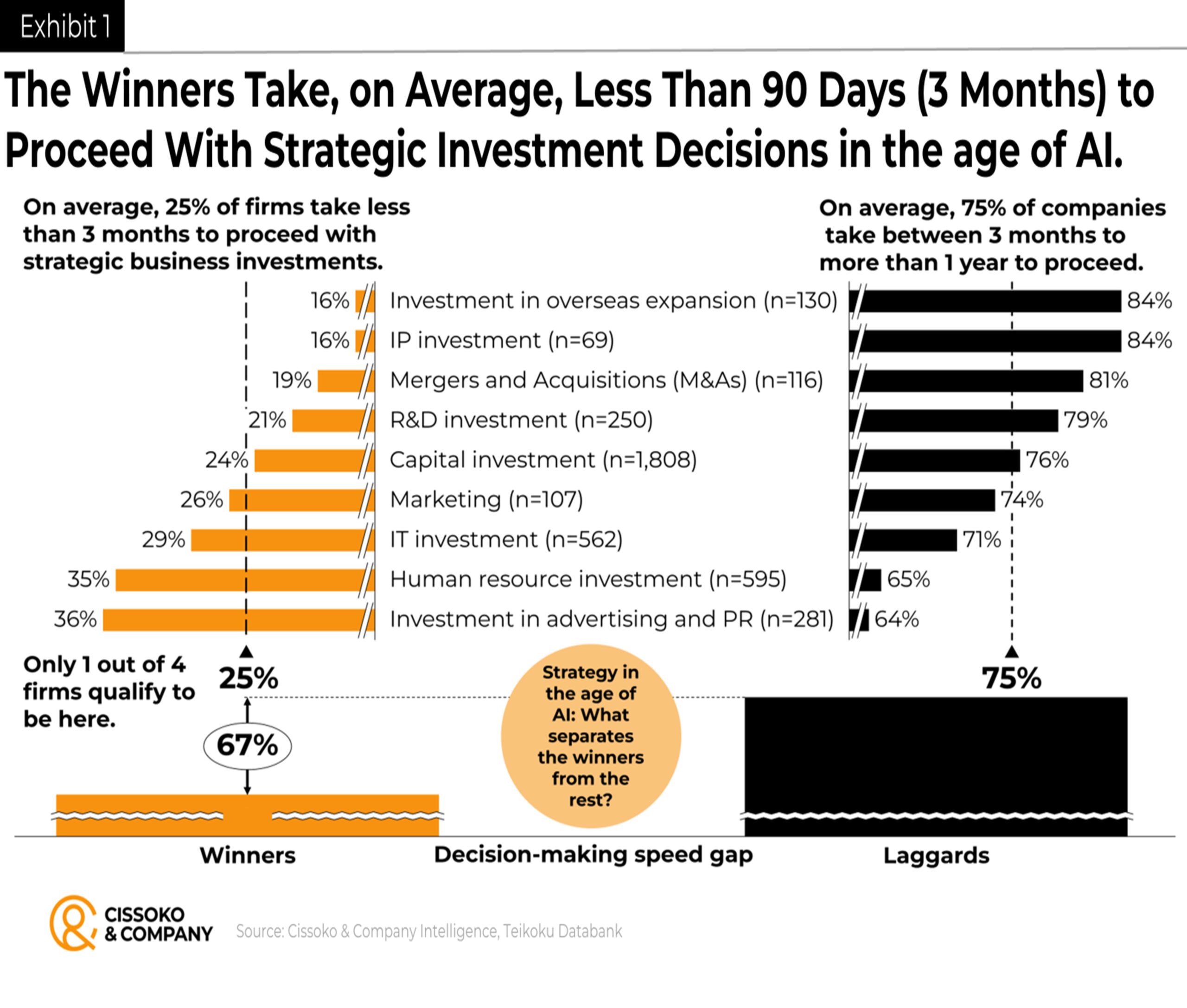
However, a common shortcoming has been the lack of comprehensive, quantitative data on the time it takes for business leaders or organizations to advance their critical strategic initiatives, especially those that confer a competitive advantage in highly competitive environments such as the era of artificial intelligence.
For this analysis, we monitored the strategic investment durations of firms across various domains, including capital investment, technology, human resources (HR), research and development (R&D), intellectual property, marketing (excluding advertising and public relations), overseas expansion, and advertising and public relations, among others.
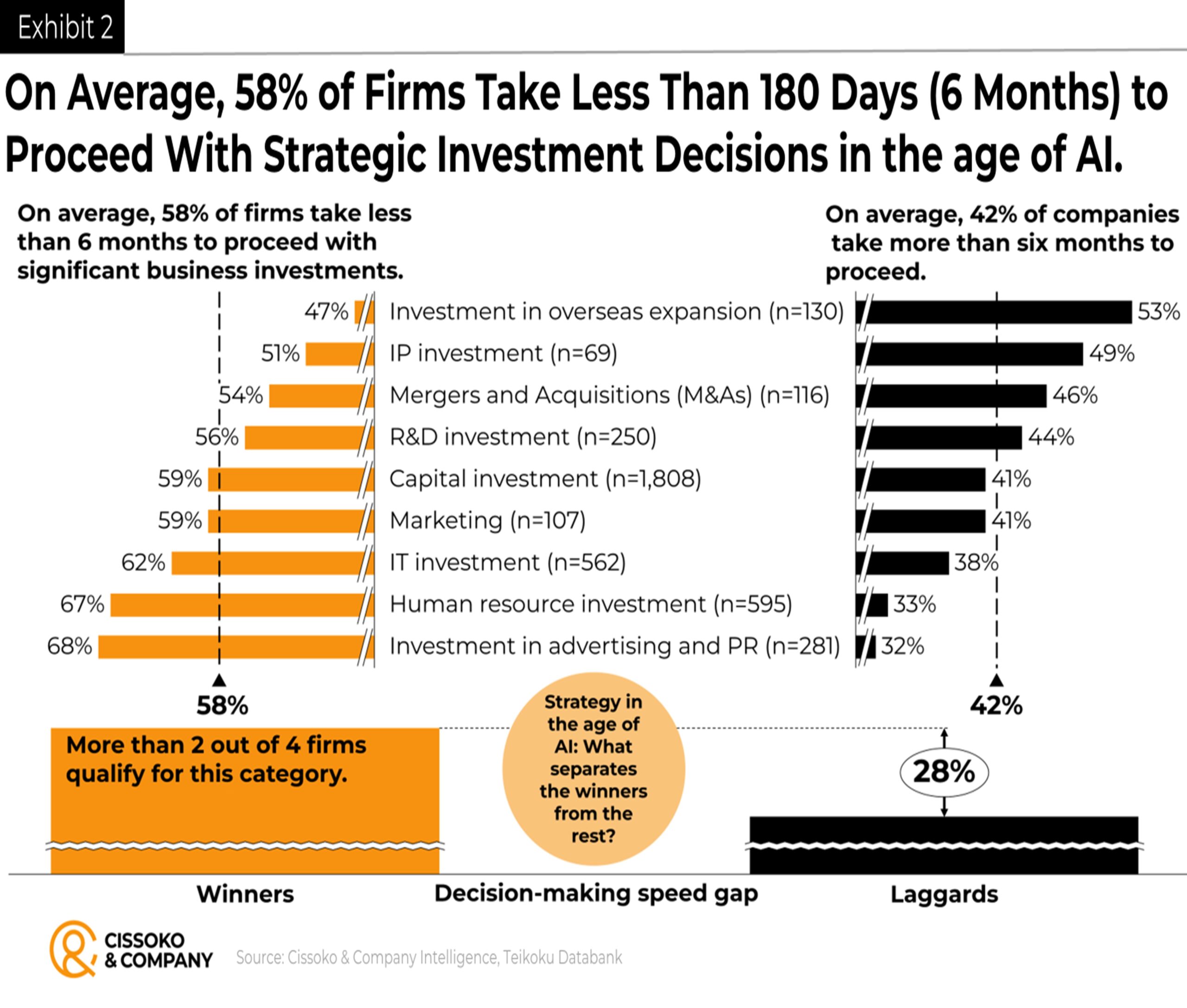
To evaluate the average disparity in strategic decision-making speed—from strategy formulation to strategic resource allocation—we set a threshold of 90 days (three months). In essence, this analysis determines the proportion of companies that complete the strategic cycle—from formulation to decision-making and subsequent investment—within 90 days, versus those that require more than 90 days, up to 365 days.
Assessing Corporate Winning Strategic Investments/Resource Allocation
Indeed, as many marriages do, businesses – large and small – make investments that do not yield the intended results (or returns) at the outset.
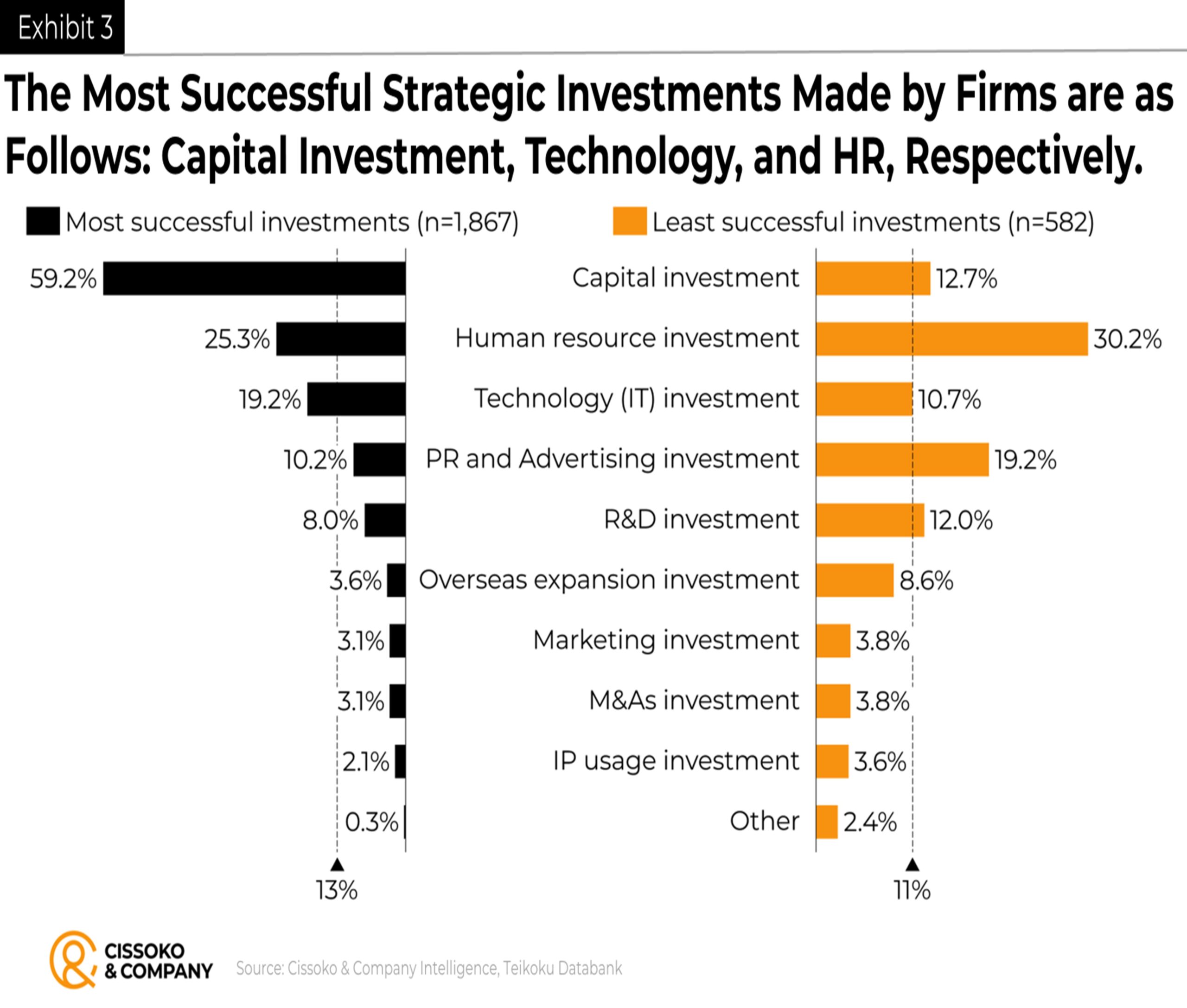
Against this backdrop, the question is: which ones among these investments, firms think, were the most successful? In other words, can other business leaders learn one thing or two about how to structure their strategic investments in light of the known likelihood of failure or success?
Prioritizing Strategic Investment decisions to win Amid Global AI Competition
Given the insights from the preceding analysis, how should business leaders prioritize their strategic investment decisions in this era of Agentic AI competition to maximize the likelihood of success?
Further investigation indicates that capital investment should be the foremost priority, followed by technology-related investments, as they have the highest win/loss ratios.
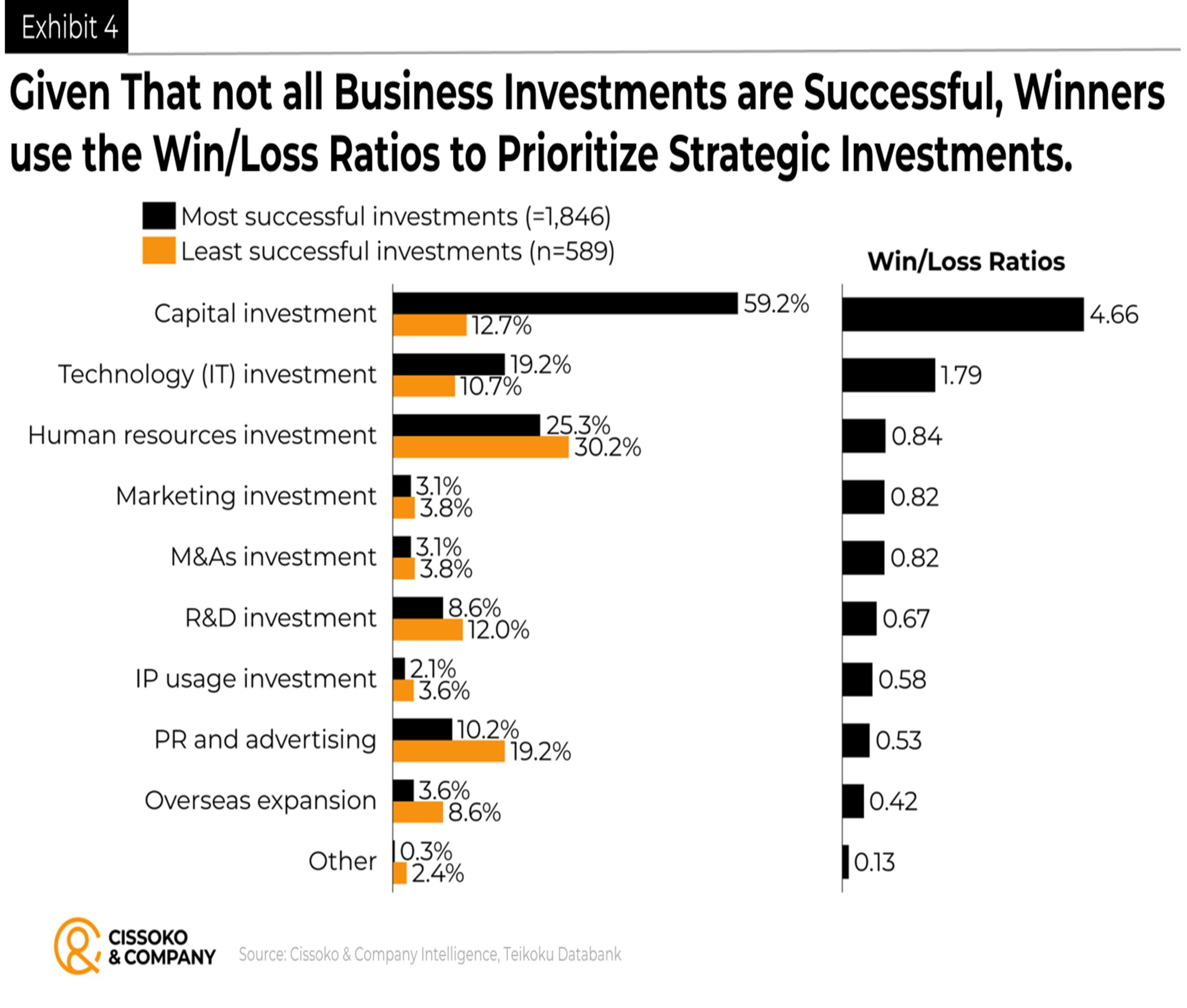
The subsequent category, with nearly identical win/loss ratios, includes human resources, marketing, and mergers and acquisitions (M&A). Ultimately, research and development (R&D) constitutes the final priority, again, as measured by investment win/loss ratios from our research.
The key conclusion of this research is that strategy is not limited to theoretical concepts about where to compete, how to achieve success, and the resources the firm has at its disposal. In fact, achieving success necessitates more than this mantra.
It requires focused attention on essential stages from strategy formulation to execution, including budgeting, resource allocation, and decision-making speed, along with other vital yet often overlooked aspects of strategic management in the era of artificial intelligence, such as decision criteria and prioritization process.
As demonstrated elsewhere in this article, these essential components, following the formulation of strategy, have, in our experience, distinguished successful entities from less successful ones. Therefore, regarding strategy, business leaders must comprehensively understand how to effectively convert an ambitious strategy into a successful implementation roadmap, where speed is the new name of the game.
Get in Touch
We will respond to your message as soon as possible.
Insights to Win
Subscribe to our newsletter for in-depth analysis, reports, and our perspectives on business and economic issues related to the Japanese market and the global economy.