
Japan’s Startup Trends: Solopreneurs vs Teampreneurs, Male vs Female Entrepreneurs — Founder Brief
Over the past thirty years, Japan’s startup scene has witnessed a significant increase in competition from various participants nationwide. Success has favored those who comprehend the evolving startup landscape in the era of artificial intelligence.
In the second part of our Founder Brief, titled “The Number Game: Winning Japan’s Startup Competition in the age of GenAI,” we will examine three emerging trends: the choices made by founders regarding business entities (sole proprietorship versus incorporation), solopreneurs versus teampreneurs, and male versus female entrepreneurs.
Insights 1: Choice of Business Entity, Sole Proprietorship vs Incorporation
In alignment with traditional business practices, founders encounter numerous dilemmas when selecting the legal structure of their company after initial endeavors, such as developing a business model concept.
It is well recognized that many startups fail, often conspicuously, with failure rates exhibiting variation across industries and stages within the business lifecycle. Due to the uncertainties associated with new business ideas and models, as well as inherent risks, founders must ultimately determine which business entity aligns most effectively with their concepts, business models, and available resources at the point of launch, guided by a cost-benefit analysis.
Within this framework, what does the prevailing trend indicate regarding the preference for different entity types over the past three decades? Before the 21st century, options such as sole proprietorships primarily dominated the landscape.
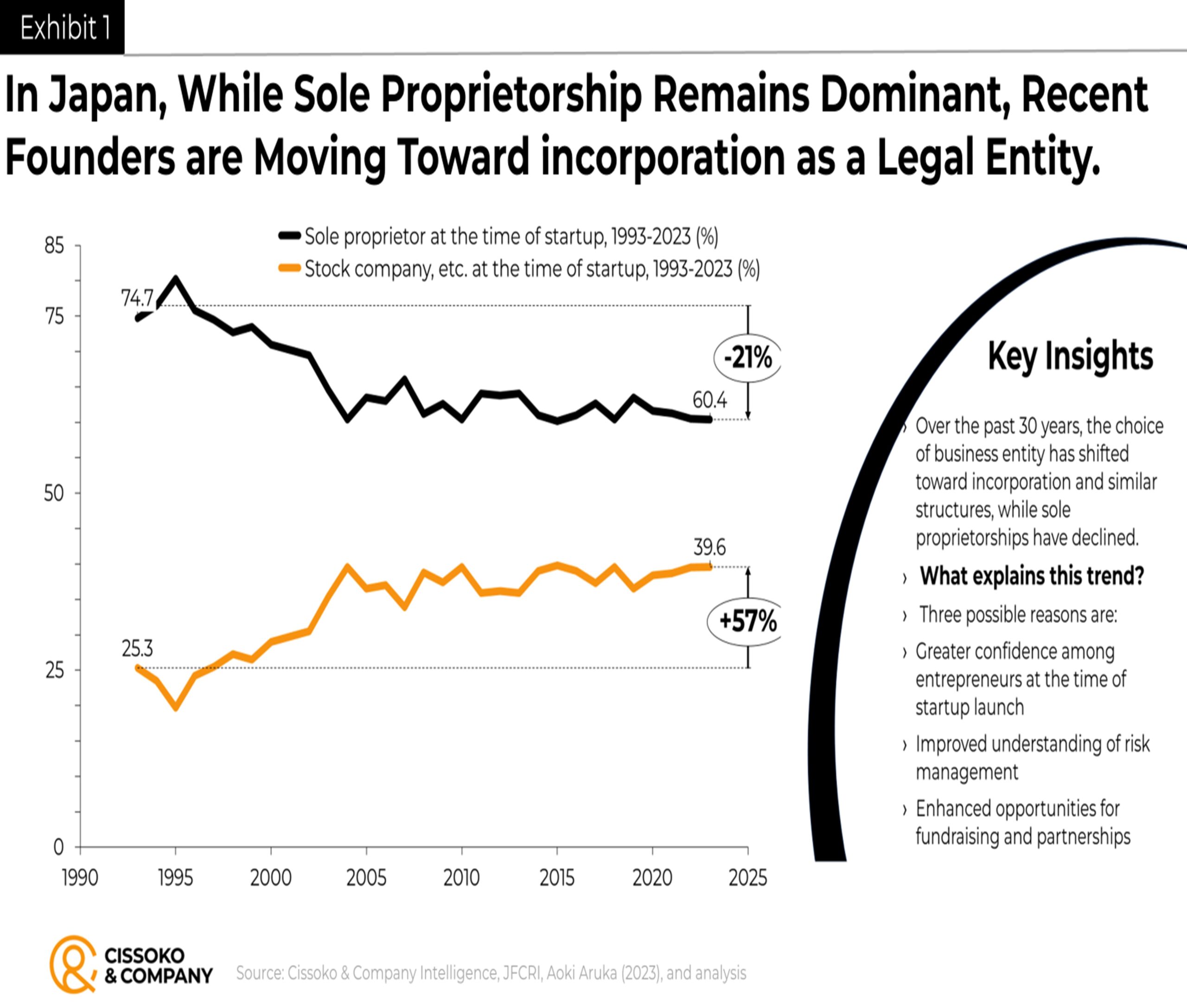
However, with rapid technological advancements during the Web 2.0 era—including the proliferation of social media and a decrease in the cost of technological infrastructure—many founders chose to incorporate their businesses and adopt other types of legal entities as their initial structures. We suspect that many made this decision to improve differentiation, legitimacy, fundraising, and partnership opportunities.
As of March 31, 2024, nearly 40% of startup founders preferred incorporation into legal entities other than sole proprietorships. This represents almost a 60% rise in their preferences over the last thirty years, while the preference for sole proprietorships has decreased by approximately 20% to account for 40% of startups’ business structures.
Insights 2: Solopreneurs Versus Teampreneurs
Understanding the evolving landscape of startup entrepreneurship necessitates an analysis of the competitive environment. This encompasses solopreneurs—those who operate independently—and other entrepreneurs commonly referred to as “teampreneurs,” who establish businesses collaboratively.
As the global number of solopreneurs increases, recent research estimates that slightly less than 16% of the workforce in the United States and Europe falls into this category. Japan reflects a similar trend. Indeed, the hidden competition between solopreneurs and teampreneurs has intensified over recent years, with the disparity narrowing annually over the past few decades. Due to the relatively low barriers to entry for solopreneurship, the proportion of team-based entrepreneurs, also known as teampreneurs, has declined in recent times. In essence, solopreneurs compete not only with fellow solopreneurs but also against team-based entrepreneurs, also known as teampreneurs.
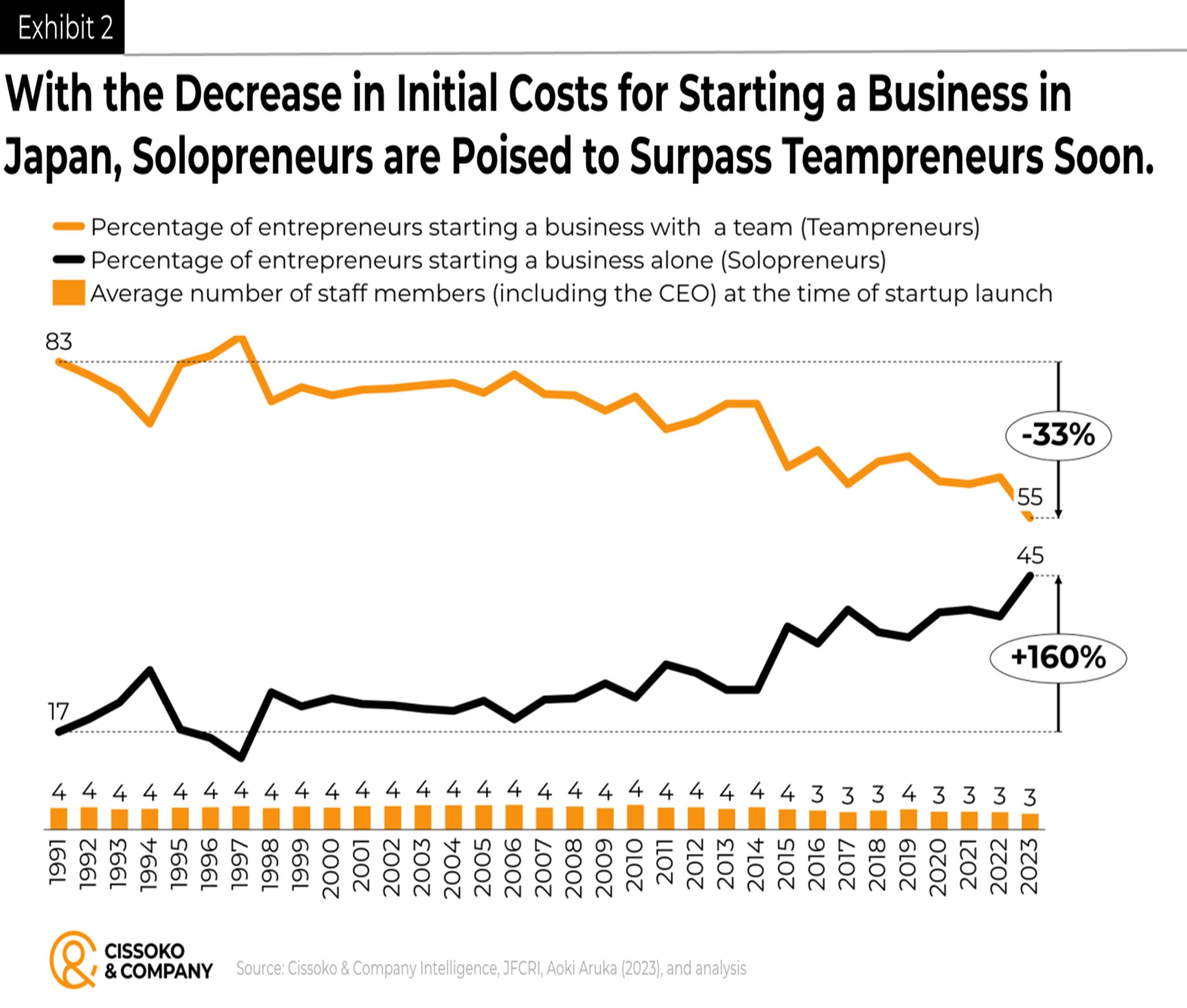
The ongoing pursuit of funding, innovation, profitability, and growth remains a priority. Additionally, it is crucial to recognize the impact of gender-based market entry on the opportunities and challenges associated with the growing presence of female entrepreneurs. This gender-based competition can, on the one hand, encourage potential partnerships; on the other hand, it may increase industry competition by fragmenting or commoditizing specific products or services, which can then lead to reduced premium pricing in some categories of goods and services.
Insights 3: Male Versus Female Entrepreneurs
Traditionally, the entrepreneurship landscape has been predominantly led by male entrepreneurs, particularly within Japan’s male-dominated corporate sector. However, due to dissatisfaction with the slow advancement of diversity and inclusion within the corporate industry—specifically at the executive, C-suite, and board levels—many skilled Japanese women have discreetly initiated their own enterprises across various sectors in recent years. In essence, talented Japanese women have chosen to take control of their own futures.
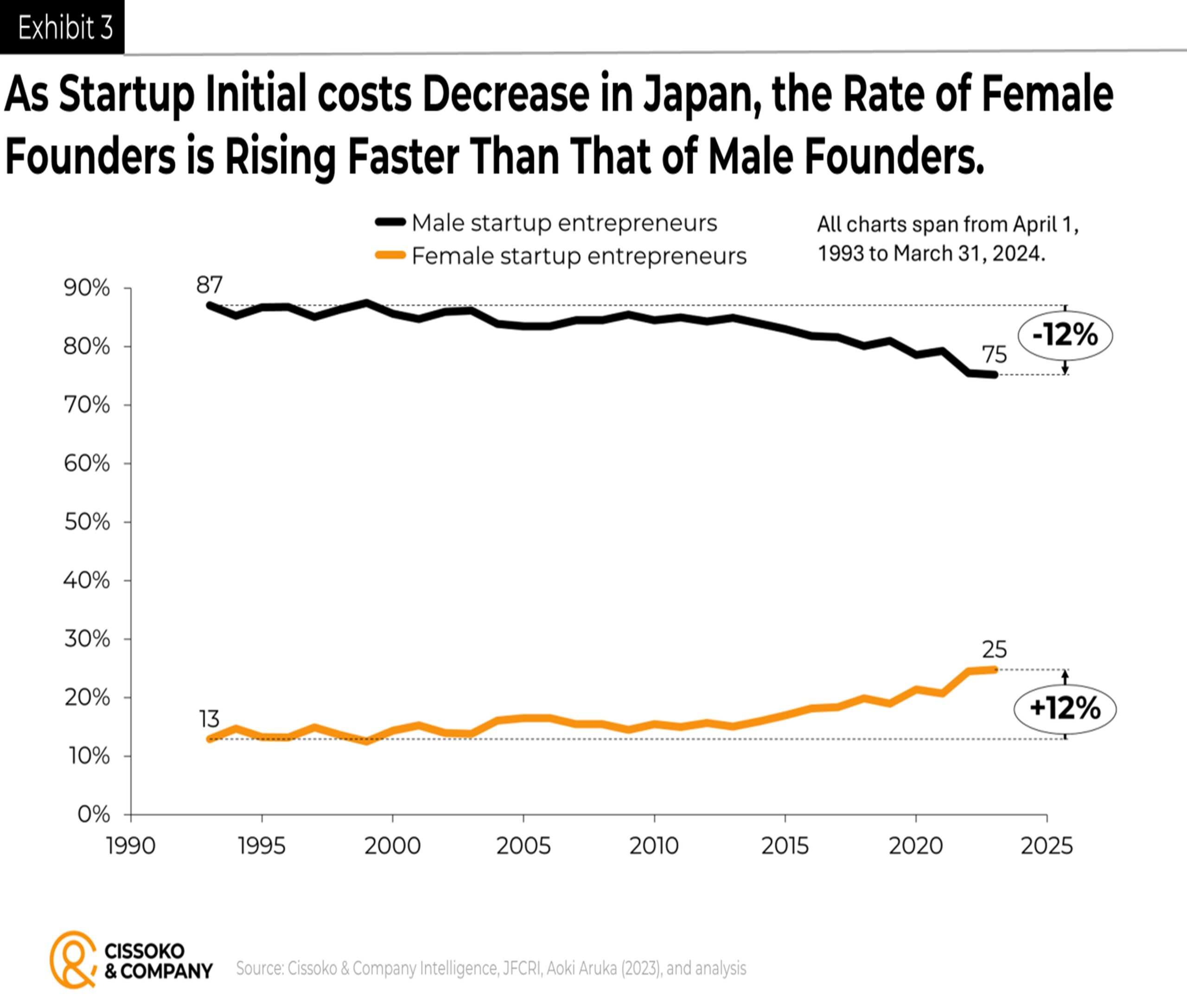
For many individuals, establishing oneself as an entrepreneur is frequently perceived as a more appealing alternative to pursuing a career within the corporate sector. Indeed, beyond entrepreneurship, many believe that academia provides greater opportunities for upward mobility compared to the corporate realm. For instance, women comprise 25.3% of faculty positions nationwide, compared to only 11% in managerial roles, according to the most recent available data. Beyond hierarchical positions within the Japanese corporate sector, another critical issue pertains to the gender pay disparity. In 2019, the gender pay gap between full-time male and female employees was 26.7%.
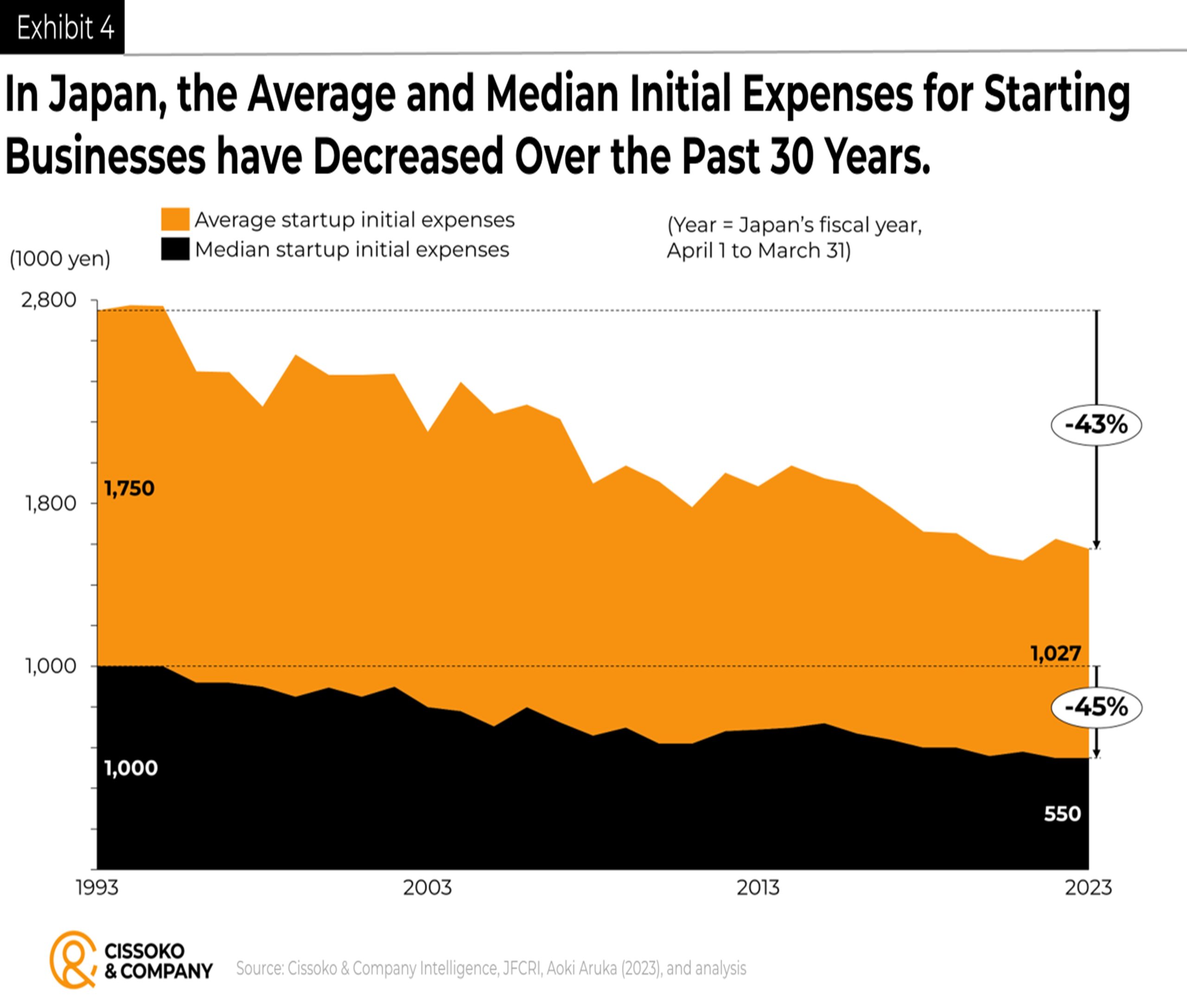
The combination of numerous factors previously discussed, coupled with the significant reduction in the initial costs associated with establishing a business in Japan, has fostered a conducive environment for talented Japanese women to initiate their entrepreneurial endeavors. It is noteworthy that over the past thirty years, up to March 2024, the average initial cost of establishing a business has decreased from 1.75 million yen to 1 million yen. Similarly, the median initial costs for launching a company in Japan have declined from 1 million yen to 550,000 yen during this period.
In essence, the entrepreneurial environment in Japan is becoming increasingly competitive, characterized by the emergence of high-quality products and services introduced by unusual potential competitors, namely female entrepreneurs.
As an increasing number of female entrepreneurs establish businesses, this trend has the potential to invigorate Japan’s technological and innovation sectors, potentially contributing to long-term economic growth.
Get in Touch
We will respond to your message as soon as possible.
Insights to Win
Subscribe to our newsletter for in-depth analysis, reports, and our perspectives on business and economic issues related to the Japanese market and the global economy.